Overview
Kinosaki's chemistry story is unity. One publicly-owned chloride spring feeds seven architecturally distinct bathhouses, five public footbaths and three drinking fountains, and goes nowhere else by design. This page carries the verified type, what the chemistry does to a body, the published drinking and bathing registers, who owns the water, and the gate on every number nobody has certificated.
What chloride water actually does
Sodium-calcium chloride springs are the classic *atatamari-no-yu*, the warming water, and the mechanism is not mystical. Dissolved salts leave a faint mineral film on the skin after you get out. That film slows evaporative cooling, which is the process that normally strips heat from a wet body in cold air within a minute or two. Interfere with it and the heat stays with you — not for a moment, but for a walk. In most onsen towns that is a pleasant footnote. In Kinosaki it is infrastructure. The entire product here is the circuit: you bathe, you put your yukata back on, you walk through the streets in it, you go into another bathhouse, and you do that several times across an evening. That only works if the interval between baths is comfortable, and in a Japan Sea winter with snow falling on the willows it has no business being comfortable. The chemistry is what makes it so. Kinosaki's town plan and Kinosaki's water are solving the same problem from two directions, and neither would work without the other. You can feel the film if you look for it. Skin that is slightly slick rather than squeaky after a bath, the sense of being sealed rather than rinsed, and a kind of low radiant warmth that persists for twenty or thirty minutes after you are dressed. This is the thing to protect. Pat dry rather than scrubbing; the instinct to towel yourself thoroughly is working against the water. It is also worth naming the flip side, because seven baths in one day is a genuine amount of mineral exposure. Chloride is gentle as onsen chemistry goes — it is not an acidic sulphur spring that will strip you — but anyone with dry or reactive skin should rinse with fresh water at the end of the day rather than after every bath, keeping the film in play during the circuit and clearing it before bed.
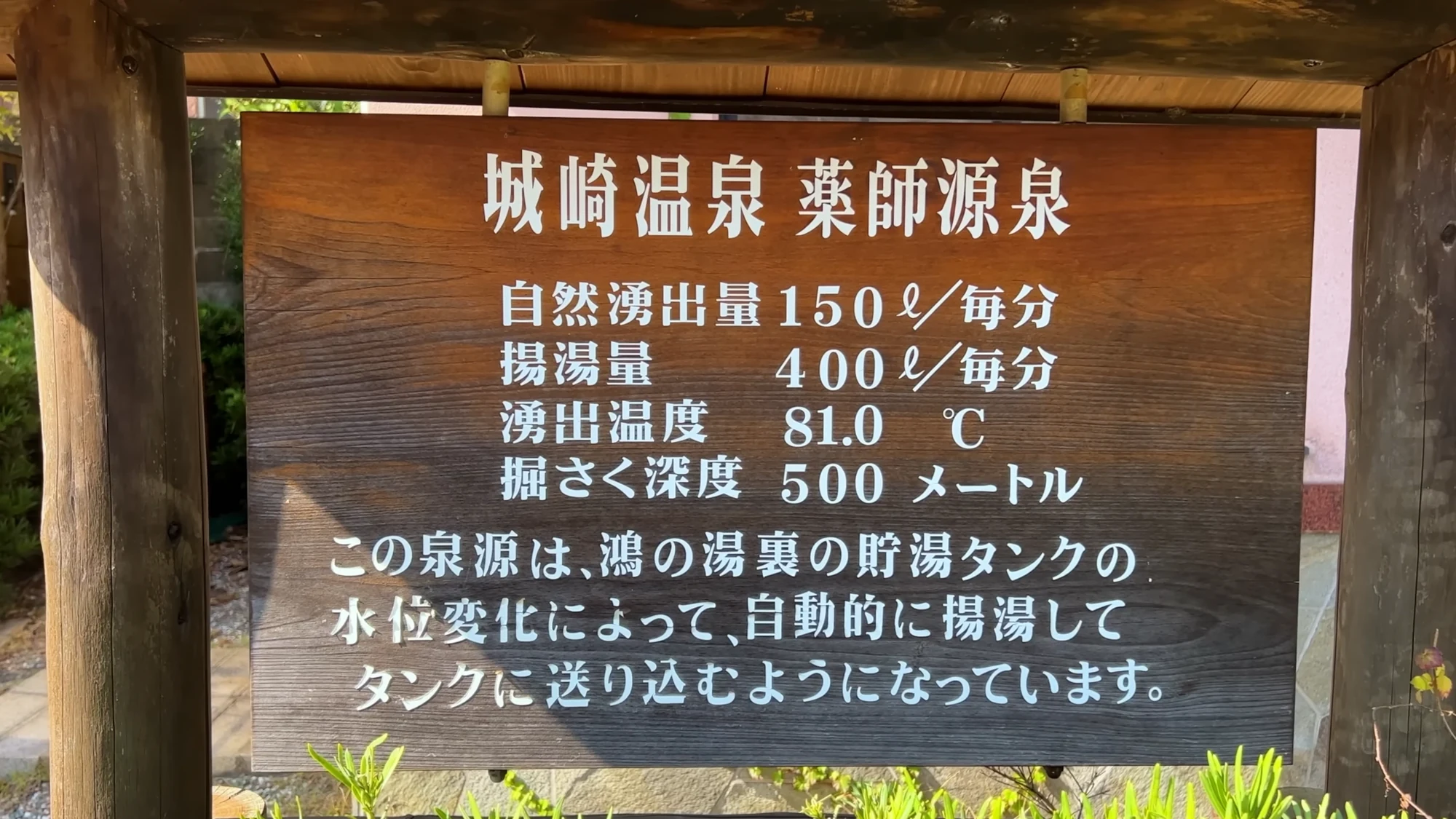
The source board: 150 litres a minute rising naturally, 400 pumped, 81.0 °C (177.8 °F), bored to 500 m (1,640 ft).
One quality, seven rooms
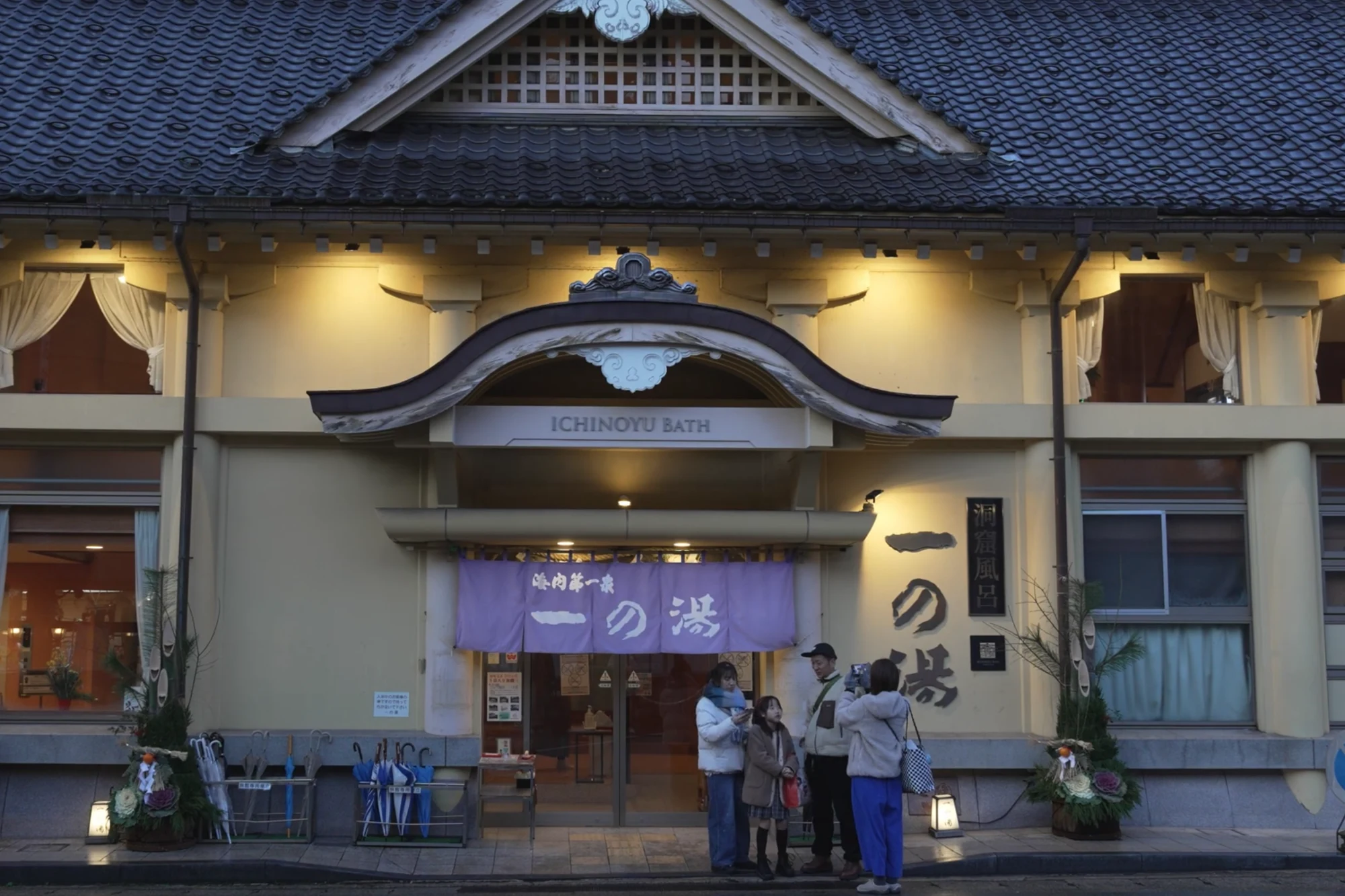
The city tourism authority states plainly what bathers usually only guess at: all seven sotoyu share the same spring quality. There is no "best water" in Kinosaki, and anyone who tells you one bathhouse's water is stronger is describing a building. This is a choice, and it is the opposite of the choice other famous onsen towns made. Noboribetsu's whole identity is multiplicity — nine distinct spring types in one valley, and the visit is a tasting menu of chemistries. Kinosaki went the other way: fix the water, vary everything else. What "everything else" turns out to mean is substantial. Goshono-yu (御所の湯) has a waterfall terrace and takes its name from the *Masukagami* chronicle's record of Ankamon-in, sister of Emperor Go-Horikawa, bathing here in 1267. Ichi-no-yu (一の湯) has its cave bath and was renamed from Shin-yu after the physician Kagawa Shūtoku called it *tenka ichi*, first under heaven, in his 1738 pharmacological text. Yanagi-yu (柳湯) is named for a willow transplanted from China's West Lake. Jizō-yu (地蔵湯) is named for a Jizō statue said to have emerged from the source itself and enshrined on the spot. Each house also carries its own 御利益 (*goriyaku*, divine benefit): Ichi-no-yu for 開運招福 (fortune and good luck), Yanagi-yu for 子授安産 (conception and safe childbirth), Goshono-yu for 美人の湯 (beauty). Choosing a favourite bath in Kinosaki means choosing a story and a room, which is precisely what the town's designers intended when they fixed the one variable that everywhere else competes on.
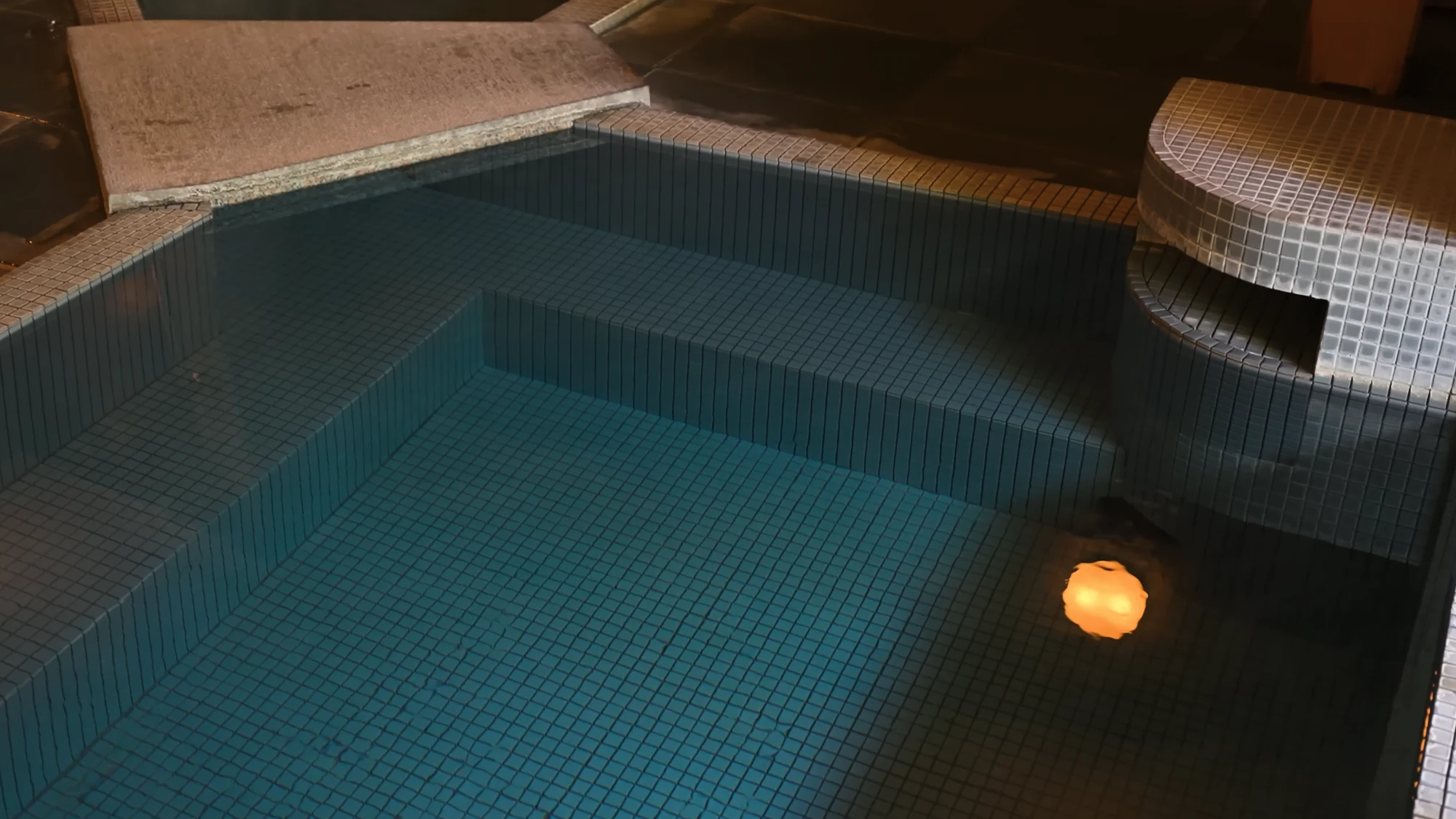
One quality of water, seven rooms. What changes between the houses is the architecture and the blessing.
The temperature, and what happens between source and tub
The water arrives at the drinking fountains at about 57°C (135°F), and the city notes this varies with the weather. That is well above bathing temperature and far too hot to sip without care. By the time it reaches a bath it is running at around 42°C (108°F) — the association's stated bathing temperature, and squarely in the traditional Japanese range. For an American visitor used to a hot tub at 38–40°C (100–104°F), 42 is noticeably hot on entry and then settles quickly. The correct technique is the local one: rinse and pour water over yourself outside the tub first, enter slowly, and stay in for shorter stretches than you might expect — ten minutes is a full soak here, not a warm-up. The spring is formally classified a 高温泉 (*kōonsen*), a high-temperature spring, which is a specific category in Japanese hot-spring law rather than a description. It means the water arrives hot enough that the question at every facility is how to bring it down and distribute it, not how to heat it. One claim you will see in English that this page does not make: that a central blending facility built in 1972 stabilised the town's supply at 57°C. The figure is right and the fountains confirm it, but the 1972 facility itself is not stated on any primary page we have been able to reach, including the springs authority's own site. It may well be true. It is not sourced, so it is not here.
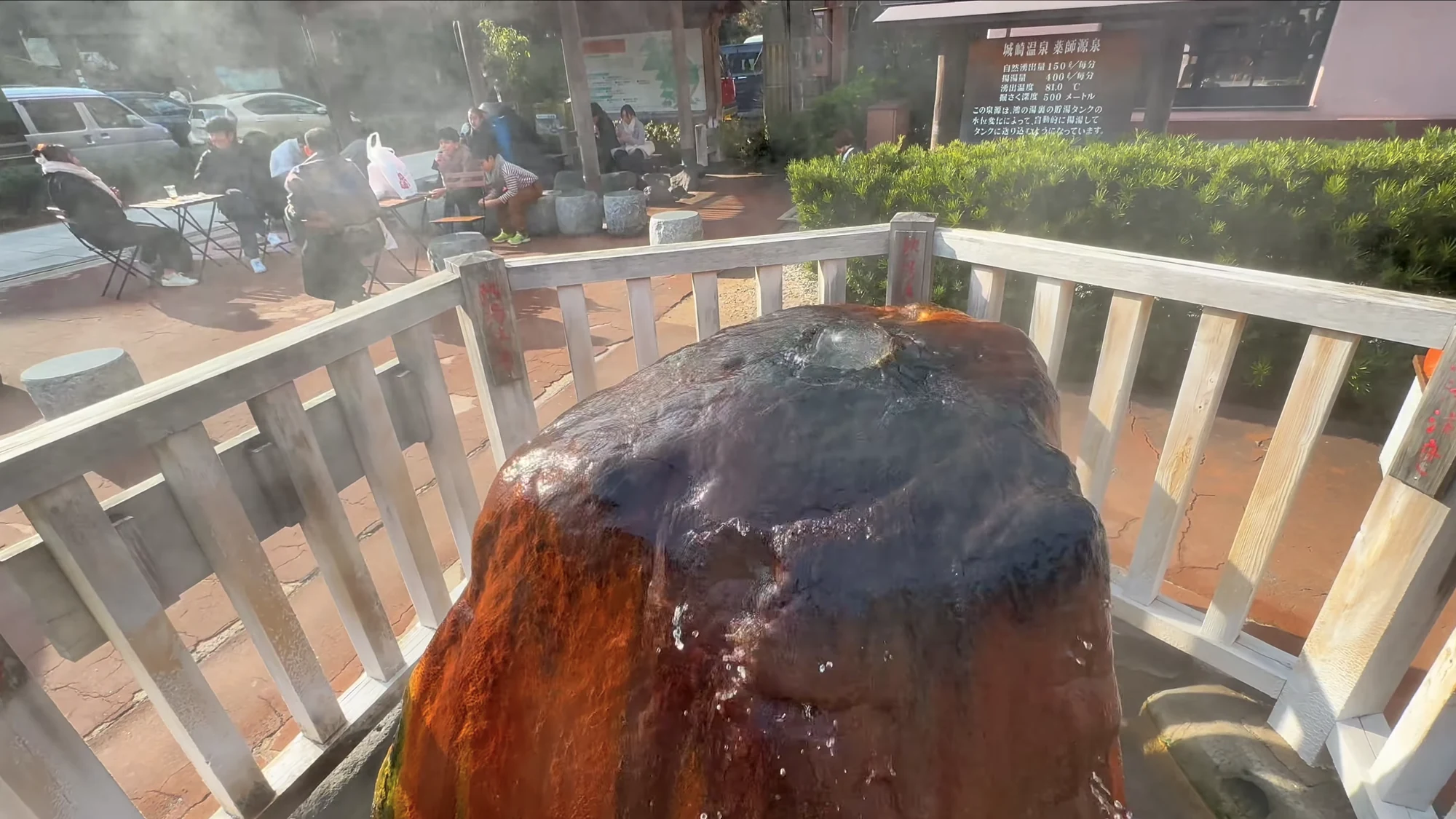
It leaves the ground at 81 °C and is cooled before it reaches any tub; nobody bathes in it at source temperature.
The three fountains: drinking the spring
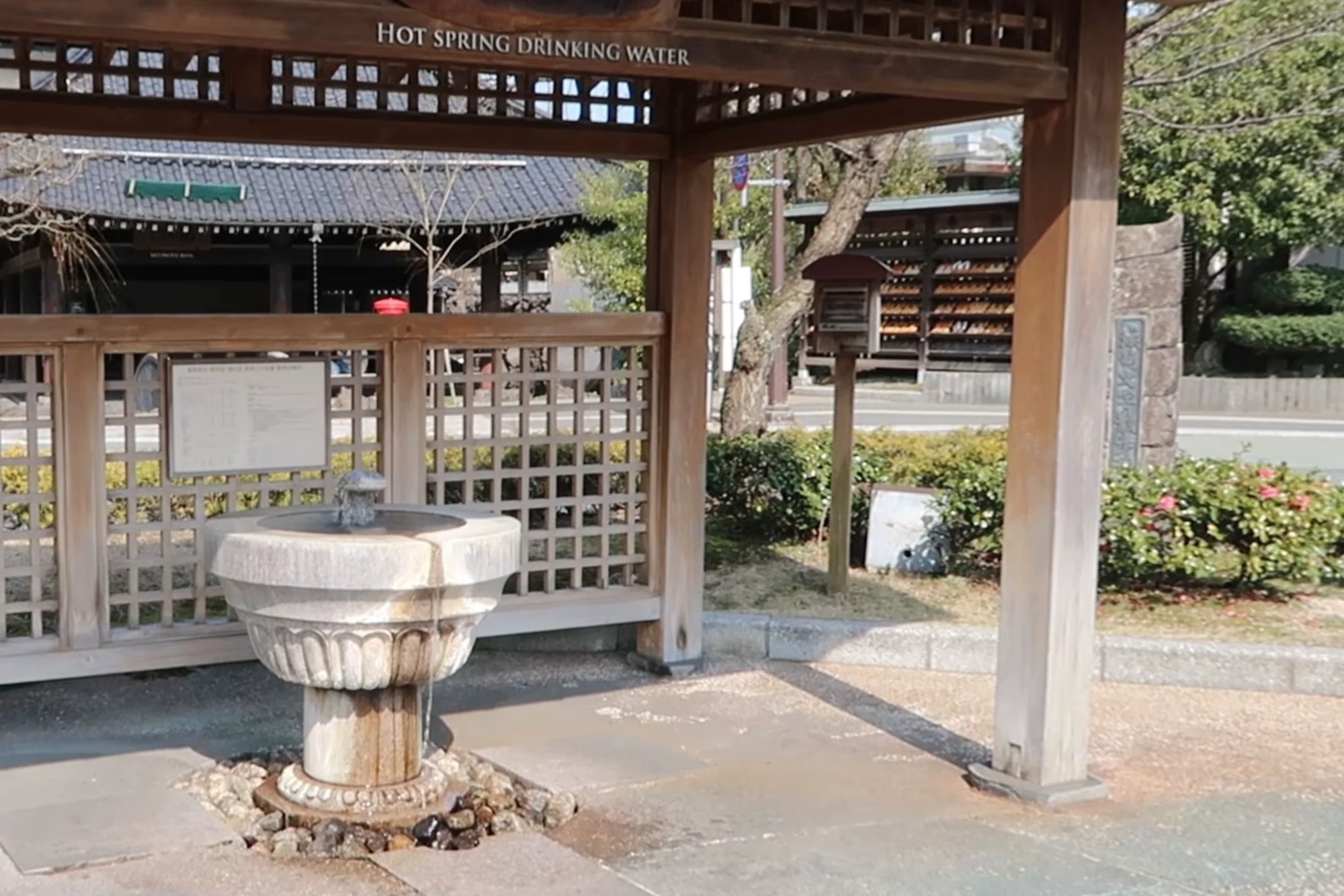
This is Kinosaki's unusual extra, and most visitors walk straight past it. Three 飲泉所 serve the spring for drinking. One is in the rotary directly in front of the station, so the first Kinosaki water most people could touch is drinkable and almost nobody realises it. One is at Yakushi Park, below Onsenji near the ropeway. One is at the Ō-bashi bridge, in front of Ichi-no-yu, in the middle of the main street. The city publishes a proper register for drinking it, and it reads like the pharmacological document it is rather than a tourism blurb. Traditionally indicated for atrophic gastritis and for constipation. 100–150 ml per serving (about 3.5–5 fl oz). 200–500 ml per day (about 7–17 fl oz). Taken roughly 30 minutes before meals. Children under 15 only under a physician's guidance. Taking the water home is prohibited. The bottles of "Kinosaki onsen water" you might imagine buying do not exist legitimately, and the springs authority has gone out of its way to say so — see the section below. Drink it hot and drink it slowly. It tastes of salt and iron and faintly of the earth, which is the honest report; it is not pleasant in the way a mineral water is pleasant. It is the oldest form of the thing you came here for. Onsen towns were medical destinations for a thousand years before they were leisure ones, and the fountain in the station rotary is the surviving evidence, free, on a public street, with dosage instructions.
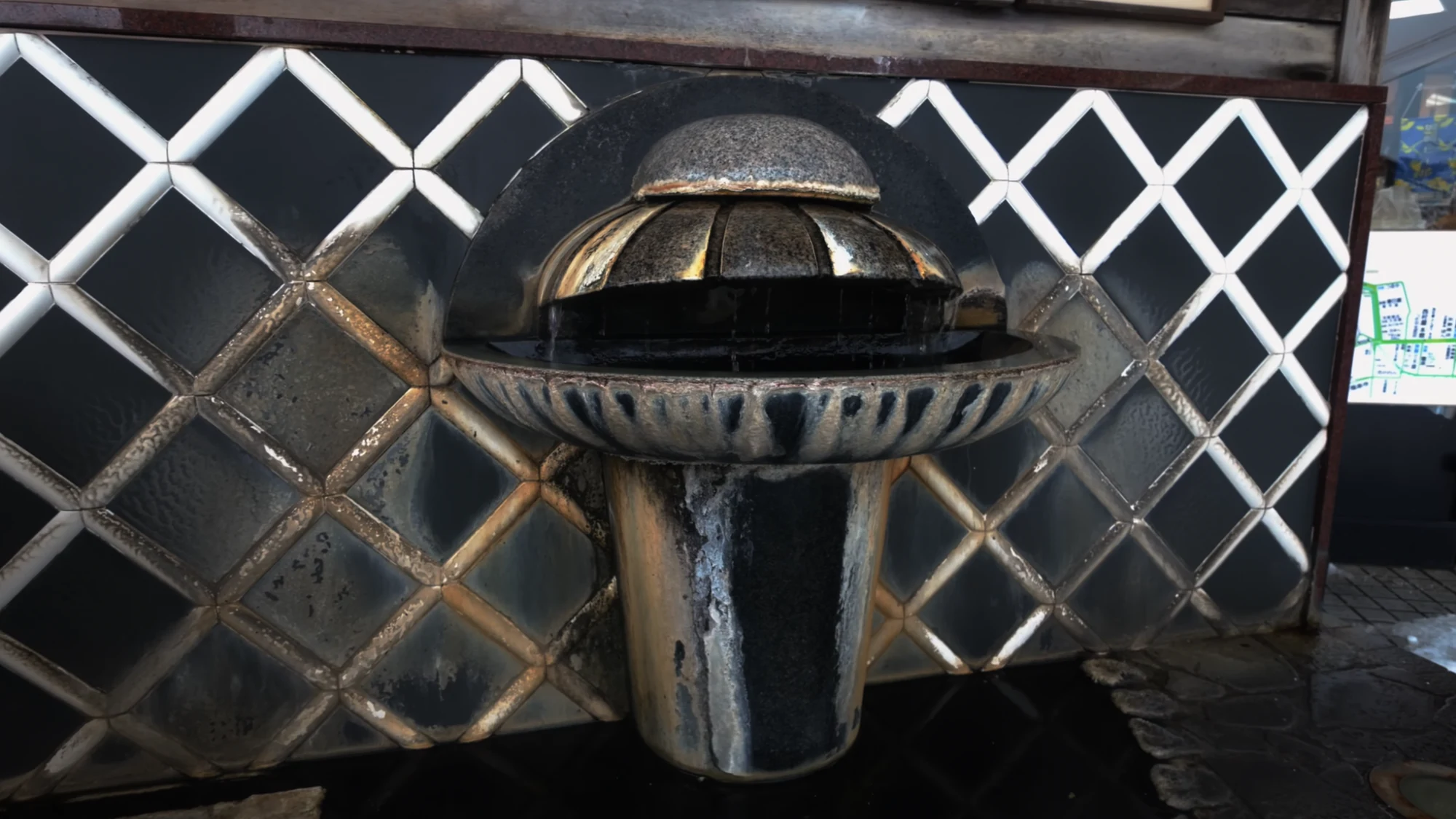
The fountains run around the clock; the register beside them posts the recommended dose.
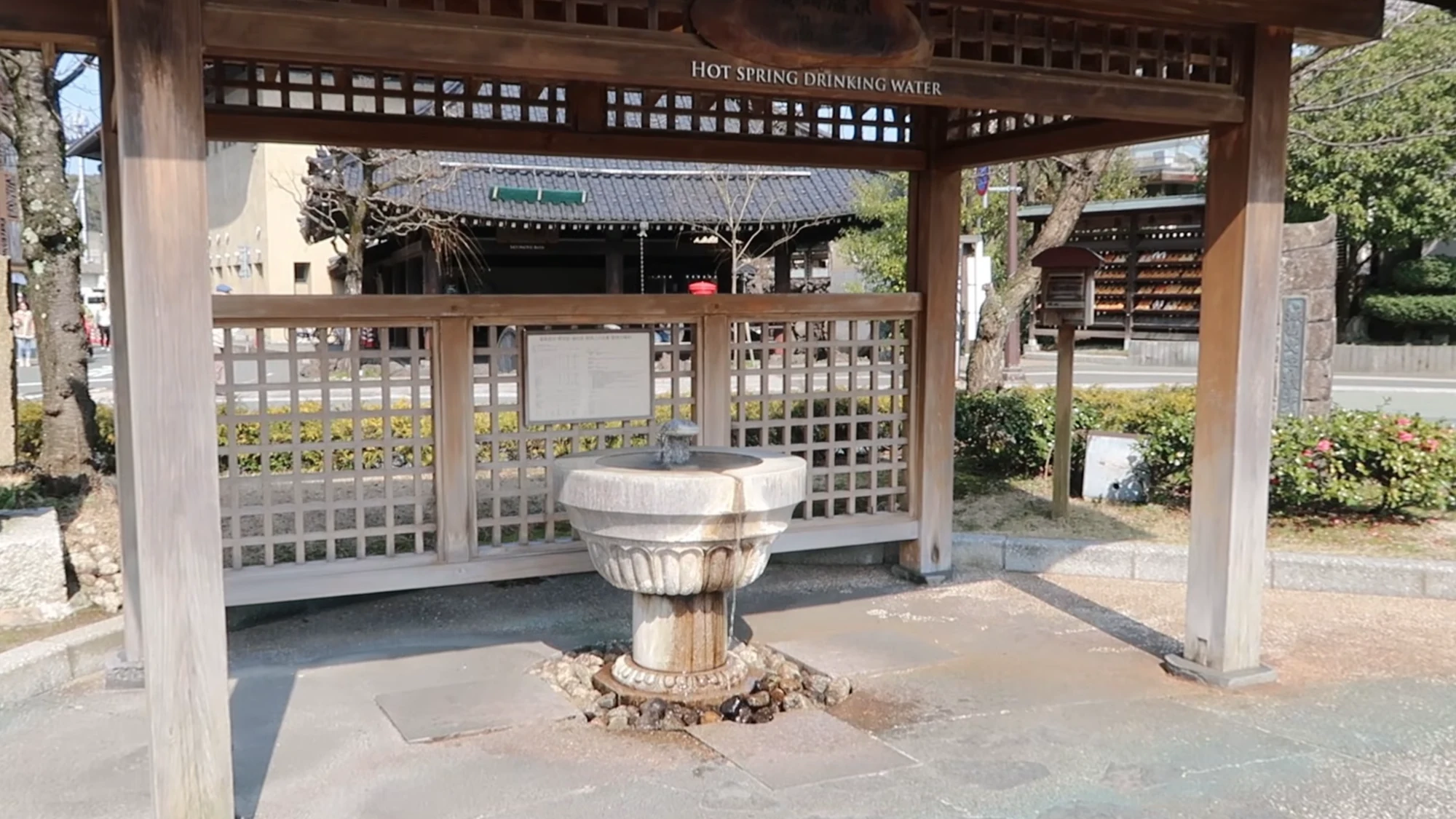
The station-front fountain is the first of the three, and the one most visitors meet.
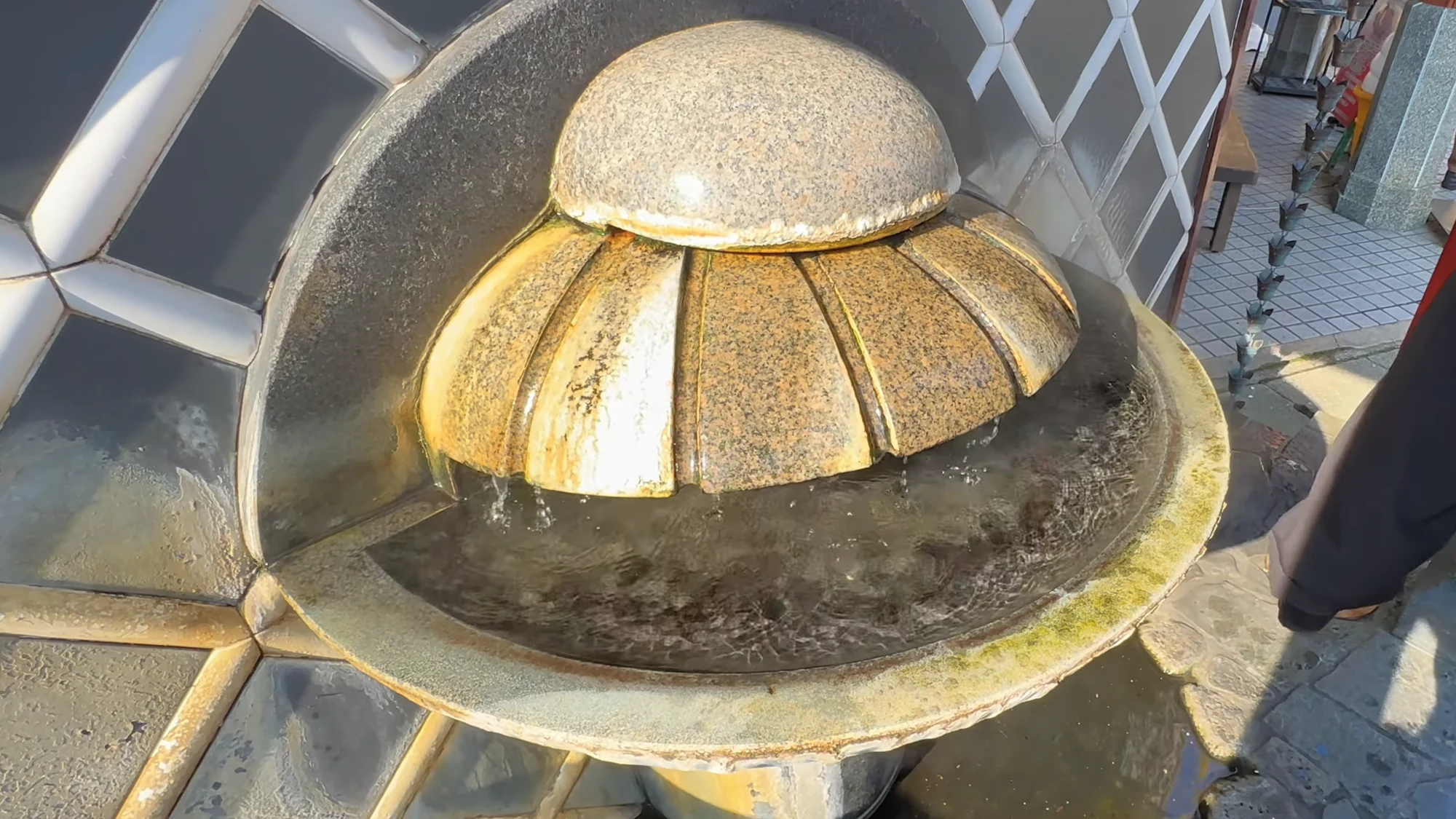
Three fountains: the station front, Yakushi Park below Onsenji, and the bridge in front of Ichi-no-yu.
The published register — and where it ends
Japan publishes a formal register of indications (適応症, *tekiōshō*) and contraindications (禁忌症, *kinkishō*) for each spring type. For a chloride spring, as posted by the Japan Spa Association, it runs as follows. Indications specific to the spring type: cuts and wounds, peripheral circulatory disorders, sensitivity to cold, depressive states, dry skin. General bathing indications: chronic muscle and joint pain or stiffness, recovery after illness, fatigue, general health maintenance. General contraindications: any illness in its active phase, particularly with fever. Active tuberculosis. Advanced malignancy or severe anaemia. Serious heart or lung disease. Serious kidney disease with oedema. Gastrointestinal bleeding or any visible bleeding. The acute flare of a chronic condition. That list deserves to be read rather than skimmed, because it is the part of onsen culture that tourism writing routinely drops. This is a traditional balneological register as published in Japan. It is not medical advice, and it is not this site's claim. We reproduce it because it exists, because it is posted at the baths in Japanese, and because a visitor who cannot read it is entitled to know what it says. If you have a condition on the contraindication list, that is a conversation with your doctor, not with a guidebook. What this page will not do is go further than the register. You will find English pages asserting specific therapeutic outcomes for Kinosaki's water. Those are not in any source we hold, and the gap between "traditionally indicated for" and "treats" is the whole of the difference between a record and a claim.
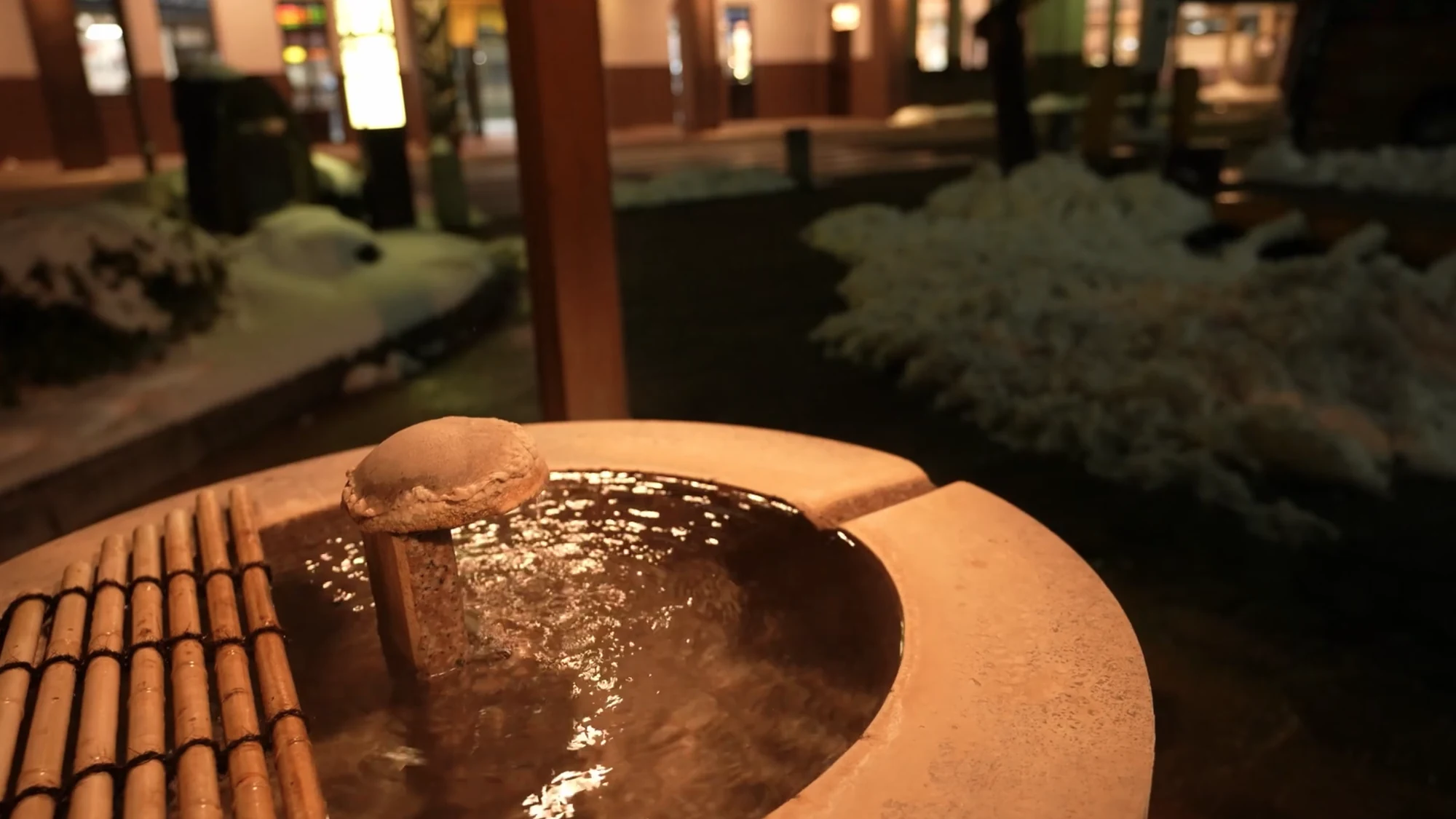
Steam off the basin in winter is the simplest proof of how hot the water arrives.
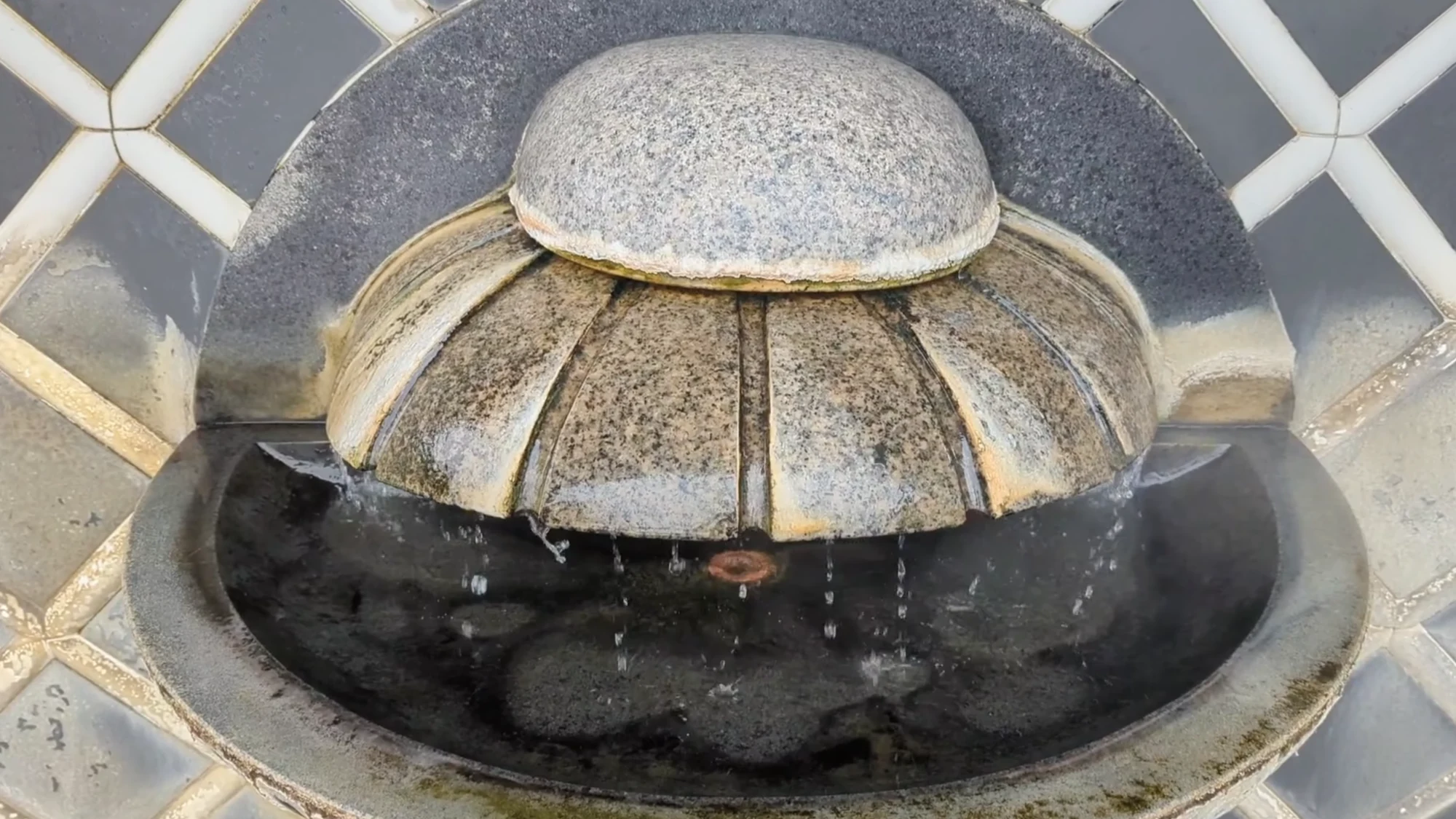
The register posts the dose. Taking the water home is prohibited.
Who owns this water
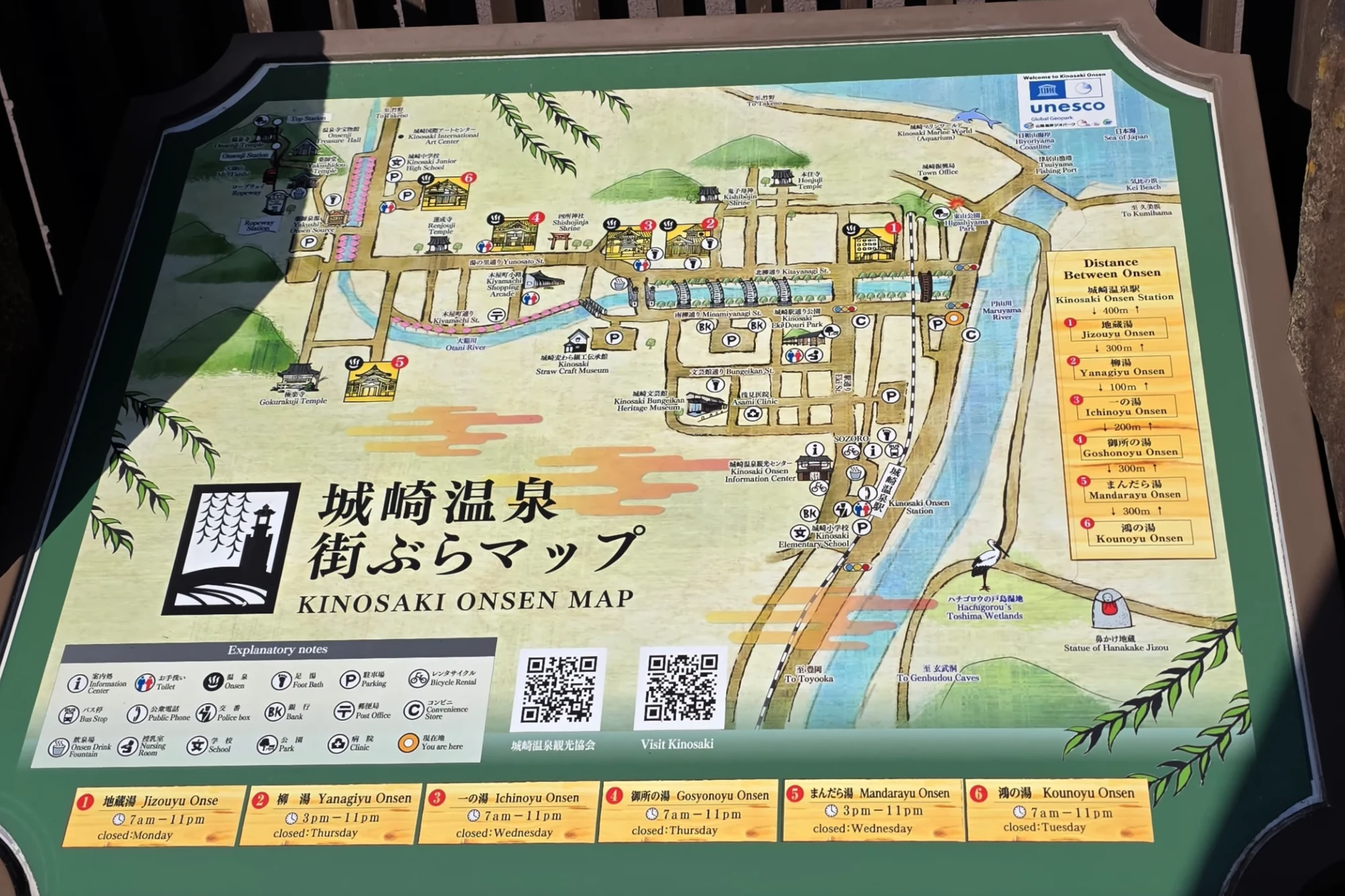
Kinosaki's spring is not a private asset, and the arrangement is the quiet reason the town works. The water is held and supplied by the Kinosaki-chō Yushima Zaisanku (城崎町湯島財産区), a property ward — a public body that owns a common resource on behalf of a community, a form of collective ownership that predates the modern municipality. Day to day it is administered alongside Toyooka City's hot spring division. The authority publishes the complete list of what it supplies, and it is short: 1. The seven sotoyu. 2. Bathing facilities at ryokan and other lodgings within the Yushima, Momoshima and Imazu districts of Kinosaki — and explicitly not to any inn's footbath. 3. Footbaths and drinking fountains installed by the ward and the city — five footbaths (beside Ichi-no-yu, at Yanagi-yu, at Sato-no-yu, at Yakushi Park near the ropeway, and at the Kinosaki Bungeikan literary museum) and the three drinking fountains. It publishes this as a warning. Products have appeared for sale implying they use Kinosaki onsen water, and the authority states that it supplies no one outside that list. So the water is geographically bounded, enumerated, publicly held, and actively defended against being turned into a commodity that leaves town. Since December 2023 the ward has also issued a 天然温泉配湯の証, a certificate of natural hot spring supply, distributed on request to facilities that use the real water so they can display it. If you want to know whether the bath in your inn is fed from the town spring, that certificate on the wall is the answer, and it exists because someone thought the question was worth being able to answer. This is the same decision as the ordinance that caps how large an inn's private bath may be, made in a different register. The water is a commons. Everything else in Kinosaki follows from that.
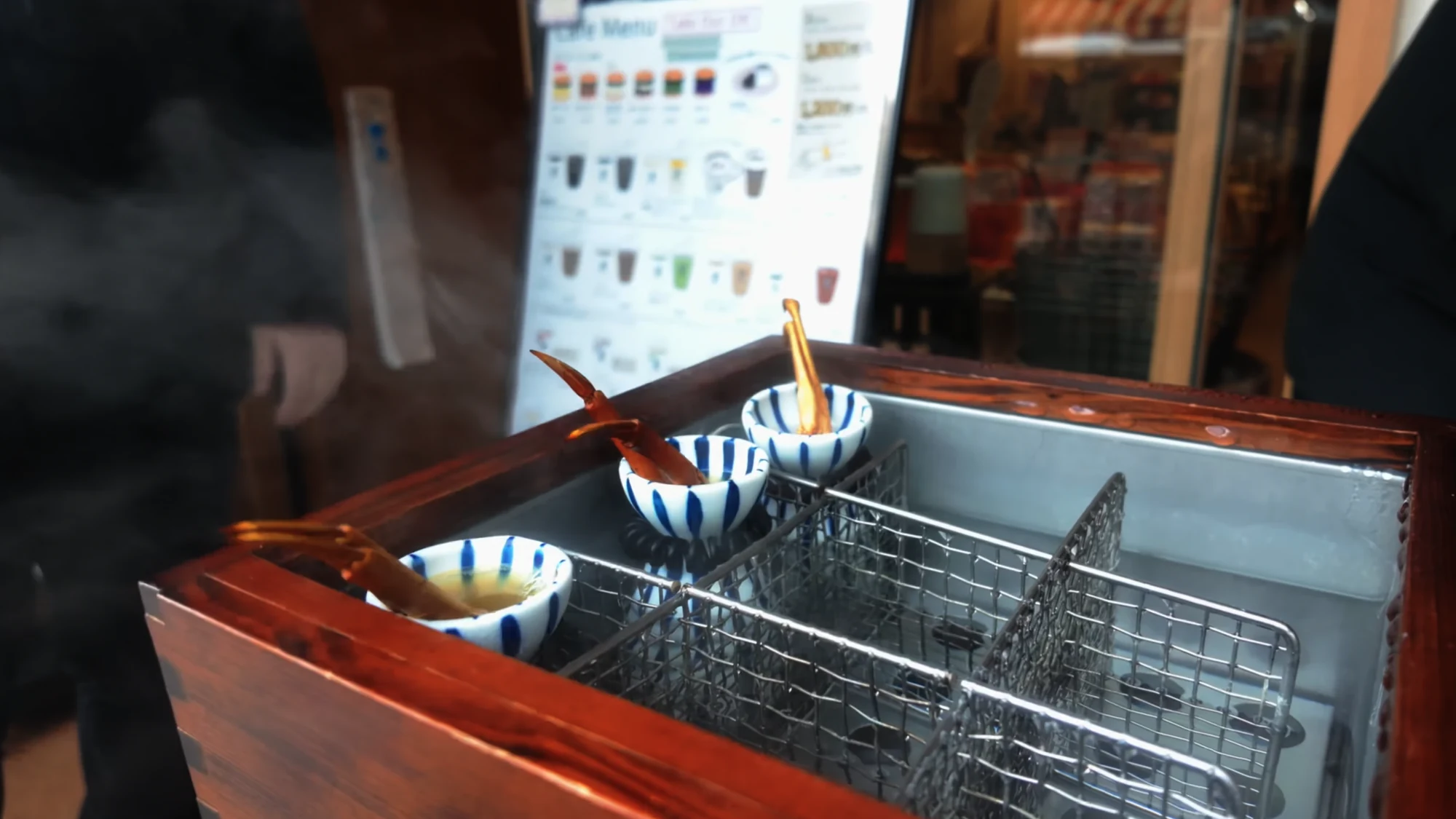
About twelve minutes gives a soft-set egg. The bowls are left out for you.
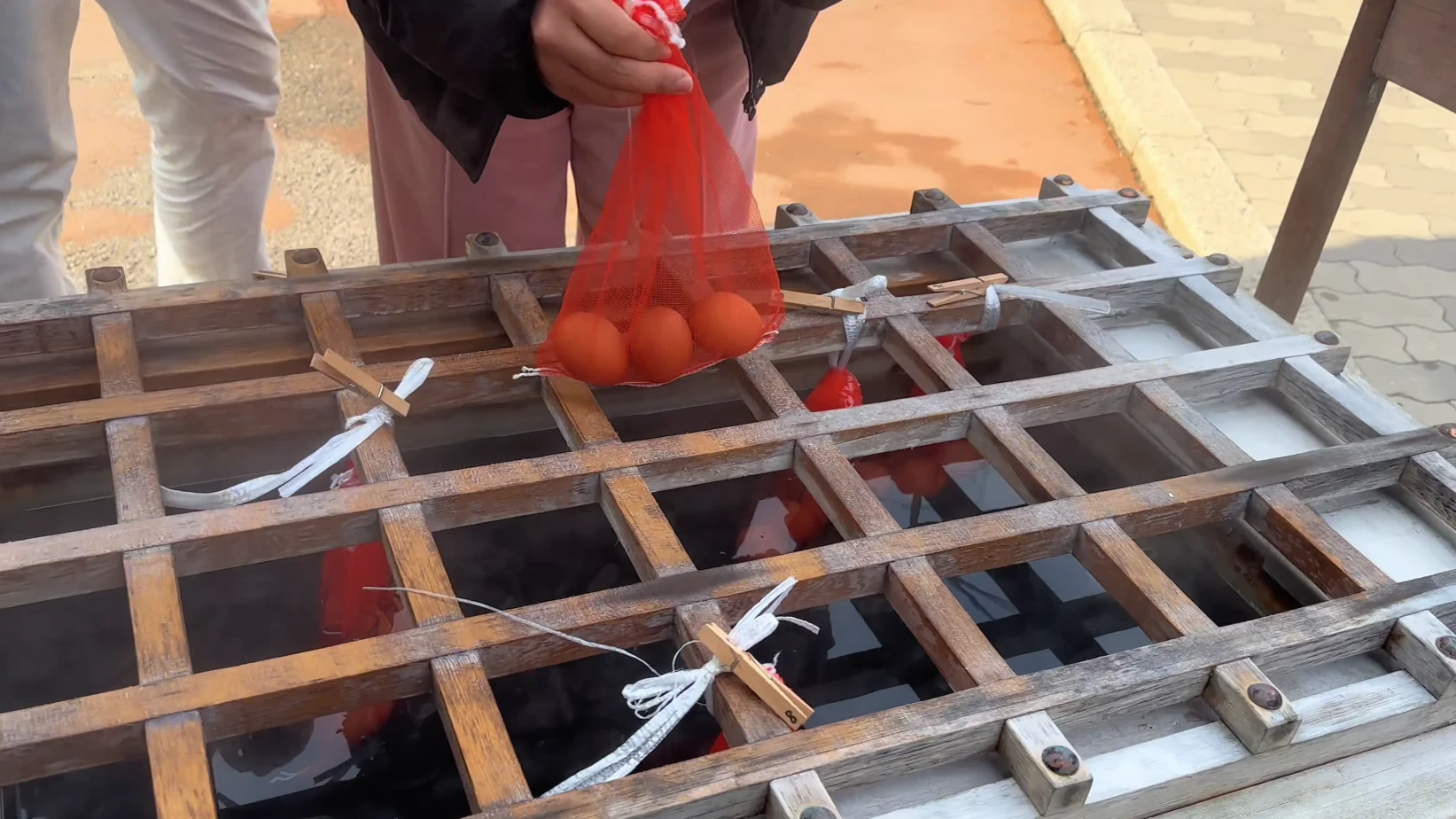
The municipality holds the source. The egg pit is the one place visitors handle it directly.
What this page will not print, and why
Two numbers are missing here on purpose. Per-source pH and TDS. No 温泉分析書, the formal analysis certificate, is published online for Kinosaki's sources. The springs are municipally managed and the certificates are not public. Our standard on every domain is certificate or silence: we do not repeat a pH figure we cannot trace to the document it came from, because a wrong pH is the kind of error that gets copied into thirty other sites and never corrected. The 1972 central distribution facility. Widely repeated, not sourced on any primary page including the springs authority's own. Held open. If you want either of these, the body to ask is the Yushima Zaisanku or Toyooka City's hot spring division. If we obtain them, they will appear here with the certificate behind them and a dated line saying so.
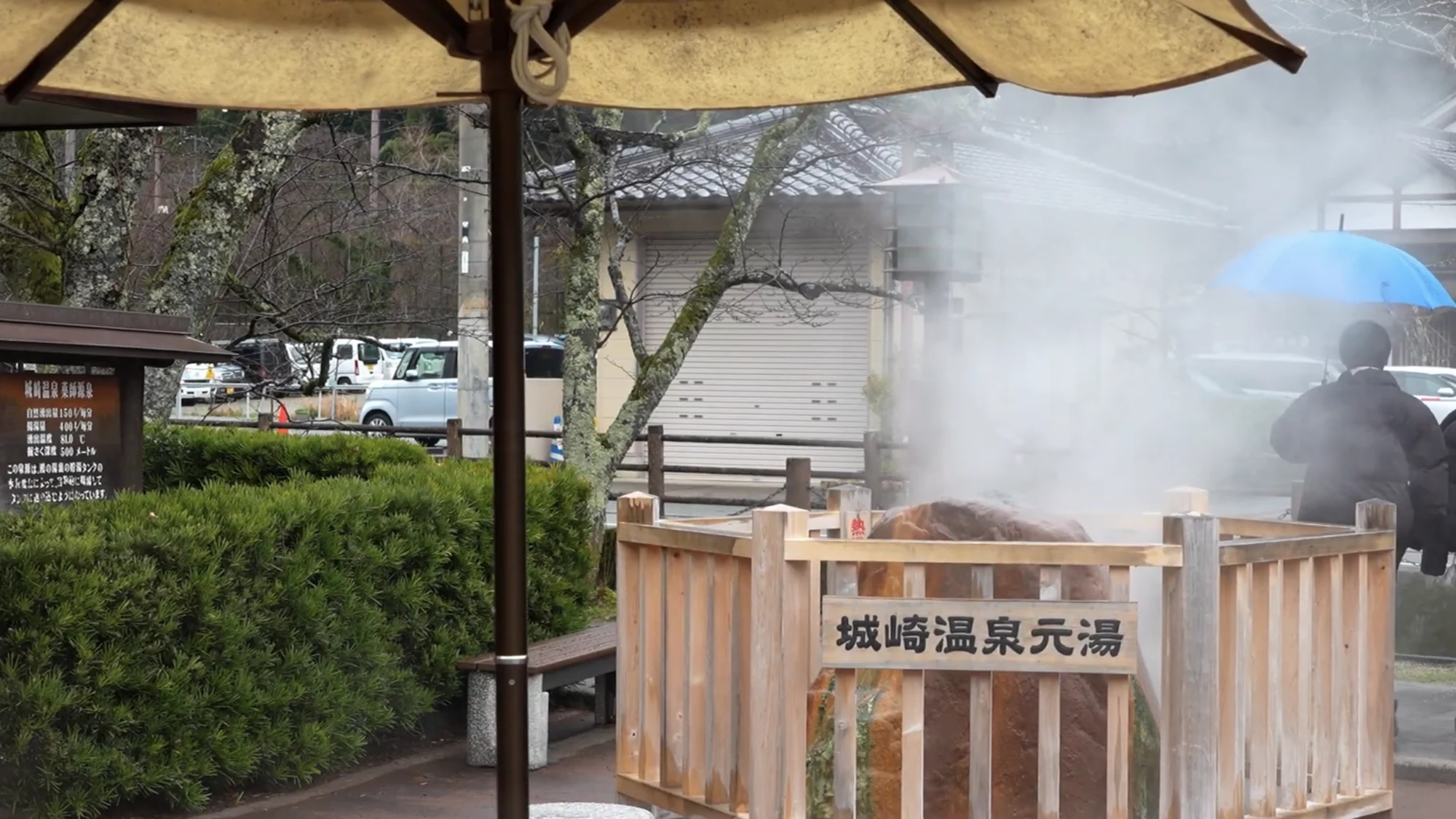
No per-source pH or mineral breakdown is published, so this page prints none. Certificate or silence.
Tips
**Drink at the station fountain on arrival.** It is free, it is in the rotary, and small sips — it is genuinely hot at about 57°C (135°F).
**The salt film is the product.** Pat dry, do not scrub, and let the warmth carry you to the next bathhouse.
**Rinse with fresh water at the end of the day**, not between every bath, if your skin is dry or reactive.
**Look for the 天然温泉配湯の証 certificate** on the wall if you want to know whether your inn's bath is fed from the town spring.
**Five public footbaths** are scattered through town and cost nothing — the one at the Bungeikan is the most pleasant place in Kinosaki to sit with a book.
**Enter at 42°C (108°F) slowly**, rinse outside the tub first, and treat ten minutes as a full soak.

Verified by The Japan Onsen Society
Show all sources
泉質 name · approximately 57°C · three 飲泉所 · drinking register, dosage and take-home prohibition · 入湯作法 tradition → 城崎温泉の温泉効果を体の中から取り入れる【飲泉】(豊岡市観光公式サイト, Toyooka City tourism) → [toyooka-tourism.com/recommend/onsen/kinosaki_insen/](https://toyooka-tourism.com/recommend/onsen/kinosaki_insen/) → verified July 7, 2026
Same spring quality across all seven · the sotoyu system → 外湯巡り発祥の地 (豊岡市観光公式サイト) → [toyooka-tourism.com/recommend/onsen/kinosaki_sotoyu/](https://toyooka-tourism.com/recommend/onsen/kinosaki_sotoyu/) → verified July 7, 2026
塩化物泉 classification · 適応症 and 禁忌症 register → 温泉地詳細[城崎温泉](日本温泉協会, Japan Spa Association) → [spa.or.jp](https://www.spa.or.jp/search_p/detail_p/?F_ID=280880&pg=0) → verified July 7, 2026
共通泉質 ナトリウム・カルシウム-塩化物・高温泉 · 42°C bathing temperature · bath name origins and 御利益 · hours and closing days → 外湯 (城崎温泉観光協会) → [kinosaki-spa.gr.jp/about/spa/](https://kinosaki-spa.gr.jp/about/spa/) → clicked and read September 22, 2026
The enumerated supply list · five footbaths and three fountains · the Ō-bashi fountain location · the public warning on products · the 天然温泉配湯の証 certificate from December 2023 → 城崎町湯島財産区 (Kinosaki-chō Yushima Zaisanku, the springs authority) → [kinosaki-onsen.wixsite.com/kinosaki-onsen](https://kinosaki-onsen.wixsite.com/kinosaki-onsen/) → clicked and read September 23, 2026
*Verified July 7 – September 23, 2026.*
Related guides
The Town and Its Baths
The 7 bathhouses
Same water in all seven houses. What changes is the room, the story, and the blessing on the door.
The Town and Its Baths
The sotoyu system
The whole town is one ryokan. That is not a slogan about atmosphere. It is a description of the law.
The Town and Its Baths
Founding history
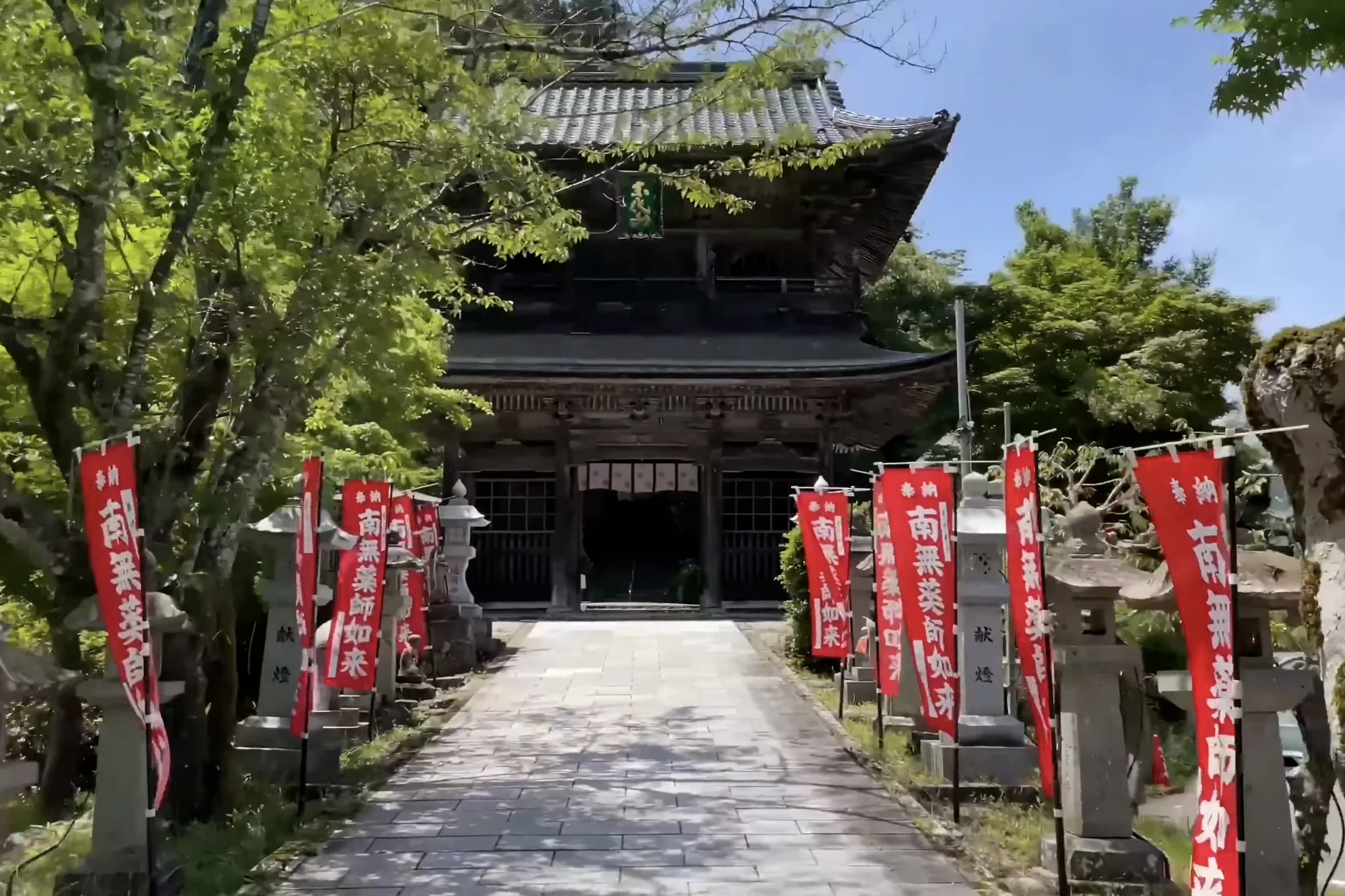
Two stories, both published by the town: a monk's thousand days in 717, and a stork that healed first.

The Town and Its Baths
Etiquette
Wash before you get in, keep the small towel out of the water, and nobody will look at you twice.
The Town and Its Baths
Crab season
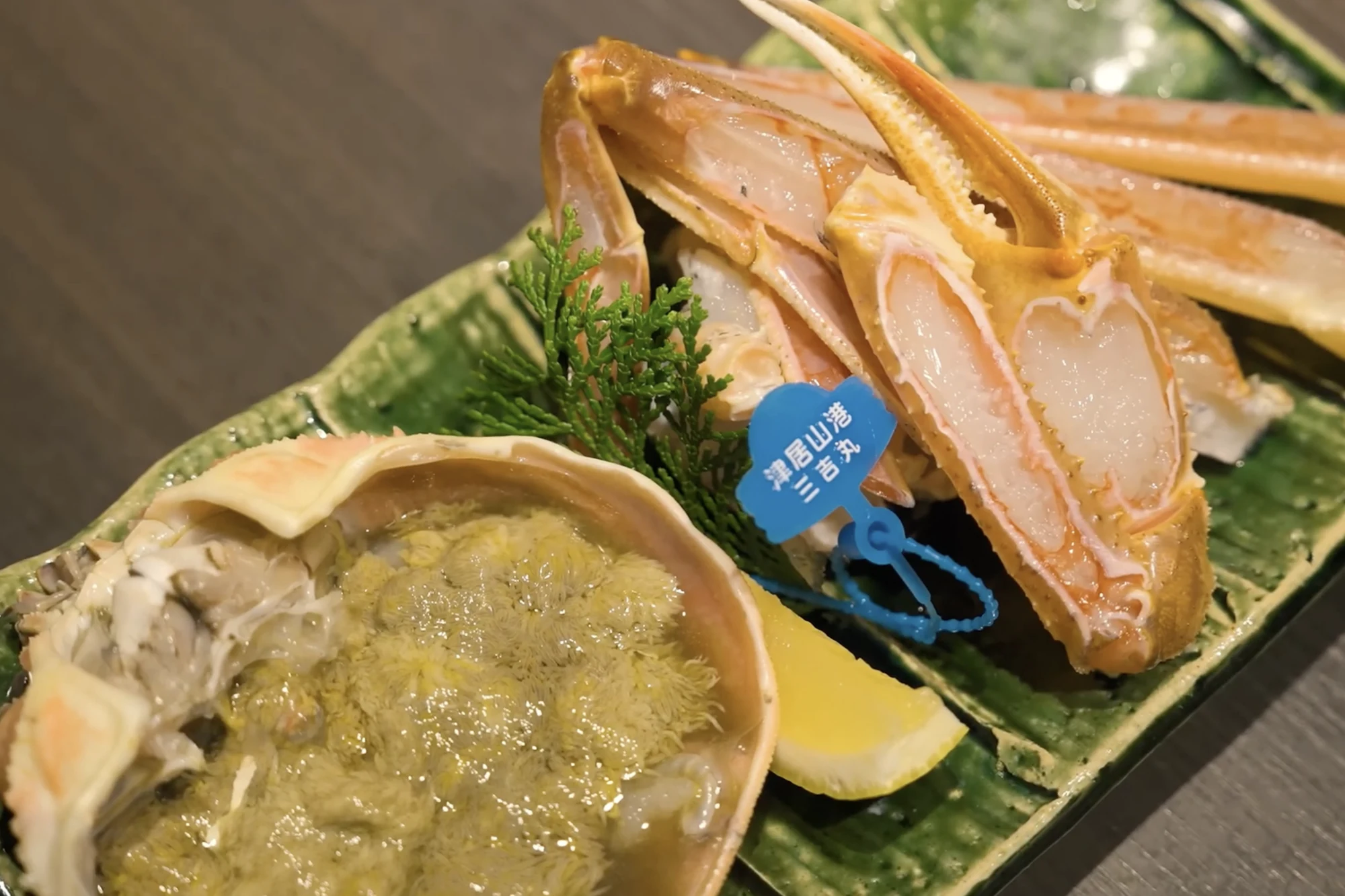
Matsuba crab season opens on November 6 and runs to March. It is why winter rooms disappear early.