Some towns need a transport chapter. Kinosaki needs a paragraph and a mental map, which is what this page provides, along with the arrival logistics that smooth the first thirty minutes. The town's greatest infrastructural feature is the absence of any required infrastructure: from the moment the limited express doors open, every bath, inn, and dinner in Kinosaki is reachable in wooden sandals. Hold one number through everything below: fifteen. Fifteen minutes is the farthest bathhouse, the longest luggage errand and the outer edge of any in-town walk — which means every logistics decision in Kinosaki is reversible within a quarter hour, and none deserves the planning weight travellers arrive carrying. This page exists mostly to give you permission to stop optimising a solved problem. It also quietly serves the "kinosaki map" searcher: the mental-map section below IS the map, delivered in prose, its landmarks ordered exactly as the street itself will deliver them — read it once on the train and the town arrives pre-labelled, no pins, no app, no phone signal required at any point between the arrival platform and the farthest bathhouse door.
Arriving: the station itself
Kinosaki Onsen Station is a small, single-purpose terminus of a station on the JR San'in line, served by the limited expresses from Osaka and Kyoto (the routes have their own step-by-step guides) and by local trains along the coast. Exit once and you're facing the town; there is no wrong door to choose and no transfer to negotiate. ⚠️ (station layout, gate count) What's at hand on arrival:
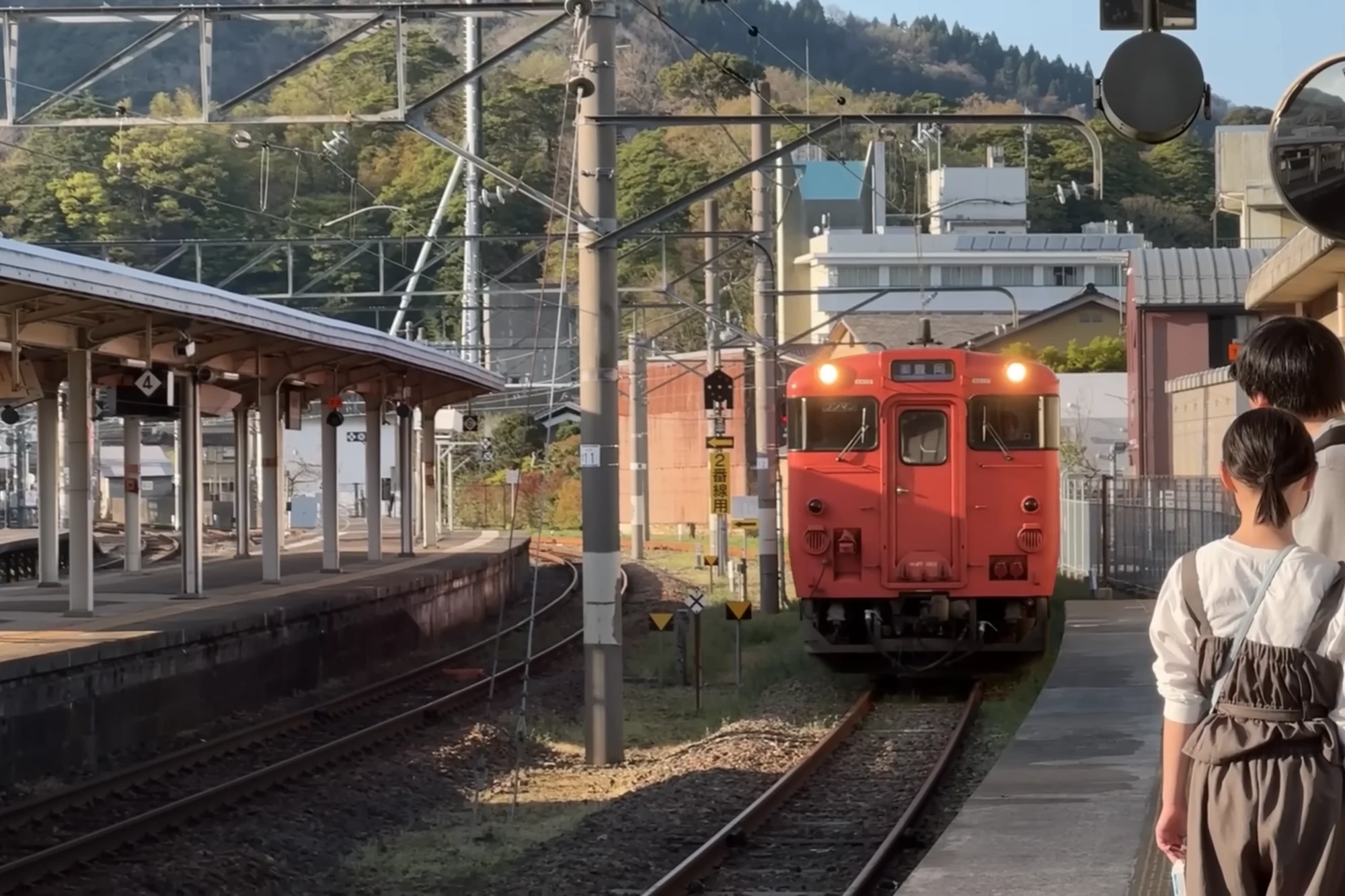
Local services run the last stretch of the line; the limited expresses go straight through to the terminus.
Reserved seats are sold at the counter and at the machine beside it; both take cards.
Three minutes on foot from this board to the first bathhouse.
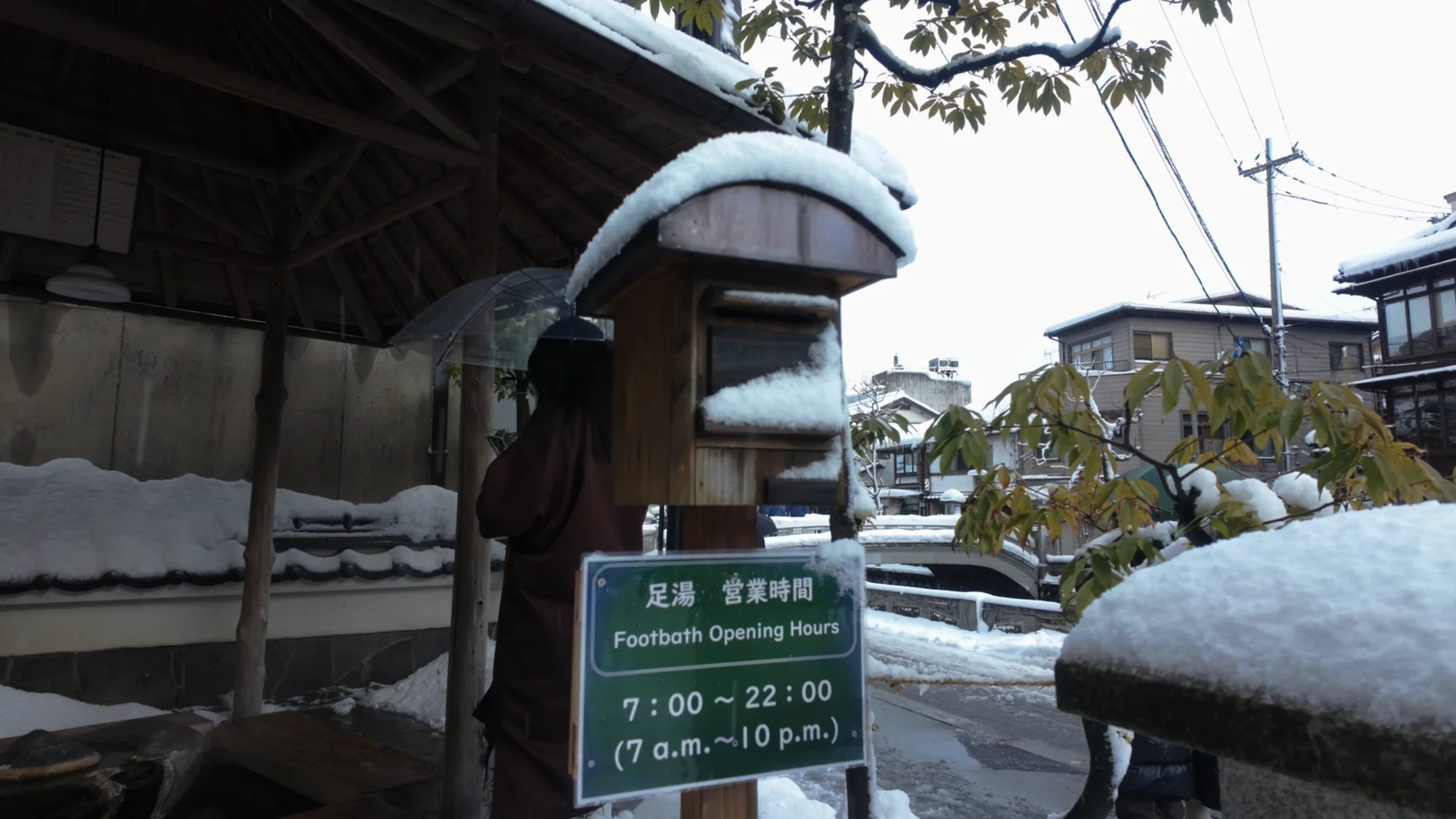
The footbath runs 7am to 10pm and costs nothing.
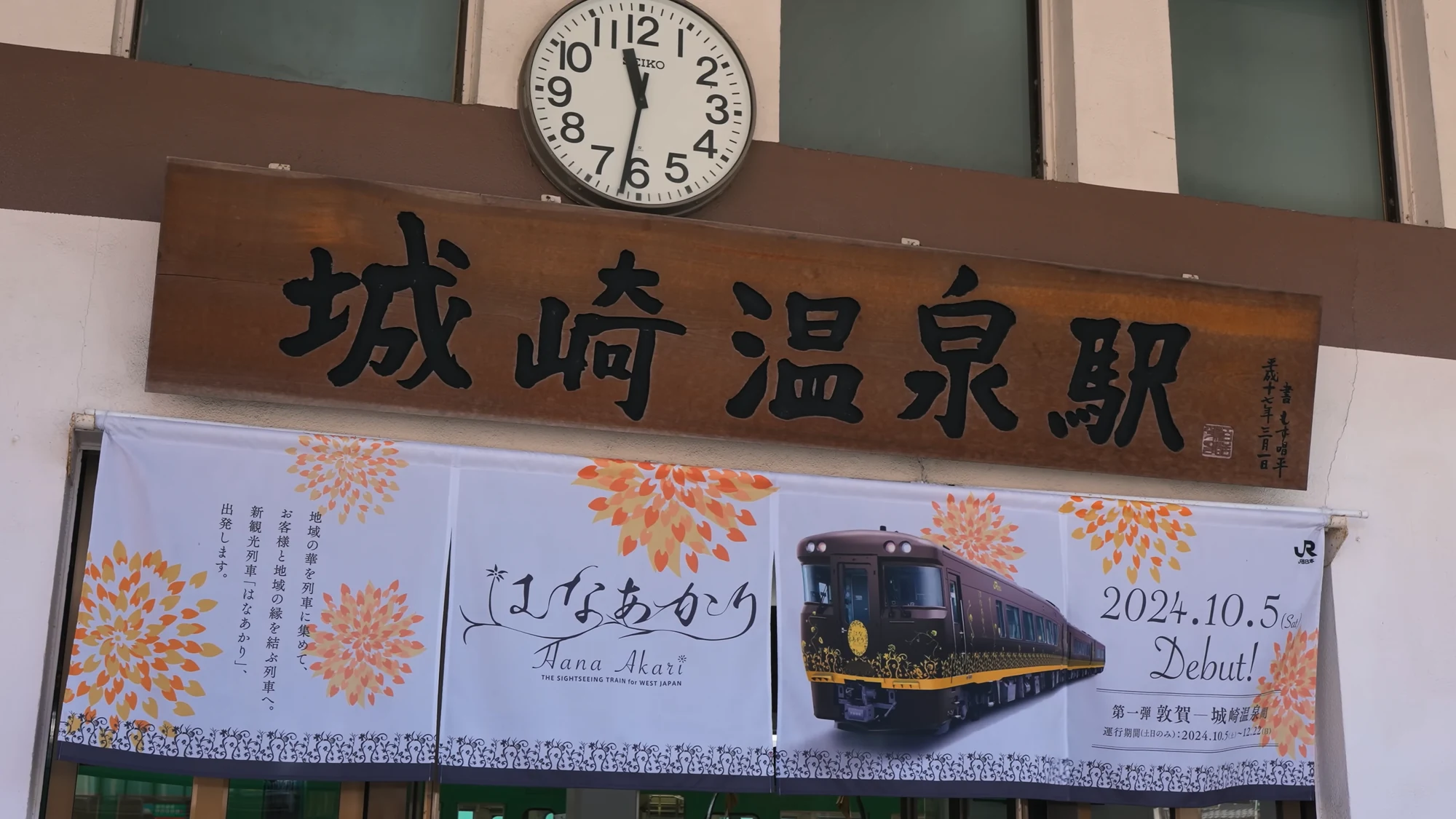
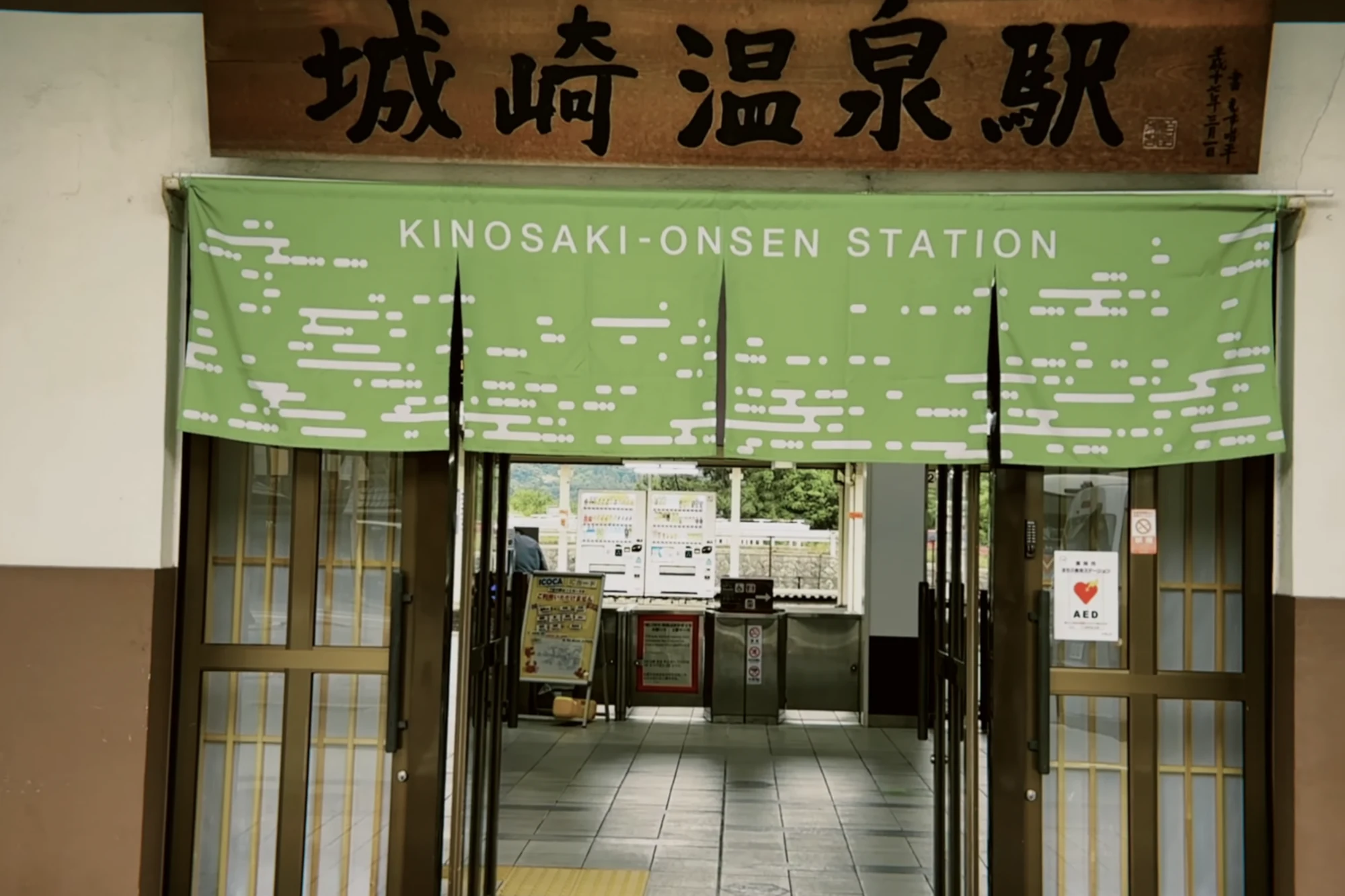
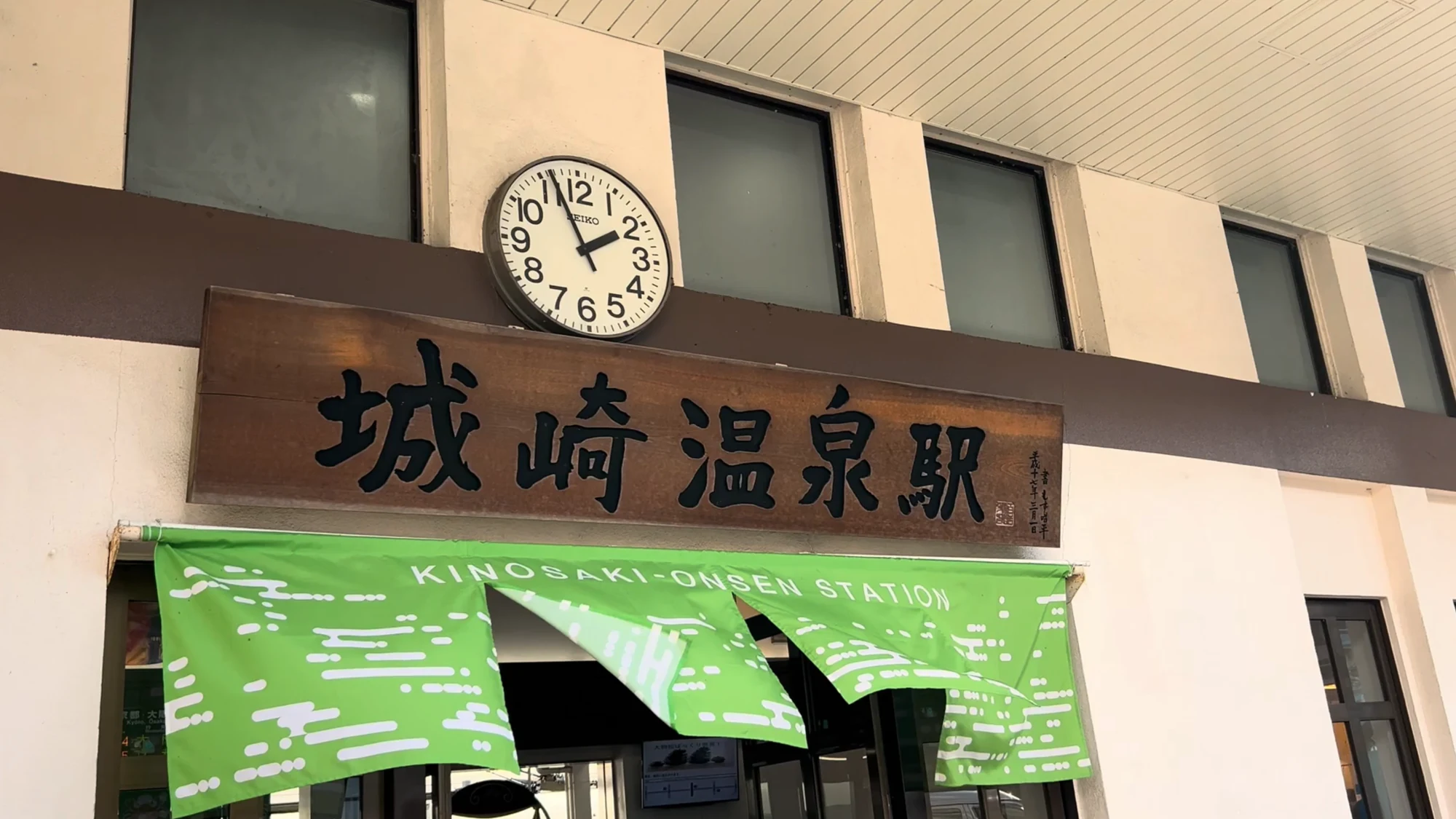
The sign is carved rather than printed — the town's first statement that you have arrived somewhere specific.
Coin lockers at the station and at the tourist center nearby, in standard sizes; large suitcases can outgrow them on busy days. ⚠️
SOZORO, the tourist information office, steps from the station: English-supported town information, bus tickets for the regional Zentan routes, per-piece luggage storage (around ¥500, about US$3.50 ⚠️), and bicycle rental by the hour or day. ⚠️ (hours ≈ 9:30–17:45; confirm)
A free foot bath beside the station-front bathhouse, where arriving and departing travelers soak shins on the bench while waiting for trains. It makes a better waiting room than the waiting room.
Taxis at a small forecourt rank, useful mainly for Marine World, Genbudo, or a rainy-night inn run; supply is modest, so ask your inn to call one rather than assuming the rank is stocked. ⚠️
Most ryokan will also collect luggage from the station or offer pickup if asked in advance ⚠️ (practice varies by inn); with the storage options above, the practical advice is simpler: drop the bags within two minutes of arriving, by whichever method, and enter the town unencumbered. The arrival order that works: bags first, fountain second, town third — thirty seconds at the drinking fountain (its own section below makes the case) and then up the station street with both hands free.
The mental map: one street, seven baths
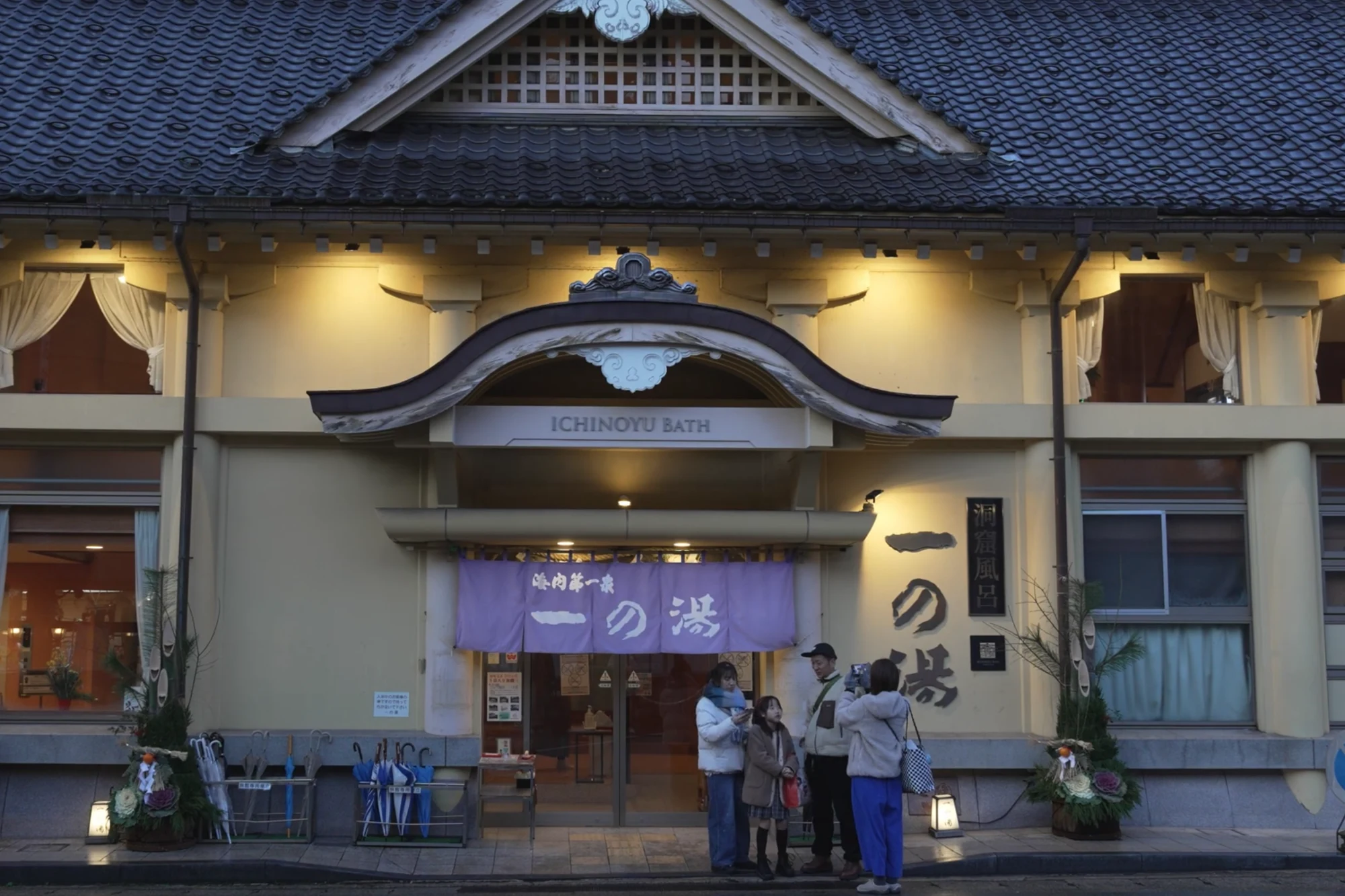
Picture Kinosaki as a single axis running from the station northwest into the mountains, with the willow-lined canal as its spine. Walking order, station first: 1. Satono-yu, the bathhouse adjoining the station itself — ⚠️ closed since April 2024; when it reopens, your first or last soak of the trip. Note the town count reads 7 sotoyu, 2 currently closed (Satono-yu here; Kou-no-yu at the far end). 2. The station street, two blocks of shops and restaurants leading to the canal. 3. The canal proper, where the willows, stone bridges, and photographs begin; Jizō-yu stands near this junction. ⚠️ (bathhouse order) 4. The mid-town stretch, densest with ryokan, snack counters, and sake shops: Yanagi-yu and Ichino-yu along it, with the Kiyamachi back lane running parallel one street over. 5. The upper town, quieter with each block: Gosho-no-yu beside the shrine, then Mandara-yu up its side lane. 6. The far end, where Kō-no-yu, the town's oldest spring by legend ⚠️ (🚨 closed for renovation works, reopening expected November 2026 — admire the exterior), sits near the ropeway base station and Onsen-ji's stairs, roughly 1 km (0.6 mi), about 15 minutes on foot, from the station. That is the entire town. A first-evening strategy falls out of the geography: walk the full axis once before choosing your baths, which takes twenty minutes and orients everything else you'll do. The map's practical corollary: your inn's position on the axis determines your default morning bath more than any ranking does — station-end guests wake nearest Jizō-yu once past the canal junction, mid-towners to Ichi-no-yu, west-enders to Goshono-yu — and the smart circuit works outward from wherever you sleep rather than marching the axis in order. Geography, not connoisseurship, should pick the 7:00 house; they share the same water anyway.
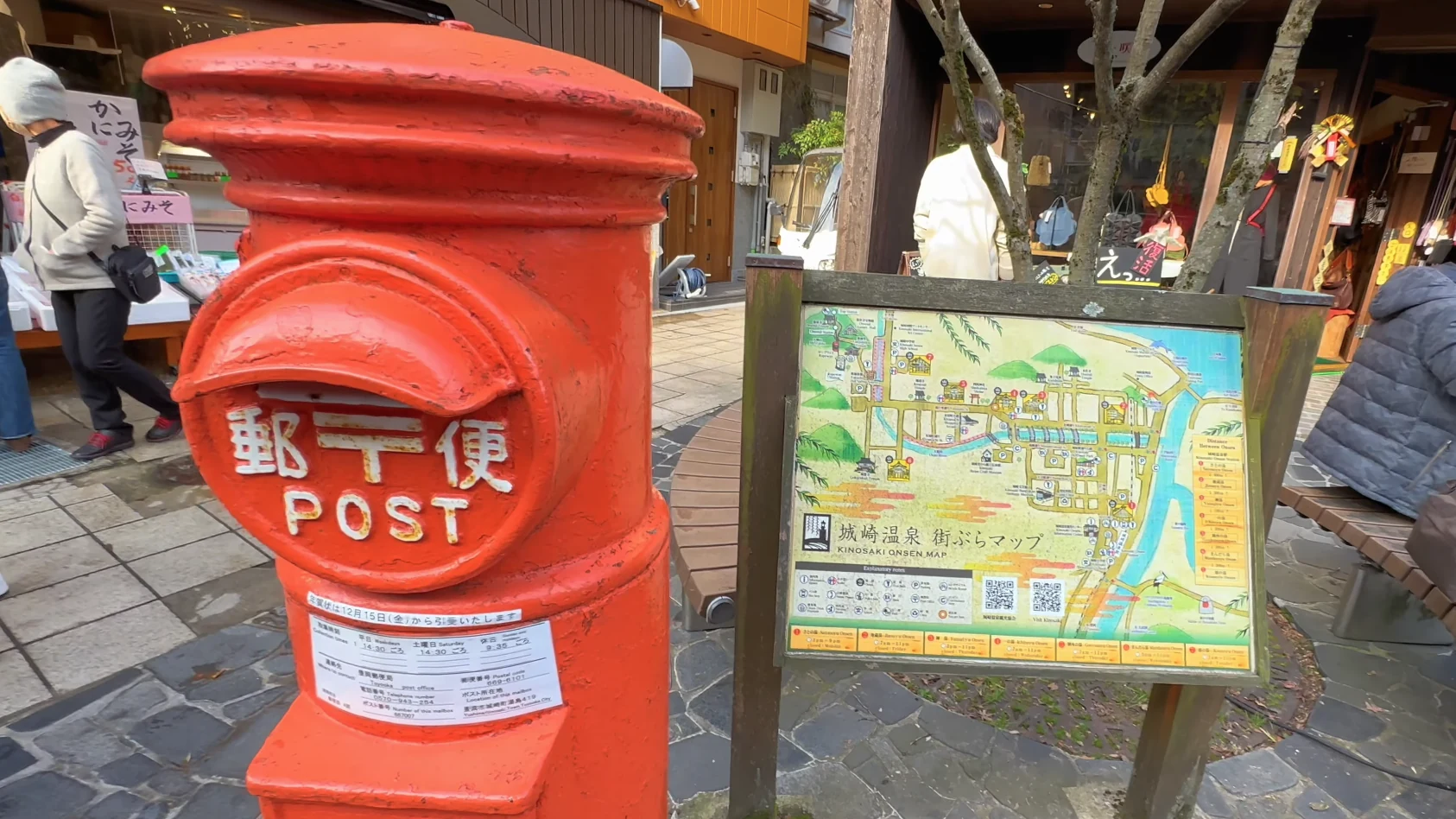
The map boards repeat every few hundred metres, which is why nobody here carries a phone out.
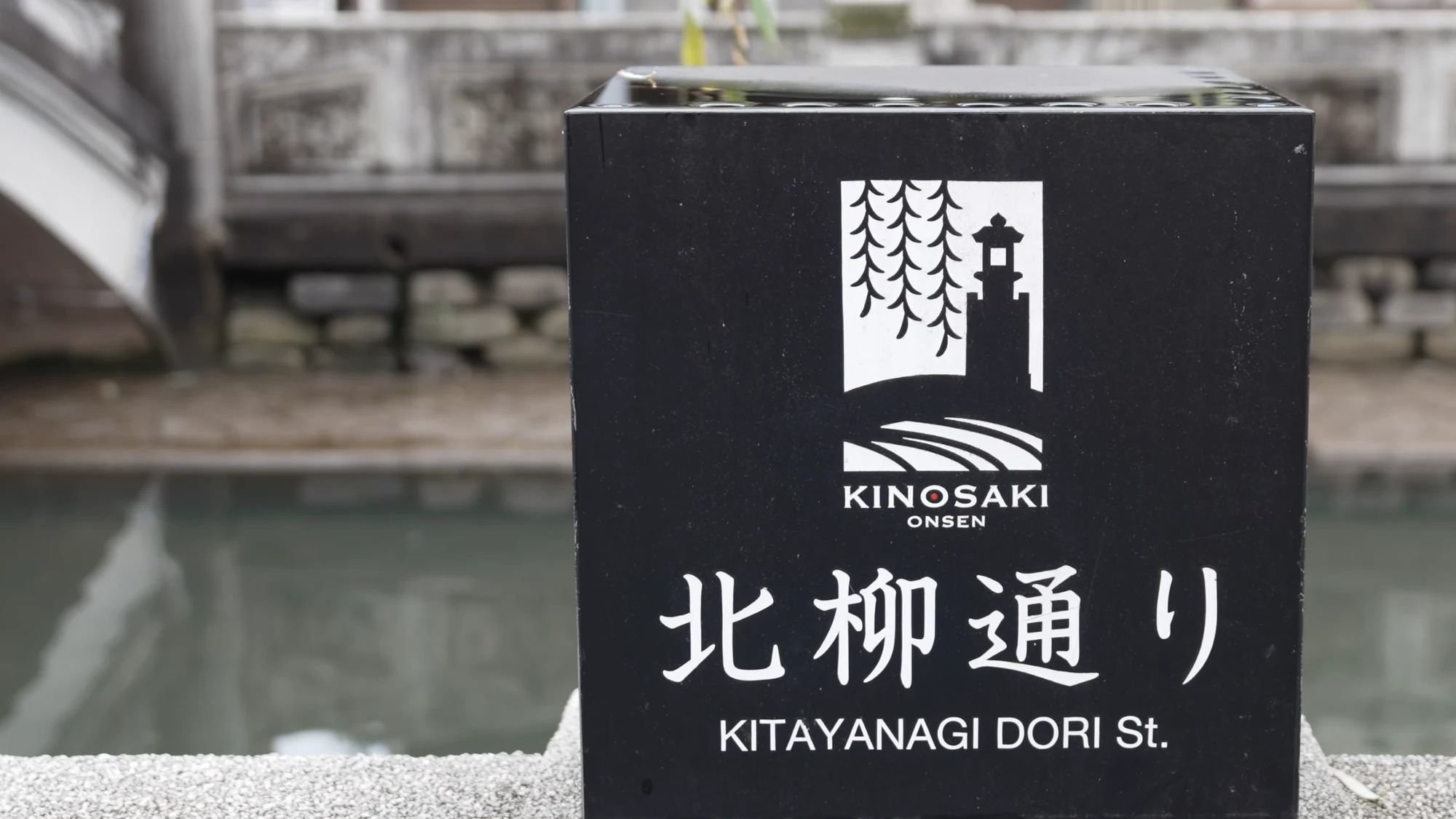
The two parallel lanes are Kitayanagi along the canal and Kiyamachi one block back.
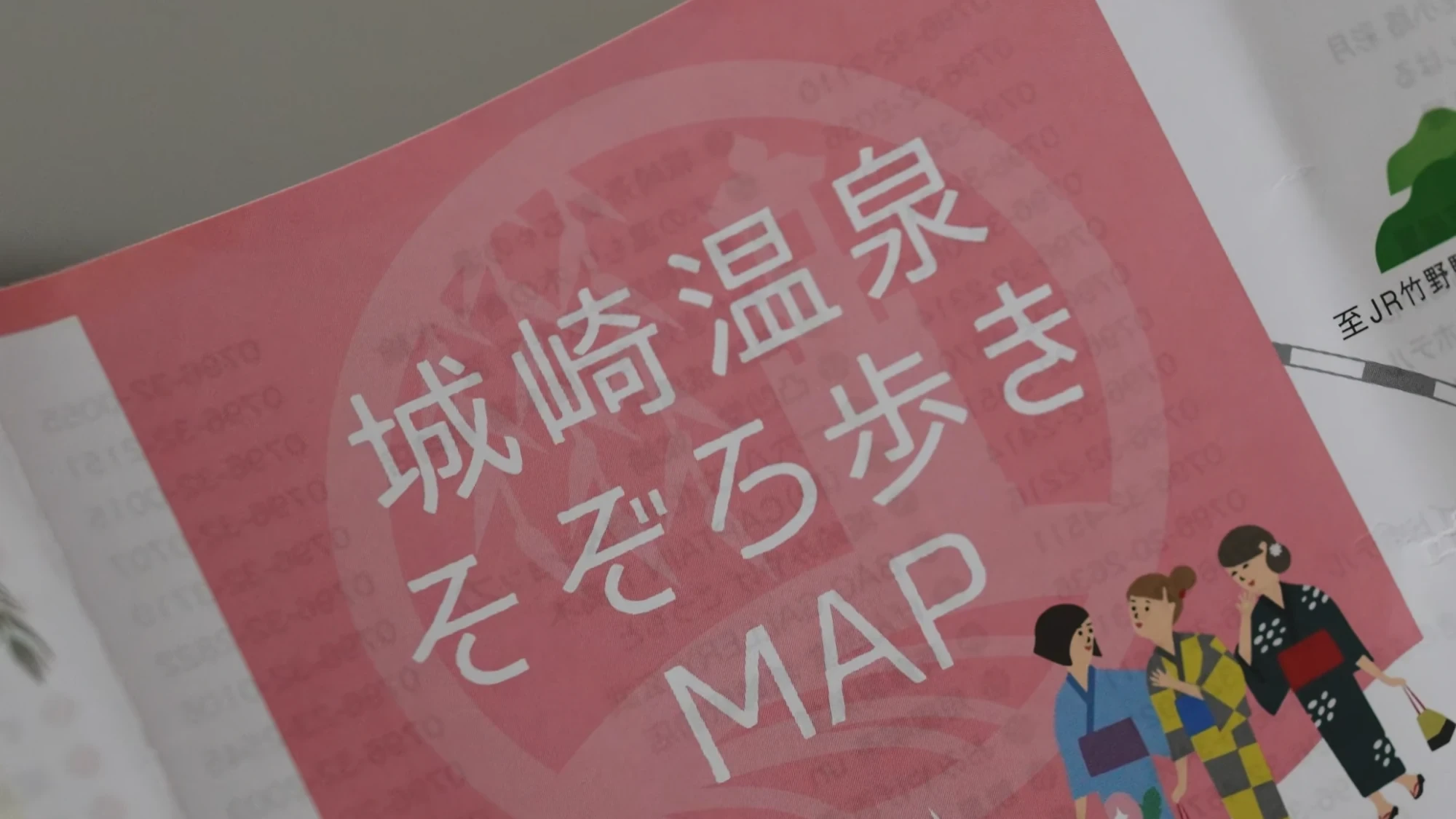
The map is free at the tourist centre by the station and is the only navigation anyone needs.
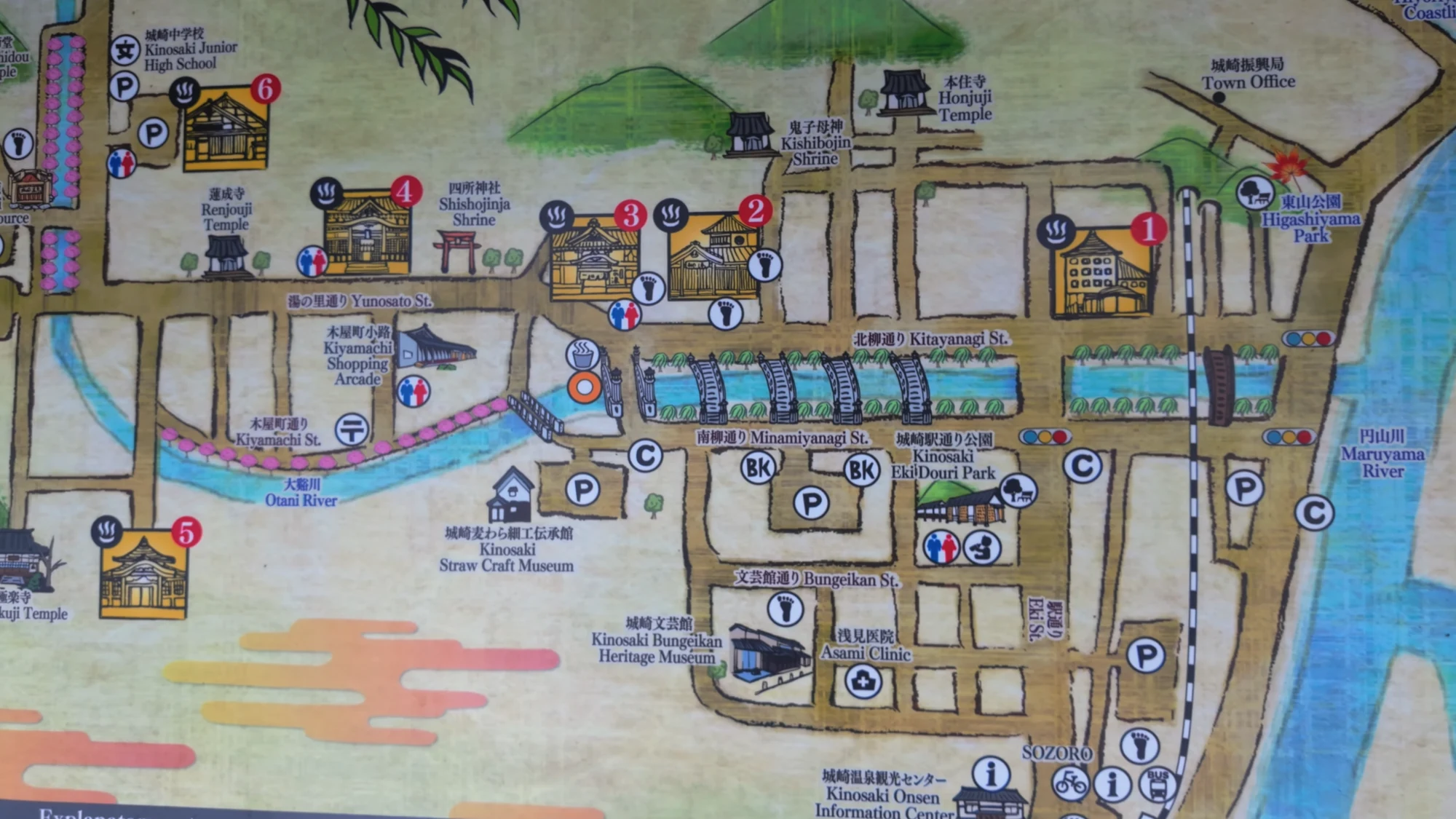
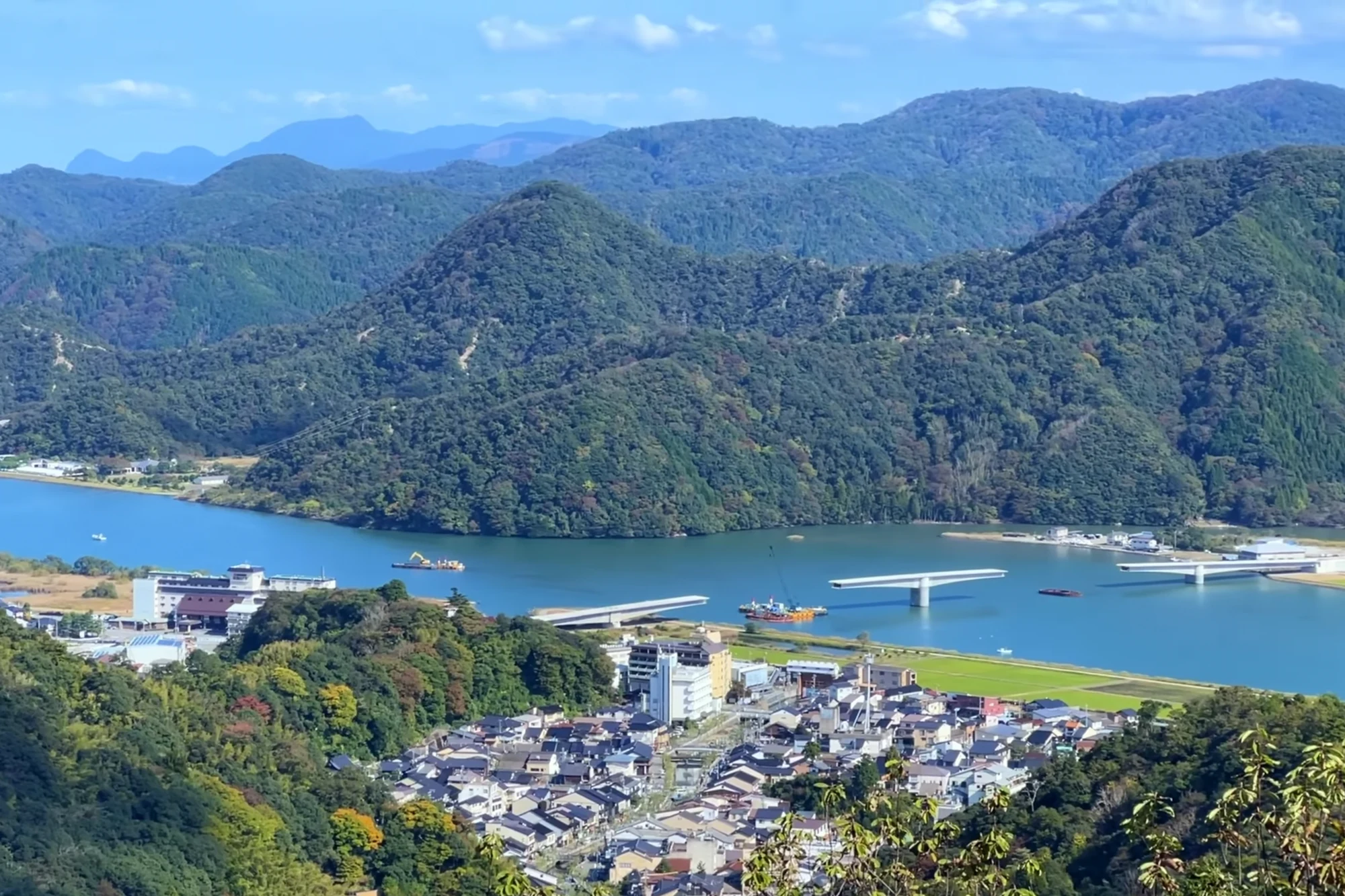
One street, one canal, seven bathhouses. The whole visitor town is a flat kilometre (0.6 mi).
Getting around: feet, geta, and two exceptions
Walking is the transport system, and the town is engineered for it: flat, compact, lit at night, and populated after dark almost entirely by people in yukata doing exactly what you're doing. Geta take a block to learn and forgiveness is universal. Distances stay so short that "getting around" mostly means deciding which bridge to cross next. Two exceptions justify wheels:
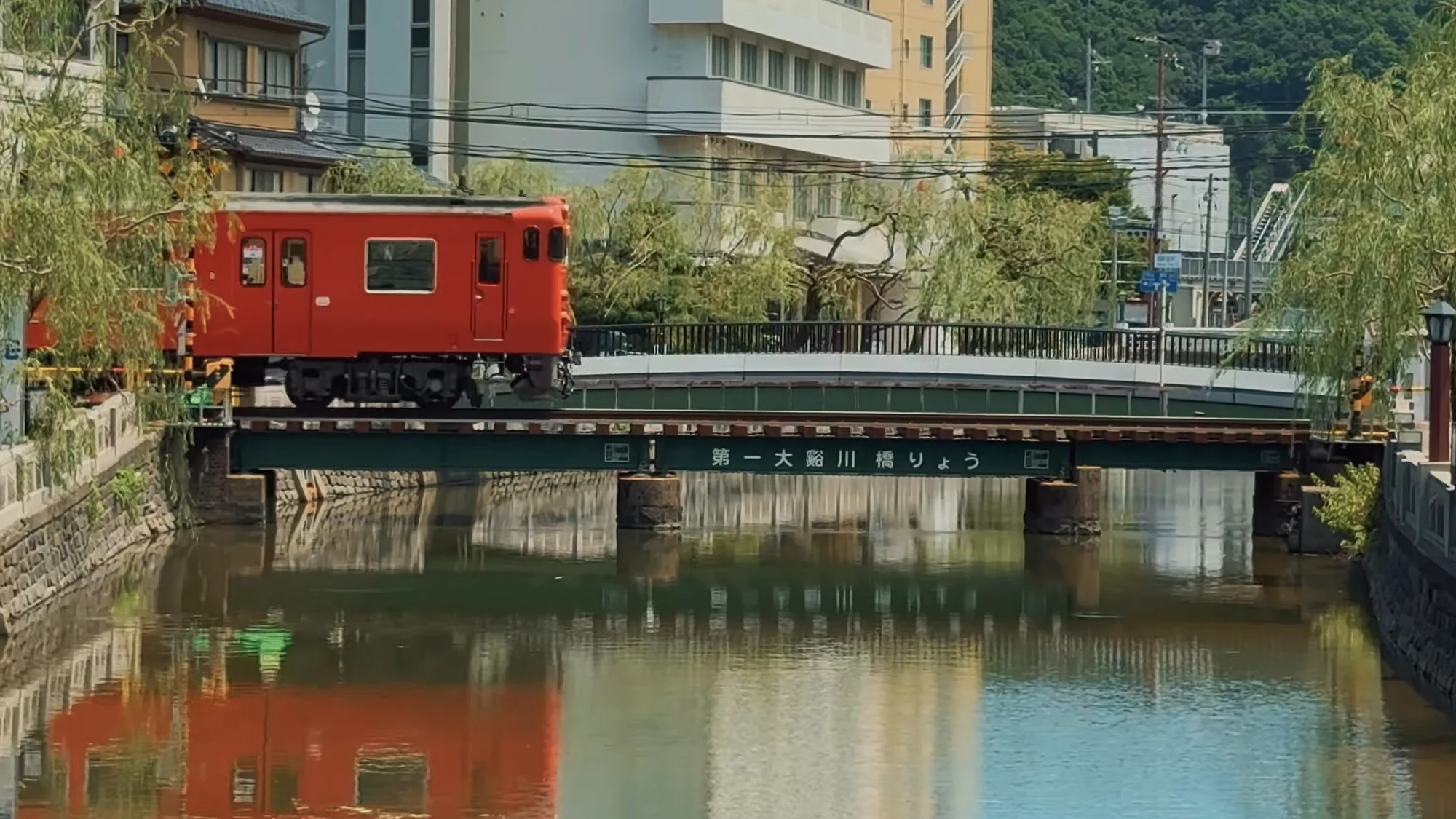
The two exceptions to walking are the ropeway and the coast bus; everything else is on foot.
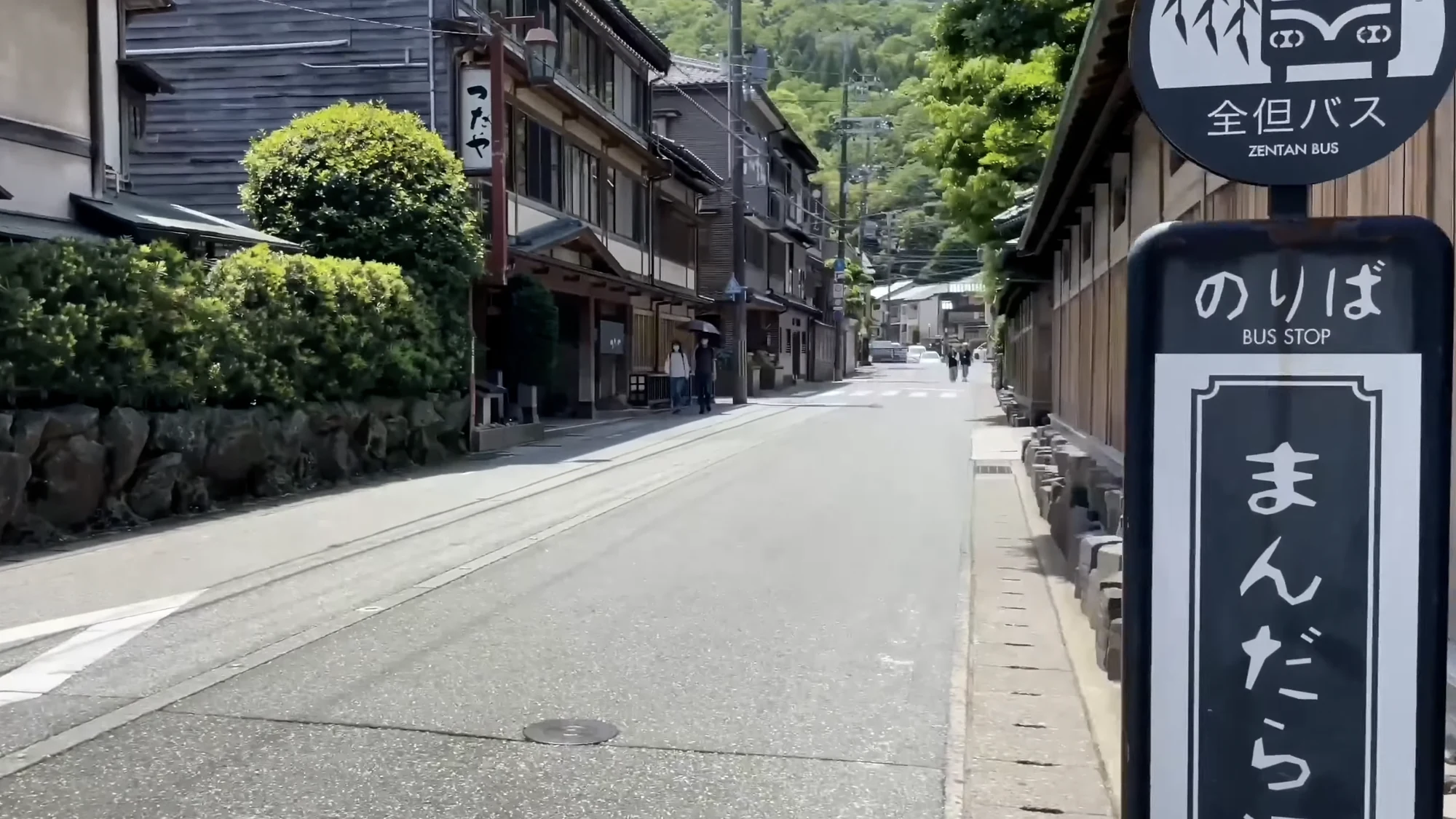
Local buses run the length of town, though almost nobody needs them.
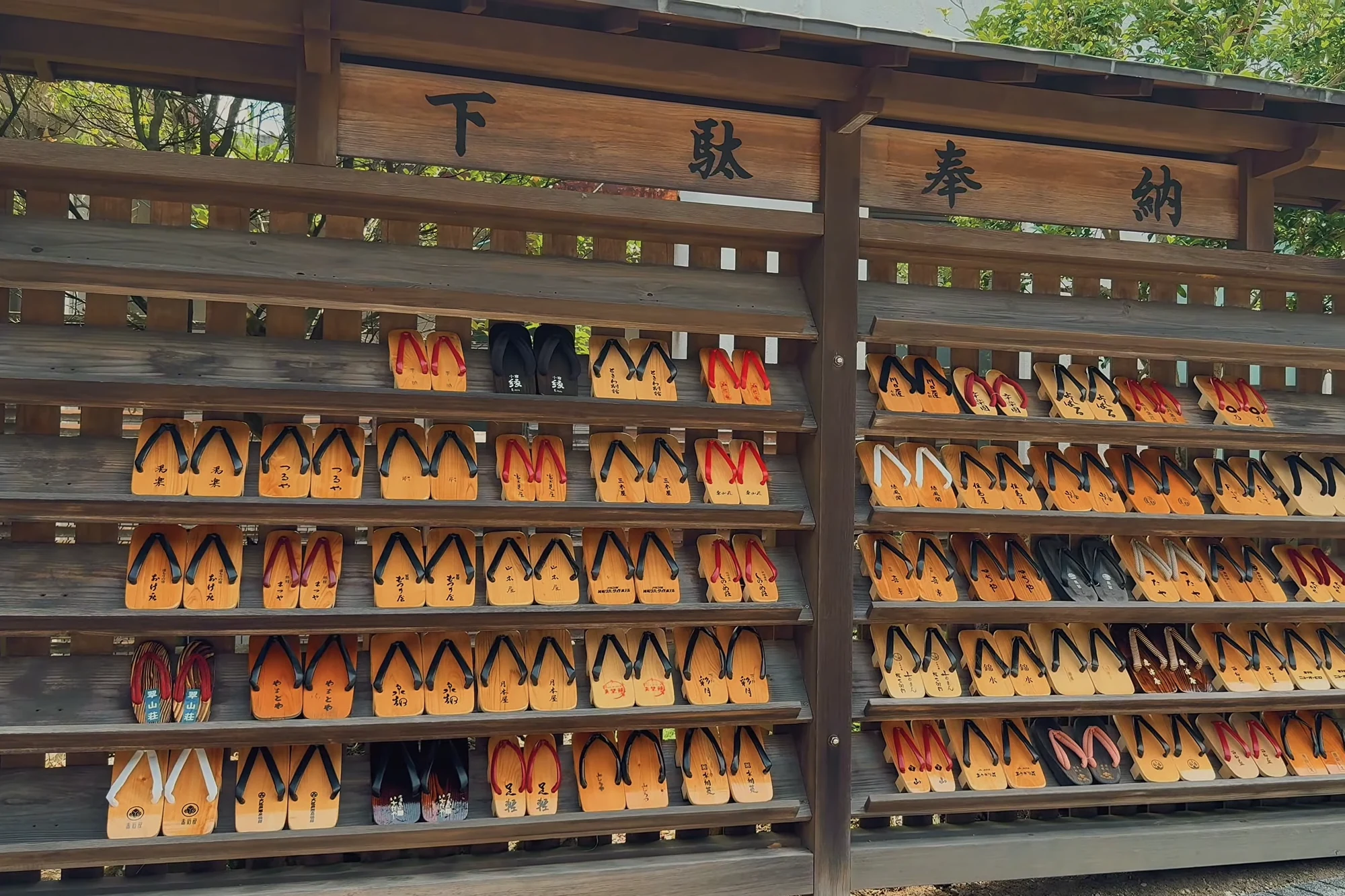
The transport system is a pair of wooden sandals. The two exceptions are the ropeway and the bus to the coast.
Bicycles, rented at the tourist office by the hour ⚠️, suit the flat river-delta countryside: the ride out toward Genbudo along the Maruyama River is the local favorite, about 30–40 minutes each way on quiet roads. ⚠️ In-town cycling adds little; the pleasure is beyond the last bridge.
Buses and taxis cover the coastal attractions: Zentan buses from the station forecourt reach Kinosaki Marine World in about ten minutes ⚠️, and regional routes connect toward Toyooka for the Izushi day trip. Timetables are posted and thin; photograph the return times.
Drivers, for completeness: the town discourages through-traffic in its core, parking belongs to your inn or the pay lots near the station ⚠️, and the correct move on arrival is to park once and rejoin the pedestrian economy. Winter drivers should read the winter guide's road cautions first. Night navigation deserves a sentence of reassurance: the axis is lantern-lit end to end, the bathhouses glow like landmarks, and the town's after-dark population is overwhelmingly fellow guests in yukata doing loops of the same kilometre. Solo travellers and families report the same thing — this is among the easiest places in Japan to wander at 22:00 without a single navigational or safety thought. The canal rail is the only edge worth minding, and mostly for phones.
Accessibility notes
Kinosaki is one of the more manageable traditional towns for limited mobility: flat throughout, curb-cut along the main routes ⚠️, with the station, canal, and several bathhouses in a tight radius. The bathhouses themselves vary in interior steps and tub access ⚠️, and the ropeway and Onsen-ji stairs are the exceptions to the flatness. Travelers with specific needs should ask their inn, which will know each bathhouse's current interior layout better than any website. Two structural notes strengthen the picture. Kinosaki is among the rare traditional towns where the signature experience itself — not just the streets — is partially accessible, because the sotoyu are ground-level civic buildings rather than mountainside baths, and the flat kilometre means a wheelchair or stroller covers the same axis as the geta. The pass system helps in a quieter way too: with several interchangeable houses, a traveller who finds one bathhouse's interior difficult simply walks four minutes to the next, an option no single-bath resort can offer. (The station itself is compact and step-managed; confirm elevator status for the platform if it matters to your party. ⚠️) For planning purposes the honest summary is a split verdict: the TOWN is among traditional Japan's most accessible — flat, short, interchangeable destinations — while the individual bathhouse interiors remain the variable, which is why the ask-your-inn advice is genuine guidance rather than a disclaimer. Send mobility needs in writing at booking, like the dietary ones, and the inn will route you to the houses that currently work best.
Departure day, done well
Checkout, bags to the station storage or your inn's hold, and two hours of town remain yours: a final soak (at Satono-yu beside the platforms once it reopens (closed since April 2024) — meanwhile Jizo-yu, two blocks up, holds the honor), a foot bath while the express rolls in, and the neat symmetry of leaving Kinosaki the way it received you, warm and slightly too relaxed for the seat reservation ahead. Two departure details complete the symmetry. The pass runs to 13:00 (1 pm) at most inns, so the final soak is not a stolen luxury but the system's designed last act — check out, bags at the desk, bathe, and collect the bags on the way to the platform. Build the fare correctly into the day's arithmetic: about ¥6,140 (about US$41) reserved-seat back to Osaka, reserved early in crab season when the afternoon expresses fill with checkouts. Souvenir logistics close the loop: the straw-craft box travels flat and light, the crab does not travel at all (eat it here; the markets will ship domestically but not abroad ⚠️), and the sake shops sell padded bottles for the suitcase. Buy on departure morning rather than mid-stay and nothing rides the bath circuit in a tote bag — the shops open in time, and the choosing is better done with a night's experience of the town behind you anyway.
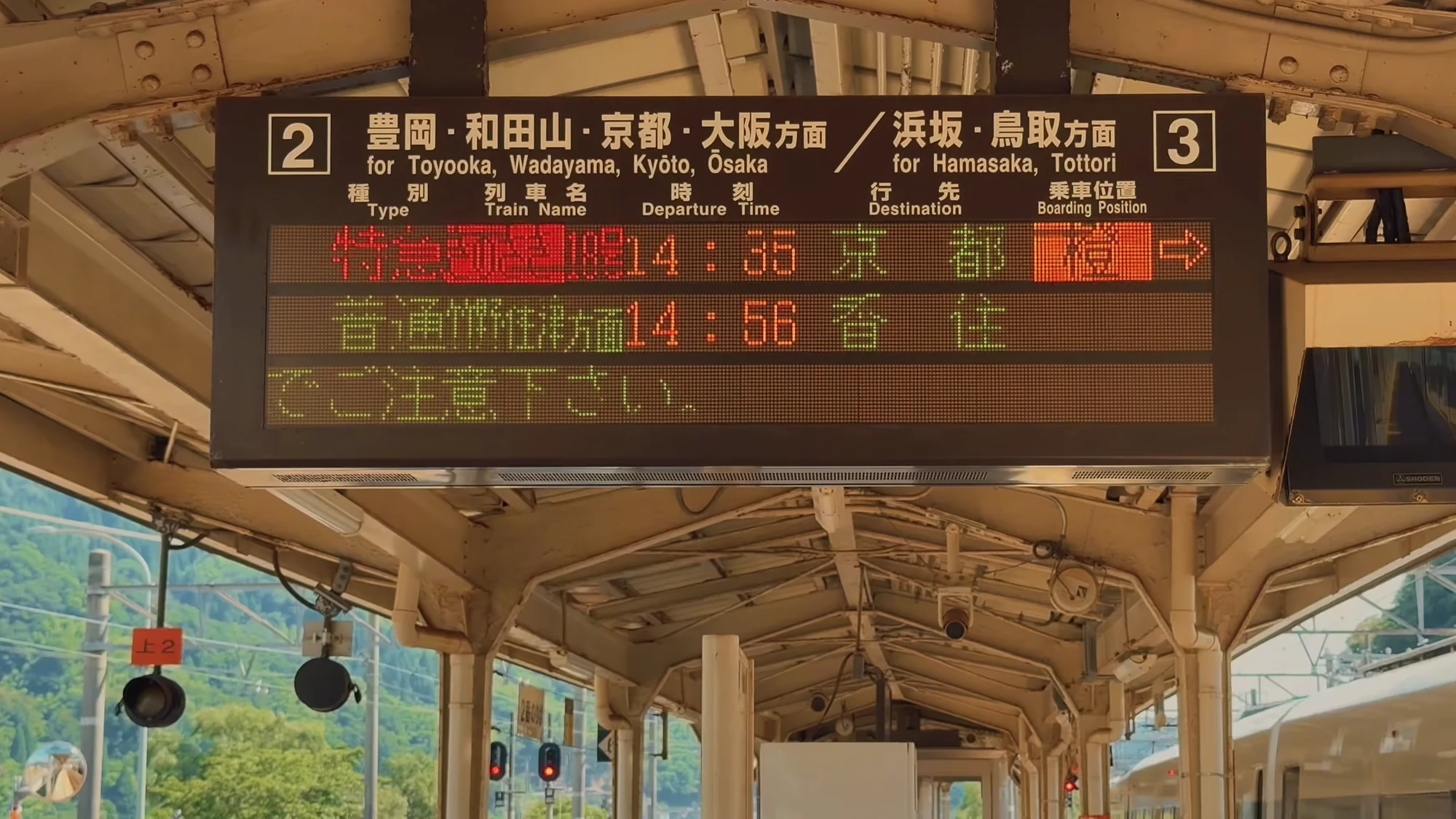
Platform 2 runs south to Kyoto and Osaka, platform 3 west along the coast to Tottori.
The fountain at the door: drink the town before you bathe in it
The station forecourt holds the town's best introduction, and most arrivals wheel their luggage straight past it: a 飲泉所 (insenjo, drinking fountain) serving the same municipal spring the seven bathhouses share, at source temperature of roughly 57°C (135°F). Cup a hand, taste the mineral heat, and you have met Kinosaki's actual product — one water, drunk here, bathed in everywhere — before you have met your inn. It is the rare destination whose headline attraction can be sampled thirty seconds off the train, for nothing. The fountain is one of three, and the trio makes a deliberate micro-walk: station front, the Ō-bashi bridge beside Ichi-no-yu mid-town, and Yakushi Park below the temple at the far end — the town's axis marked out in drinkable water. The city publishes an actual dosage register: 100–150 ml (3–5 fl oz) per serving, up to 200–500 ml (7–17 fl oz) a day, ideally about thirty minutes before a meal; children under 15 only with a doctor's guidance, and carrying water home is prohibited. The listed traditional indications — atrophic gastritis, constipation — belong to the balneological register and are not medical advice; the travel indication is simpler: it tastes like the town smells, warm and faintly mineral, and no other souvenir is this direct. Since December 2023 the same one-water story is posted on doors around town as the 城崎温泉天然温泉配湯の証, the certificate facilities display when they use the genuine municipal spring — worth a glance as you walk, because it converts the marketing phrase "real onsen town" into checkable paperwork. Between the fountains and the certificates, Kinosaki is unusually generous with proof: the water is the claim, the claim is posted, and the tap is public. Drink at arrival, drink before dinner, and let the station fountain be the bookend it wants to be — the first taste on the way in, the last warm mouthful before the train home.
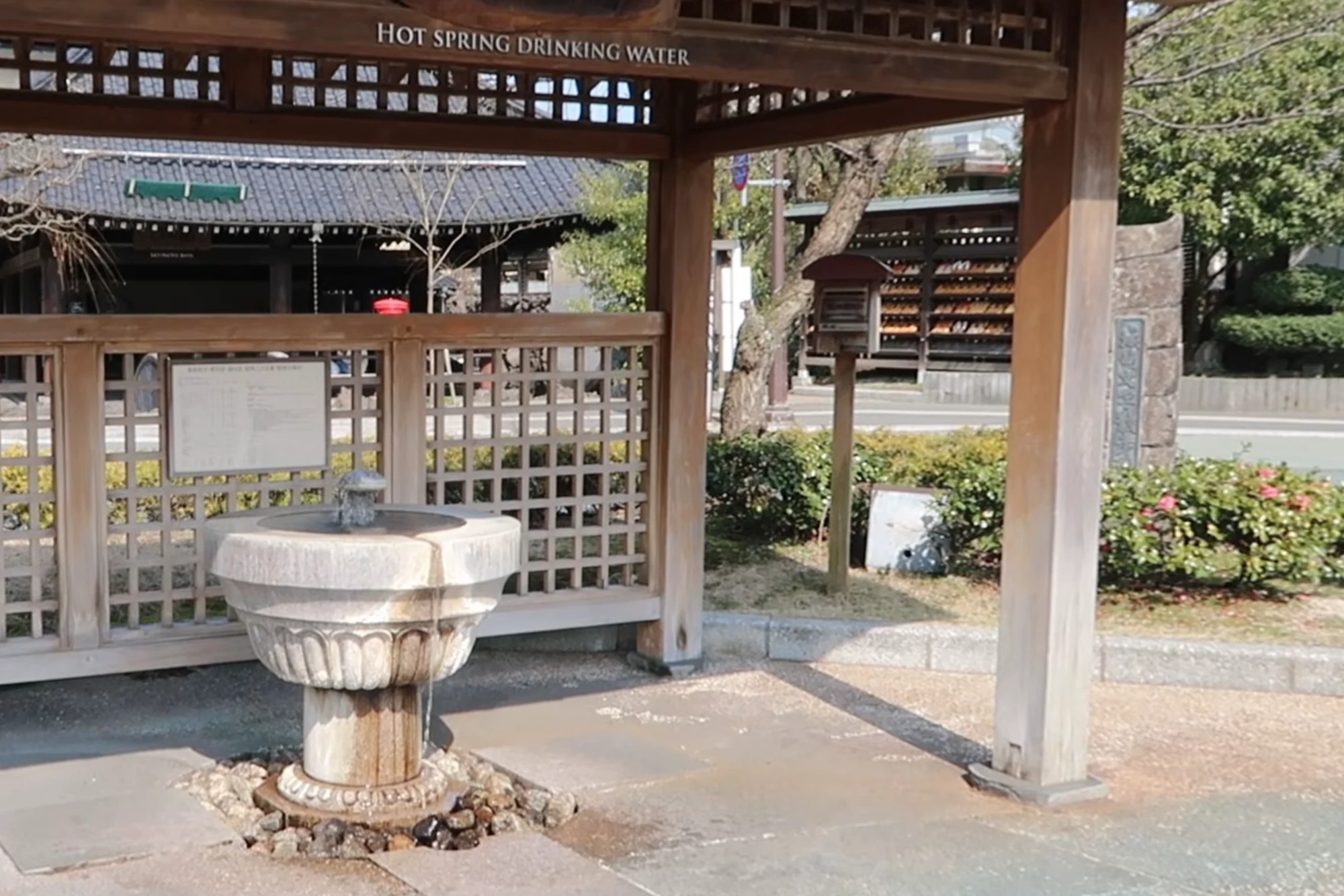
There is a fountain at the station front. Drink the town before you bathe in it.
Tips
Drop the bags within two minutes of arriving — lockers, SOZORO storage, or your inn's pickup — and enter the town unencumbered.
Walk the full axis once before choosing your baths; twenty minutes orients everything.
Ask your inn to call a taxi rather than trusting the small station rank.
The worthwhile bike ride leaves town: the flat river route toward Genbudo, 30–40 minutes each way ⚠️.
Departure day symmetry: final soak beside the platforms, foot bath while the express rolls in.

Verified by The Japan Onsen Society
Show all sources
Drafted July 2, 2026; the drinking-fountain facts, certificate and closures verified September 22, 2026. Primary Japanese sources:
城崎温泉の【飲泉】 — 豊岡市観光公式サイト (Toyooka City Official Tourism Site — the three 飲泉所, ~57°C, dosage register): [https://toyooka-tourism.com/recommend/onsen/kinosaki_insen/](https://toyooka-tourism.com/recommend/onsen/kinosaki_insen/)
外湯 — 城崎温泉観光協会 (Kinosaki Onsen Tourism Association — the 配湯の証 certificate, closures): [https://kinosaki-spa.gr.jp/about/spa/](https://kinosaki-spa.gr.jp/about/spa/)
Related guides
Plan Your Visit
Kinosaki complete guide
Seven public bathhouses, one shared spring, and a law that keeps them the centre of town. Start here.
Plan Your Visit
The 7 bathhouses
Same water in all seven houses. What changes is the room, the story, and the blessing on the door.
Plan Your Visit
Things to do
Beyond the baths: a ropeway, a mountaintop temple, a literary museum and a stretch of wild coast.
Plan Your Visit
Day trips
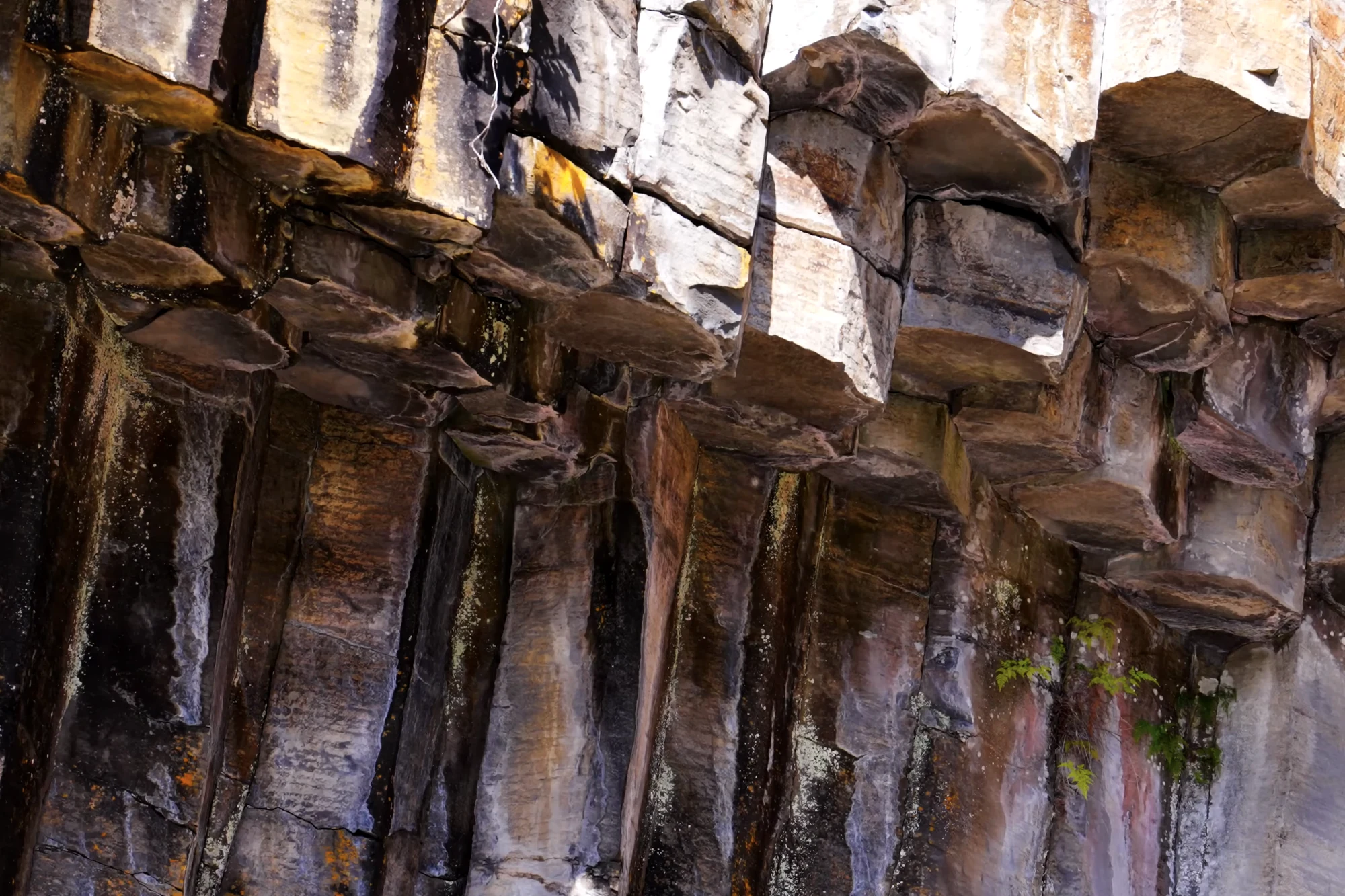
Izushi for soba, Genbudo for basalt caves, Takeno for the sea. All within an hour of the station.