
Seven baths. One yukata.
Kinosaki Onsen
The town is the inn.
The town
Seven public baths, one shared spring, and a law that keeps them the centre of town.
Seven public baths, one shared spring, and a law that keeps them the centre of town.
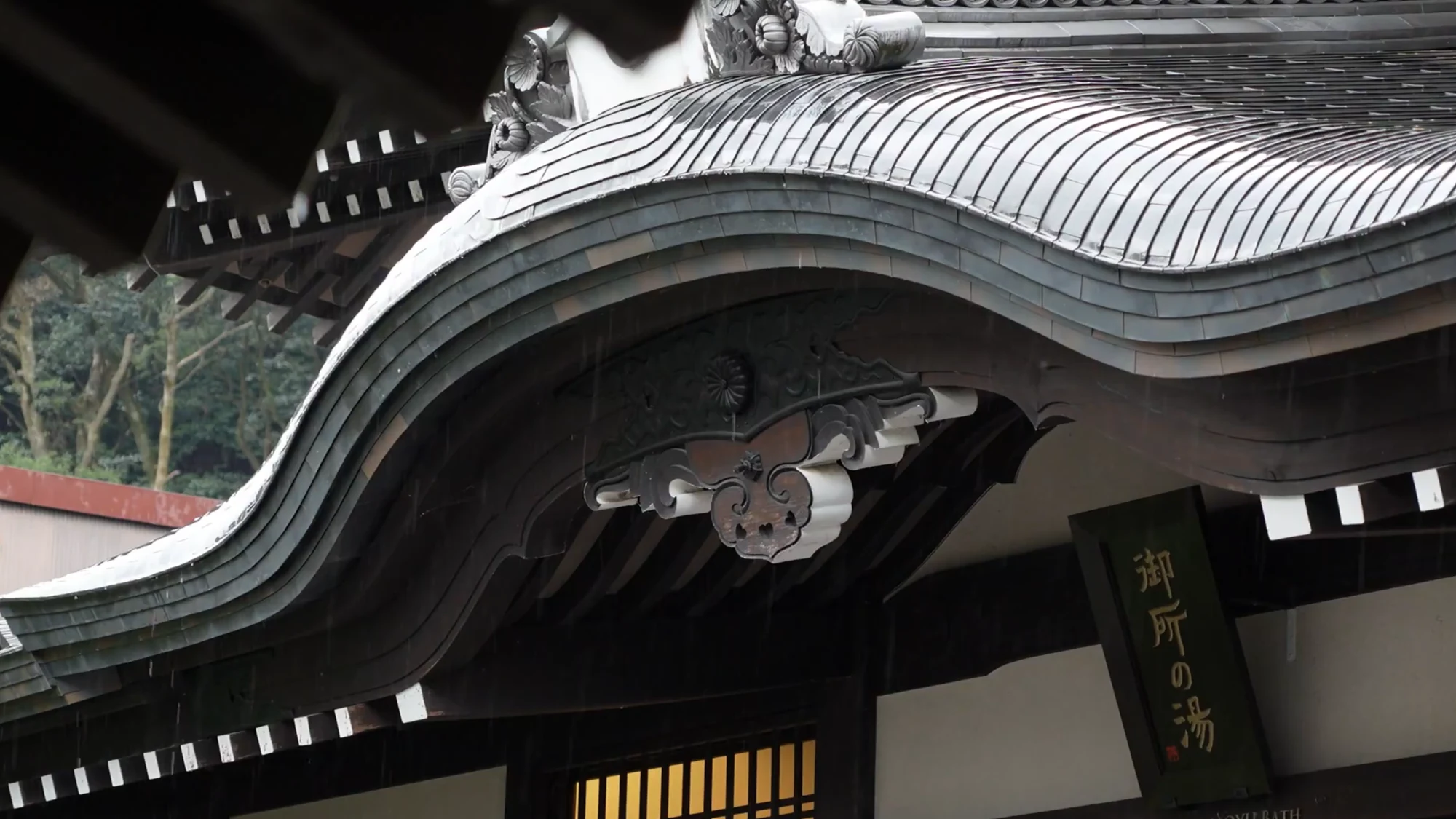
Kinosaki is a town that decided, by ordinance, that its bathhouses belong to everyone. Inns keep their own baths small on purpose. The seven public houses are the destination, and your room key is a pass to all of them.
Kinosaki is a town that decided, by ordinance, that its bathhouses belong to everyone. Inns keep their own baths small on purpose. The seven public houses are the destination, and your room key is a pass to all of them.
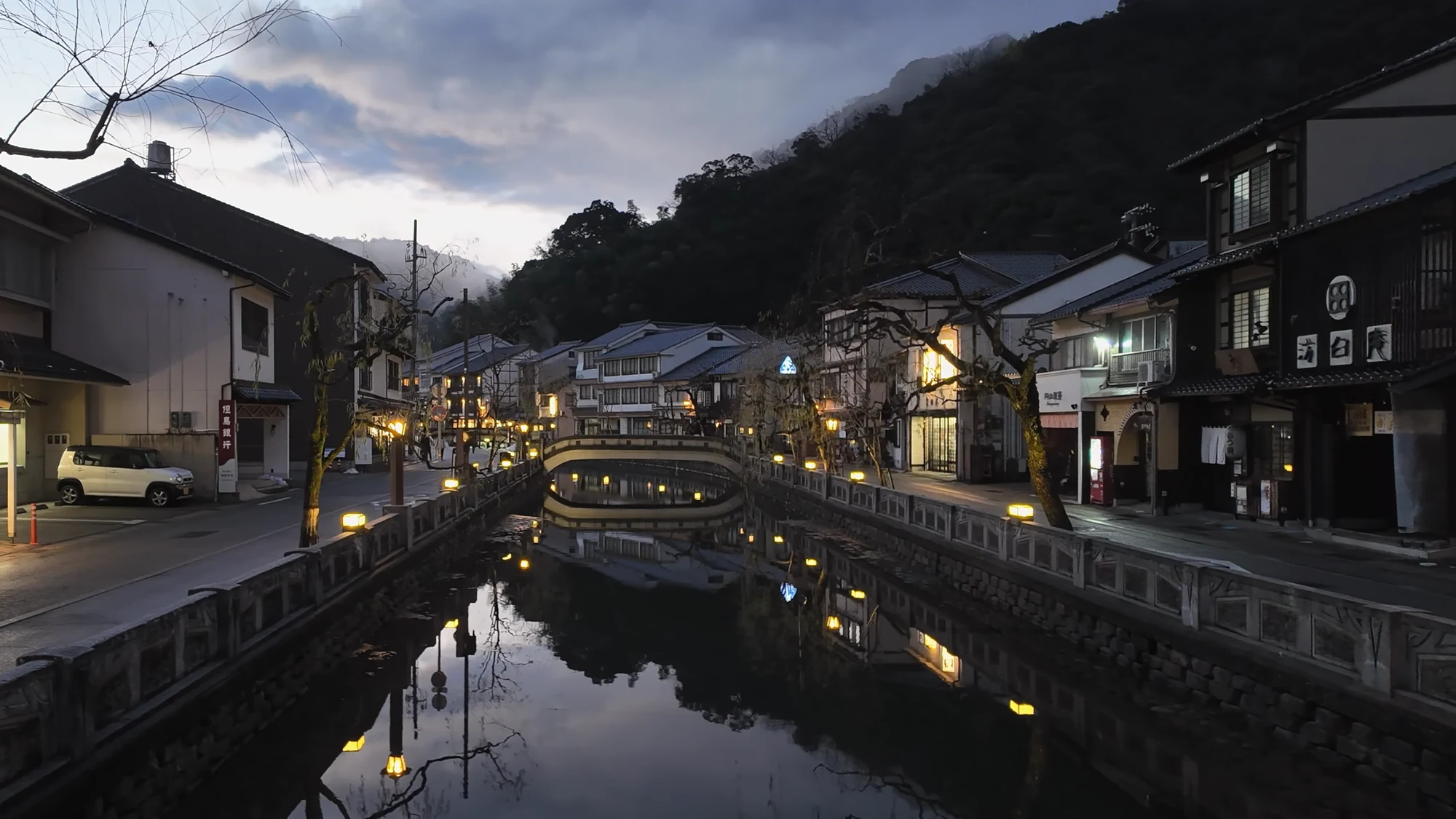
You will be handed a yukata and a pair of geta, and for the rest of your stay that is what you wear — down the willow-lined canal, between baths, to dinner and back. Nobody drives. The whole town is a five-minute walk wide.
You will be handed a yukata and a pair of geta, and for the rest of your stay that is what you wear — down the willow-lined canal, between baths, to dinner and back. Nobody drives. The whole town is a five-minute walk wide.
Why Kinosaki
What makes this town different.
What makes this town different.
The sotoyu system
A local ordinance protects the seven public bathhouses. It is why they still exist.
A local ordinance protects the seven public bathhouses. It is why they still exist.
One shared spring
Sodium-calcium chloride, 63°C at source. The same water in all seven houses.
Sodium-calcium chloride, 63°C at source. The same water in all seven houses.
Matsuba crab
The season opens November 6 and runs to March. It is why winter rooms disappear early.
The season opens November 6 and runs to March. It is why winter rooms disappear early.
Yukata and geta
Your inn dresses you. The clatter of geta on the canal street is the sound of the town.
Your inn dresses you. The clatter of geta on the canal street is the sound of the town.
Three minutes from the platform
Kinosaki-Onsen Station faces the foot of the main street. No transfer, no bus, no taxi needed.
Kinosaki-Onsen Station faces the foot of the main street. No transfer, no bus, no taxi needed.
Literary Kinosaki
Shiga Naoya convalesced here in 1913 and wrote the story that made the town’s name in Japanese letters.
Shiga Naoya convalesced here in 1913 and wrote the story that made the town’s name in Japanese letters.

Eating
Crab in winter, and dinner is your inn’s job.
Crab in winter, and dinner is your inn’s job.
Dinner is served at your ryokan at an agreed hour, built on what the Sea of Japan gave up that morning. From November, that means Matsuba crab — the reason the town’s winter sells out months ahead.
Dinner is served at your ryokan at an agreed hour, built on what the Sea of Japan gave up that morning. From November, that means Matsuba crab — the reason the town’s winter sells out months ahead.


Frequently asked
1. Do I have to stay the night?
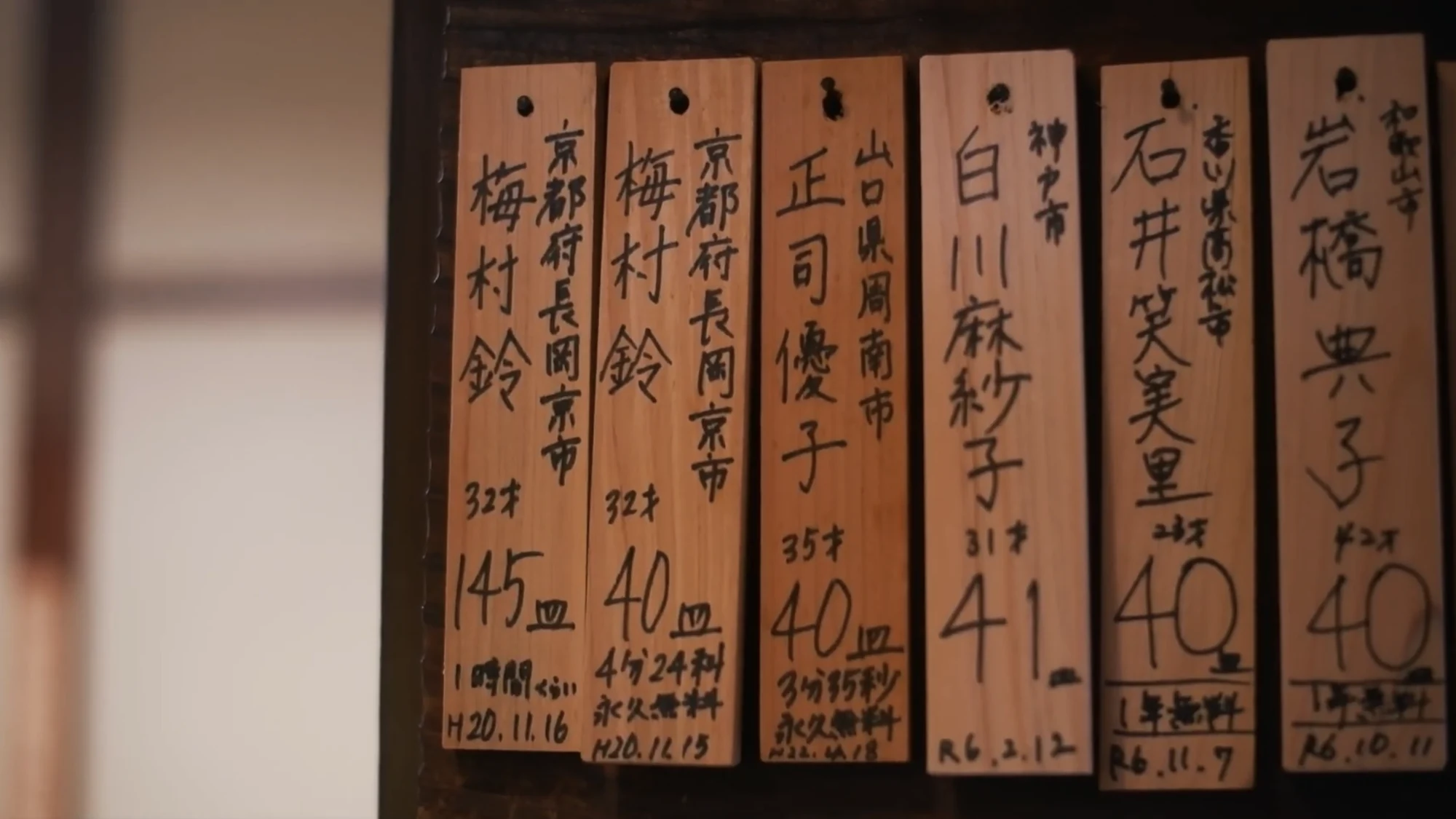
2. How does the wooden pass work?
3. Can I get there without a car?
4. Which three baths should I choose?
5. Can I bathe without the pass?
6. Are tattoos allowed?
7. When should I come?
1. Do I have to stay the night?
2. How does the wooden pass work?
3. Can I get there without a car?
4. Which three baths should I choose?
5. Can I bathe without the pass?
6. Are tattoos allowed?
7. When should I come?
The seven baths are waiting.
Every claim on this site carries its source and the date we checked it.