Overview
Kinosaki without the sotoyu is just a pretty canal. The seven bathhouses are the town's organizing idea: your ryokan is the bedroom, the willow-lined streets are the corridor, and these seven buildings are the baths of one town-sized inn. They are genuinely different from one another in architecture, mood, clientele — and in blessing: each sotoyu carries its own ご利益, per the city DMO (一の湯 = fortune and luck, 柳湯 = fertility and safe childbirth, 御所の湯 = the beauty bath, 鴻の湯 = long life and marital harmony, and so on) — while the WATER is deliberately the same: all seven share one spring quality, sodium·calcium chloride, so the circuit is a tour of buildings and blessings, not chemistries. That's what makes it a pleasure rather than a chore. This guide profiles each honestly, explains the pass mechanics that confuse most first-timers, and lays out the circuit order that fits how the town actually breathes. Two proofs of that shared-water claim are visible on the street itself. Since December 2023 (令和5年12月), facilities using the genuine spring water post the 城崎温泉天然温泉配湯の証 — the town's certificate of natural hot-spring distribution — at the door, and the whole supply is managed by one municipal body, 城崎町湯島財産区 (the Kinosaki-chō Yushima property ward), rather than bath by bath. The circuit really is one water in seven rooms, on paper as well as in the tub. Hold that fact while you read the profiles: every difference described below is architecture, light and company — the water has already been made equal, by law and by plumbing.
How the pass really works
Three price points, one system. Pay at the door and each bath costs ¥800 for adults. Stay at any Kinosaki ryokan and the yumepa pass, issued free at check-in as a barcode card or wristband, opens all seven for your whole stay; almost no overnight guest ever pays a door price. Visit for the day and the one-day pass costs ¥1,500 (¥750 for children, free under 3), sold at the bathhouses and covering everything until close. The arithmetic is blunt: the day pass beats door prices from the second bath onward, and the free guest pass is a standing argument for sleeping in town. The detail that actually shapes plans: each house takes a different weekly closing day, so on any given evening five or six of the seven are open, never reliably all. The town posts the weekly calendar at the station, the bathhouses and online; photograph it on arrival and build your circuit from what is open rather than from a wishlist. Hours run roughly 7:00 to 23:00, but the split matters: as of September 2026, Ichi-no-yu, Goshono-yu and Jizō-yu open at 7:00 (7 am), while Mandara-yu and Yanagi-yu open at 15:00 (3 pm) — and with the traditional dawn house, Kou-no-yu, closed for renovation until about November 2026, the morning belongs to the 7:00 trio. ⚠️ verify current hours, closing-day rota, AND both closure statuses at publish. As of September 2026 the closing rota runs: Jizō-yu on Mondays, Ichi-no-yu and Mandara-yu on Wednesdays, Goshono-yu and Yanagi-yu on Thursdays — which is why a Friday-to-Saturday stay currently misses nothing and a Wednesday arrival misses two houses. ⚠️ The rota shifts; treat the pattern, not the days, as durable. The association also runs a live congestion page showing each house's current crowding in real time — check it from your room and route the evening toward the quiet tubs. Last entry everywhere is thirty minutes before close.
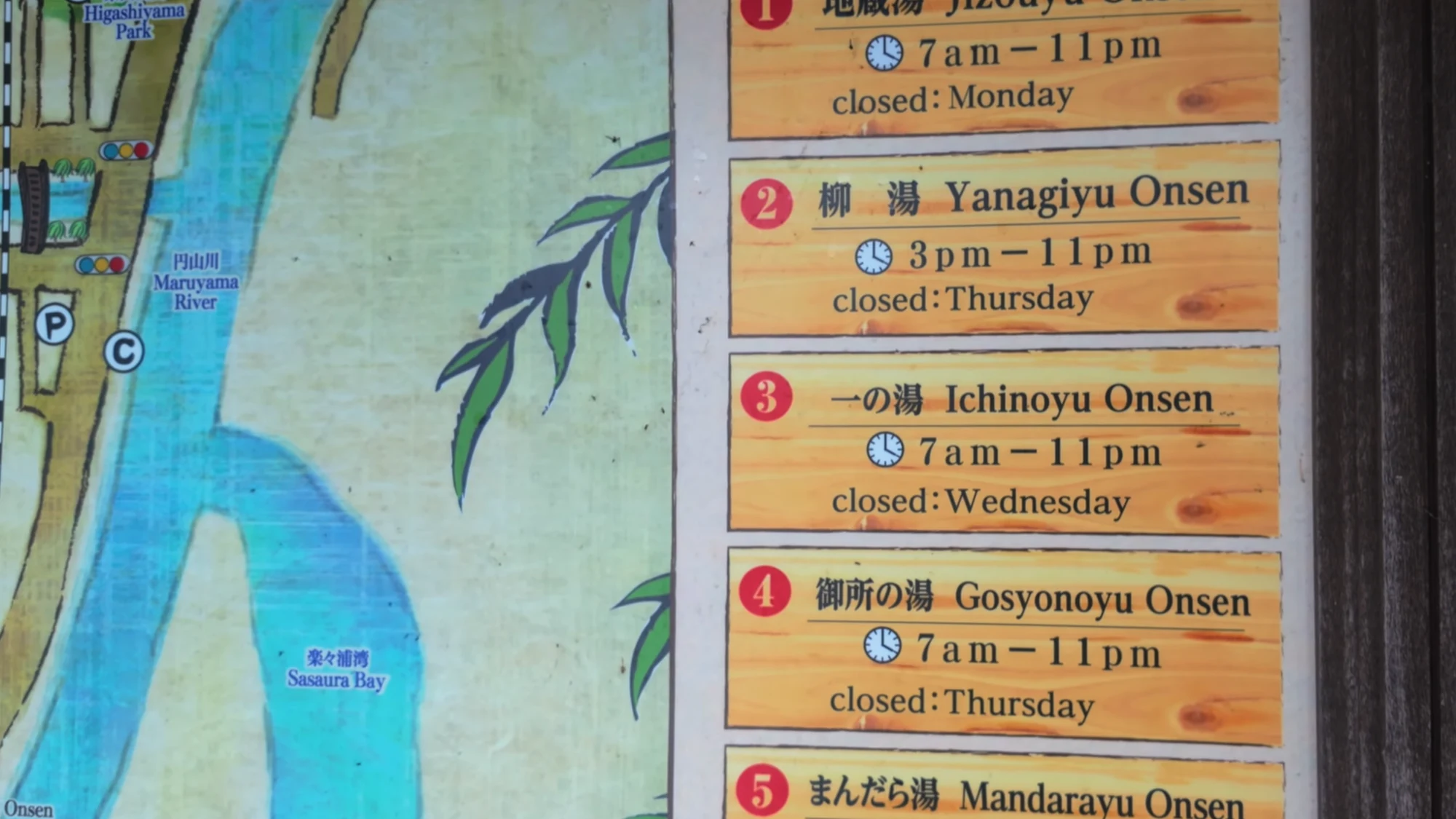
Jizouyu, Ichinoyu, Gosyonoyu and Kounoyu open at 7am; Yanagiyu and Mandarayu open at 3pm. All run to 11pm.
The seven, profiled honestly
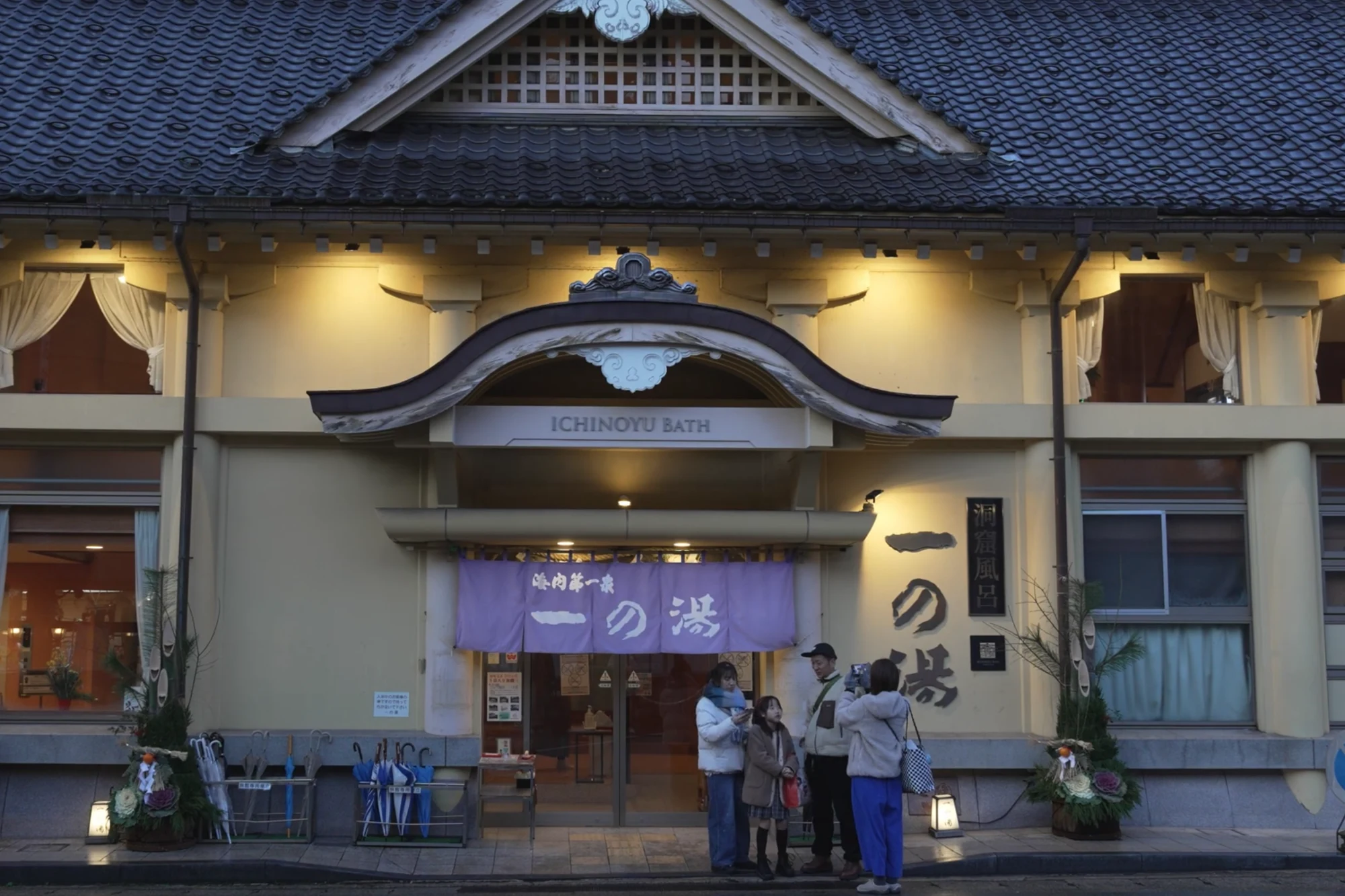
Satono-yu — ⚠️ CLOSED SINCE APRIL 2024 (休業中) — beside the station, is the biggest and most modern, two themed upper floors, one Japanese, one Turkish-flavored, that swap between men and women daily, with river views from the top baths and a sauna. It is the right first bath off the train and the wrong place to seek old-Kinosaki atmosphere; think of it as the circuit's friendly front desk. Jizo-yu, by the canal, is the locals' bath, lantern-shaped, unfussy, family-friendly and usually the quietest of the central houses. Nothing here will photograph famously, and an evening soak among neighborhood regulars is its own kind of authentic. Yanagi-yu is the smallest and runs the hottest water in town, tied to fertility and safe childbirth in the town's lore. It is a fast, scalding, memorable stop, the espresso shot of the circuit, and connoisseurs of serious heat should not skip it. Ichino-yu is the showpiece: a kabuki-theatre facade on the main street and the famous cave bath, a grotto carved into the rock behind the building where the water echoes. If the town has one bath for the postcard, this is it, and its central location keeps it lively. Goshono-yu is most visitors' favorite and ours: palace-style architecture borrowed from Kyoto's imperial vocabulary, and an open-air bath facing a hillside waterfall that turns the whole soak into scenery. Go at dusk, when the light goes amber over the water. The "beauty bath" label refers to the water's skin feel; the setting does the rest. Mandara-yu is the spiritual origin point, standing where the monk Dochi Shonin's thousand-day prayer is said to have summoned the spring thirteen centuries ago. It is small, calm, slightly apart from the main flow, and the right bath to take slowly. Kou-no-yu — 🚨 CLOSED FOR RENOVATION WORKS, REOPENING EXPECTED NOVEMBER 2026 (confirm before travel) — the oldest, anchoring the quiet western end near the ropeway, with a garden rotenburo and the injured-stork legend that named it. When it reopens, its outdoor bath in the first hour of the morning, mist still on the hill, is the connoisseur's single best soak in Kinosaki — for now, admire the exterior and give that first hour to Goshono-yu's waterfall bath instead. Two further details from the association's own listings, current as of September 2026: Ichi-no-yu and Jizō-yu both keep family baths on the premises — private, reservable rooms — though both are suspended pending major repairs (利用休止中) at present, and Jizō-yu's second floor holds a broad tatami rest area, the closest thing the circuit has to a lounge. ⚠️ Family-bath status is perishable; check before promising one to anyone.
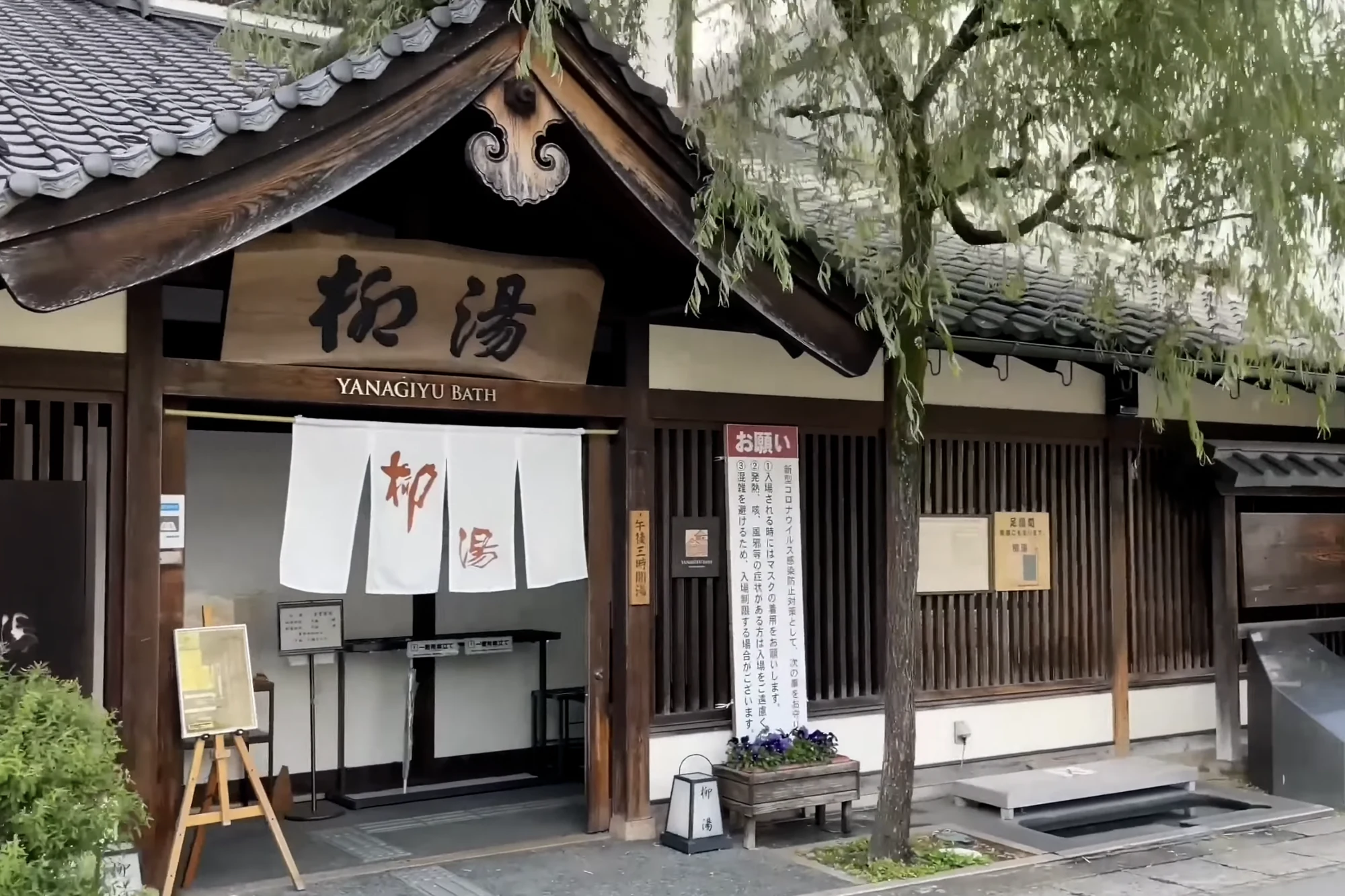
Yanagi-yu: opens 3pm, closes Thursdays. The smallest of the seven, and the one a dawn circuit misses.
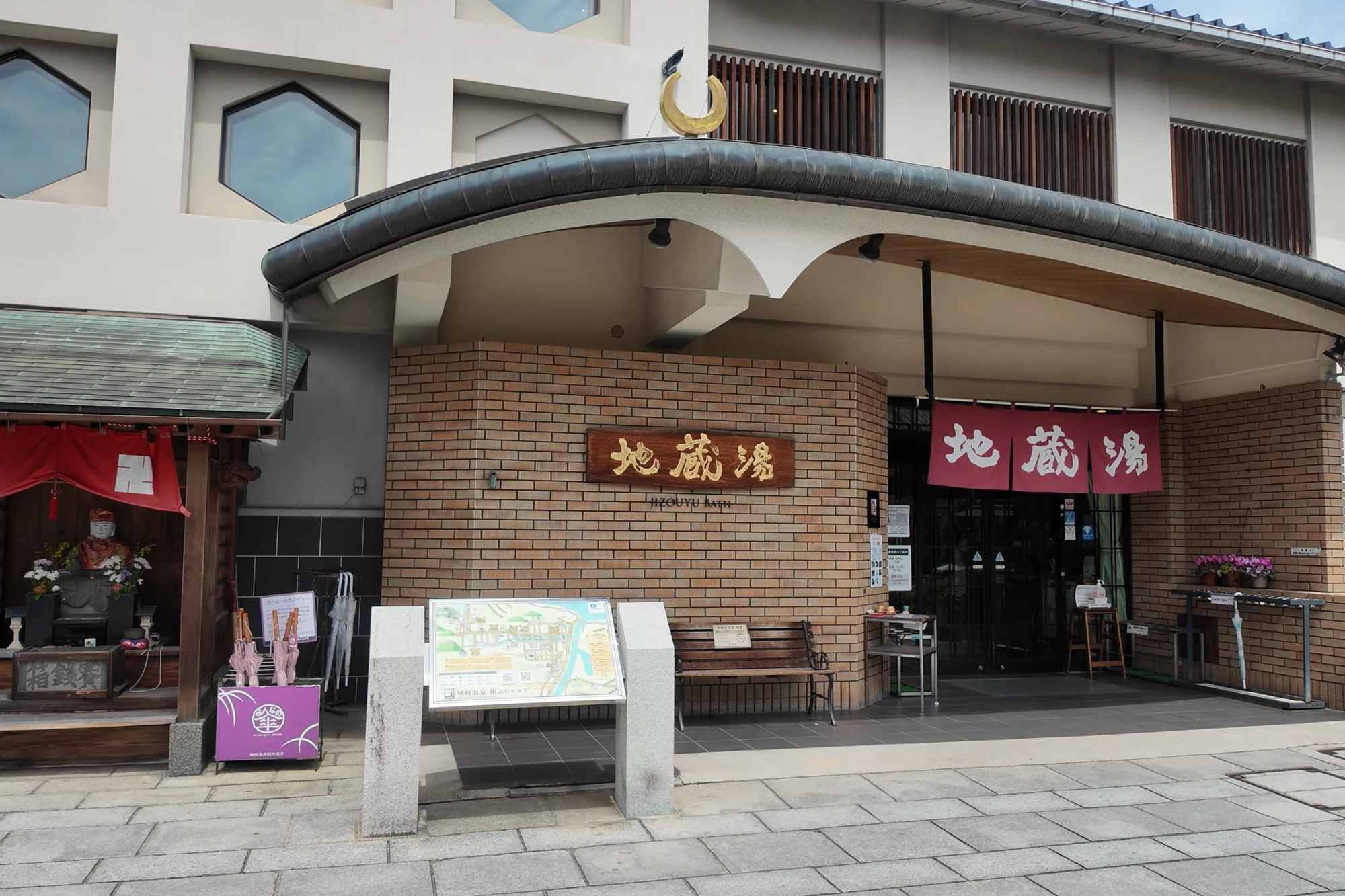
Jizo-yu closes Mondays and opens at 7am — one of the four houses a dawn circuit can include.
The names are receipts
Each bathhouse name is a small historical document, and the town can produce the paperwork. Ichi-no-yu (一の湯) — "bath number one" — earned the boast in the mid-Edo period, when the celebrated physician 香川修徳 (Kagawa Shūtoku) wrote in his 一本堂薬選 (Ippondō Yakusen) that the bath then called Ara-yu (新湯, "the new bath") was 天下一, first under heaven. The town renamed the house after the review, which makes Ichi-no-yu arguably Japan's oldest five-star rating still on display. Goshono-yu (御所の湯), "the palace bath," cites the 増鏡 (Masukagami), the fourteenth-century court chronicle recording that 安嘉門院 (Ankamon'in), the emperor's elder sister, bathed here in 1267 (文永4年) — imperial provenance, in writing, seven centuries old. The others carry their stories more quietly. Yanagi-yu (柳湯) is named for a willow said to have been transplanted from China's West Lake, beneath which the spring welled up. Jizō-yu (地蔵湯) takes its name from a statue of the bodhisattva Jizō said to have emerged from its source — still enshrined on the grounds — and spent the Edo period as the commoners' bath, a role it culturally keeps. Mandara-yu (まんだら湯) is named for the 八曼陀羅経 (Hachi-Mandara-kyō), the sutra the founding monk chanted through his thousand days of prayer on the spot where the spring finally answered. And Kou-no-yu (鴻の湯) is the stork's bath, named for the injured kounotori that led bathers to the water in the town's oldest legend. Read as a set, the names sketch the whole town: a medical review, a court chronicle, a sutra, a Chinese willow, a neighbourhood statue and a bird. Seven houses, one water — and seven completely different reasons to walk in.
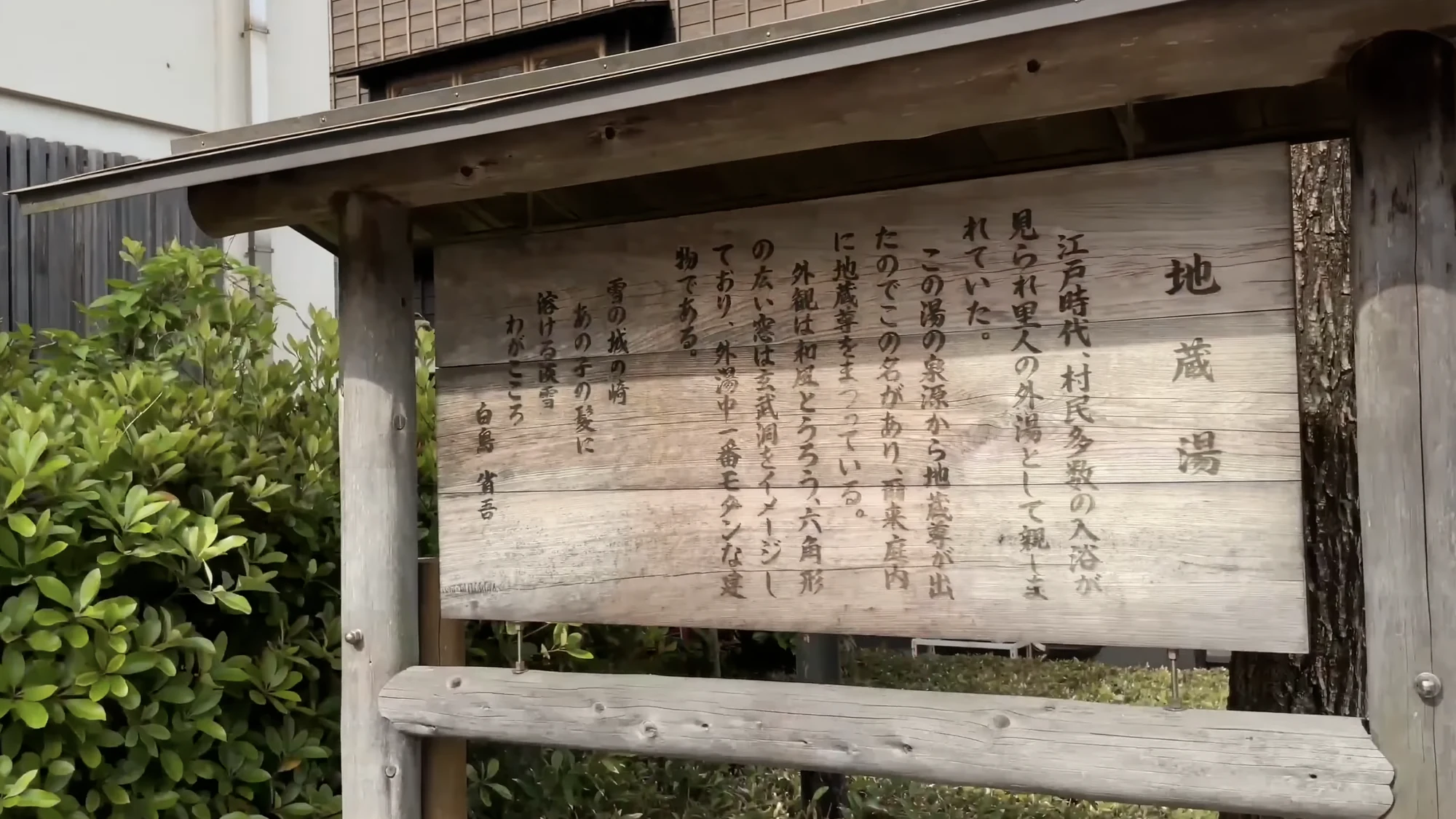
CAPTION HELD — board text not yet read at full resolution.
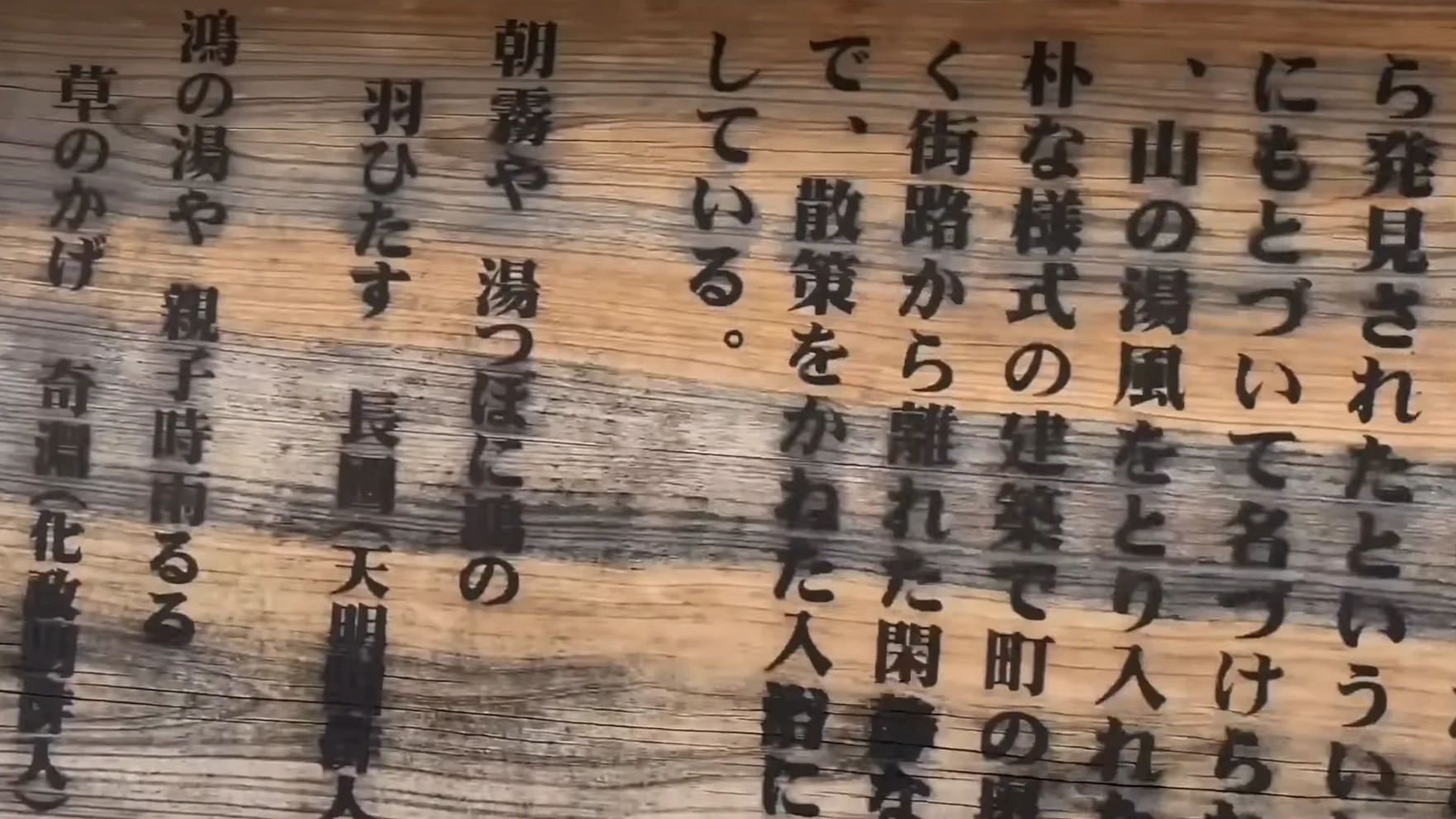
CAPTION HELD — board text not yet read at full resolution.
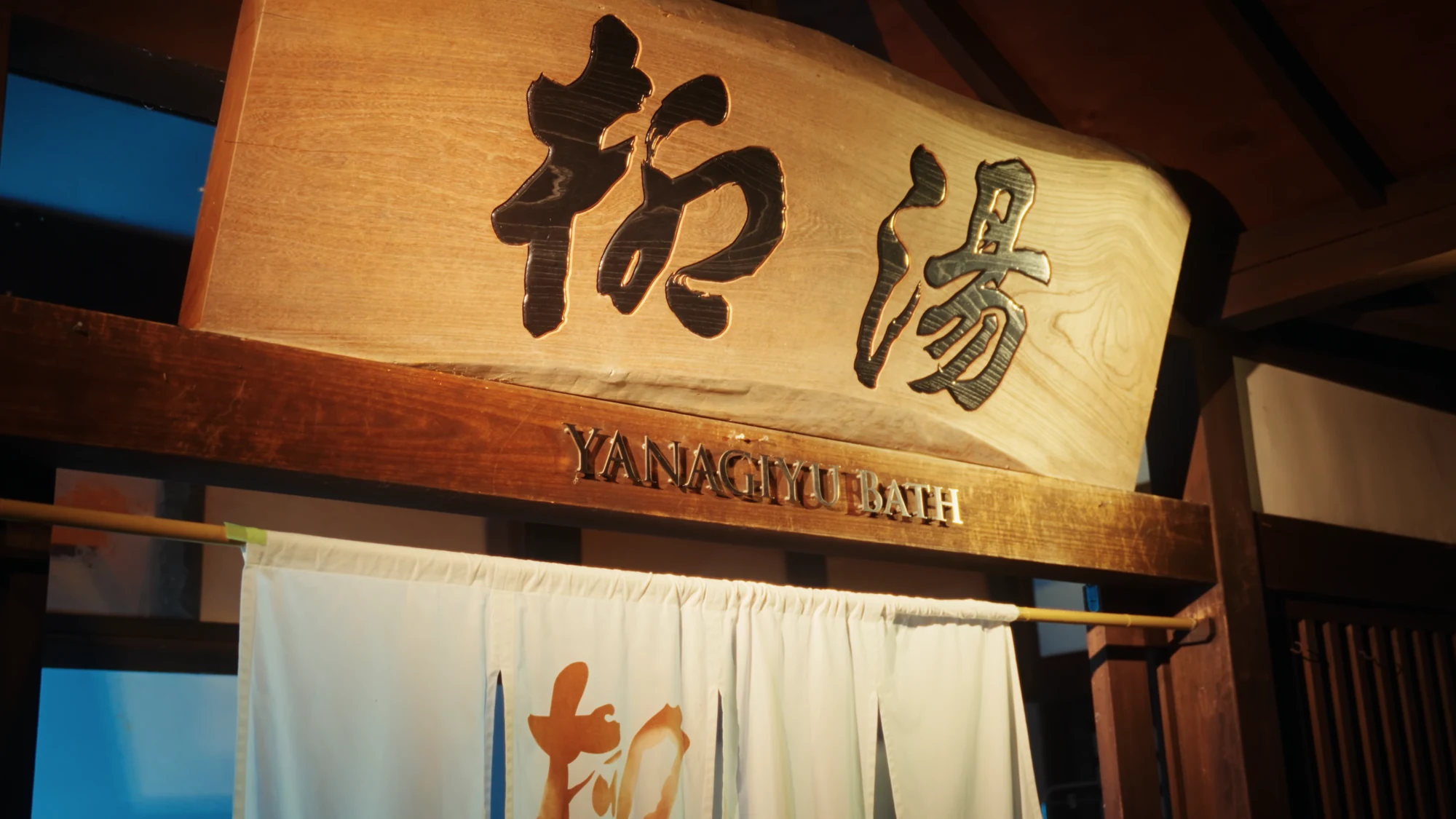
The names are receipts: Yanagi-yu is named for the willow, the tree the whole canal is planted with.
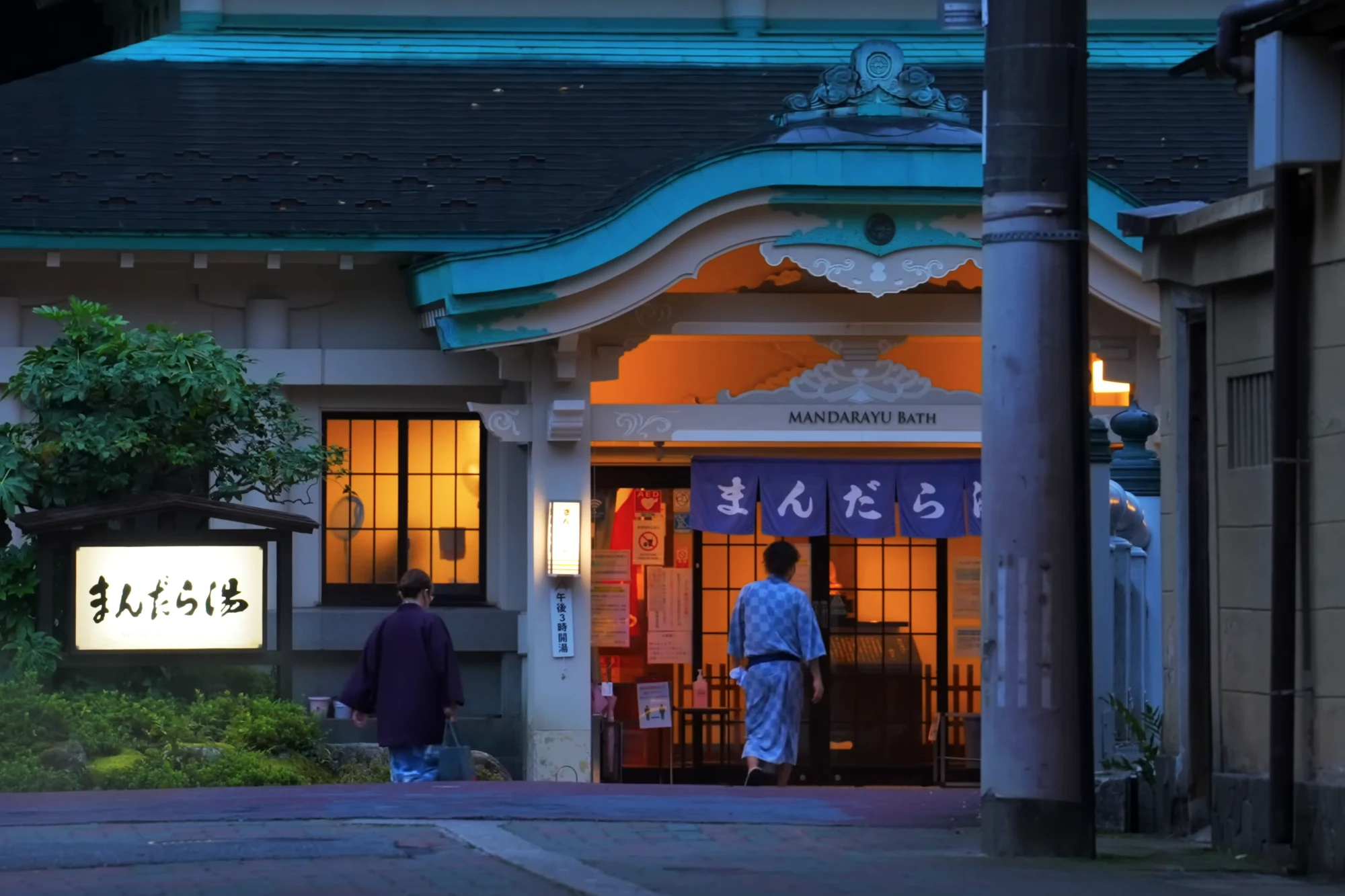
Mandara-yu marks the site where the spring answered Dochi Shonin's thousand-day prayer in 720.
Why a town of seven public baths exists at all
Every onsen town in Japan once had public bathhouses. Almost everywhere else, they died — and the killer was the private bath. As inns built ever-grander 内湯 (uchiyu, in-house baths) through the twentieth century, guests stopped going out, the shared houses lost their bathers, and town after town watched its public bathing culture quietly close. Kinosaki is the town that saw this coming and legislated against it: a municipal ordinance caps the size of the bath an inn may build, so no ryokan can compete with the sotoyu, and the seven houses keep the whole town's bathers — which keeps them funded, maintained, rebuilt and alive. The town's history shows how deep the commitment runs. When the 1925 北但大震災 (Kita-Tajima earthquake) destroyed Kinosaki, the reconstruction under mayor 西村佐兵衛 (Nishimura Sahei) rebuilt the bathhouses first — six of them between 1926 and 1932, ahead of most of the town — and the spring has been managed collectively ever since, one municipal supply feeding all seven houses rather than a scramble of private wells. The ordinance, the collective spring and the sotoyu-first rebuild are one continuous policy across a century: the baths are the town's public infrastructure, the way other towns treat their roads. That is why this page exists at all. Seven working public bathhouses in one small town is not a quaint survival; it is the result of Kinosaki repeatedly choosing them over easier alternatives — in law, in budgets and in rubble. When you buy the pass and walk the circuit, you are using an institution the town has been defending since before your grandparents were born, and the reason it calls itself the 外湯めぐり発祥の地 (sotoyu-meguri hasshō no chi, the birthplace of bath-hopping) is that nowhere else made the hop this defensible.
The circuit, in the right order
The town has a rhythm and the smart circuit rides it. Evening one: start with the spectacle while you are fresh, Goshono-yu or Ichino-yu before dinner, then after kaiseki walk the lantern-lit canal and take two of the small houses, Yanagi-yu's heat and Jizo-yu's calm, before the 23:00 close. Morning: one of the 7:00 houses — Goshono-yu with mist on the waterfall garden is the current pick for the dawn slot while Kou-no-yu is closed for renovation until about November 2026 (Mandara-yu, note, opens at 15:00 and belongs to the afternoon and evening). Evening two, if you have it: Satono-yu's variety floors, plus whichever favorite calls for a second visit. That covers all seven across one full day and two nights at a civilized pace; compressing all seven into a single evening is possible, legal, and a stamp-rally version of the experience that several houses' heat will argue against. Practical kit: the pass, a small towel (rentable or buyable at every house for a few hundred yen), and nothing else; lockers are provided, baths are gender-separated, and yukata-and-geta is the correct uniform, supplied by your inn. Etiquette is standard onsen practice, rinse first, towels out of the water, and the houses are practiced and patient with first-timers; our etiquette guide covers the details. One rota-aware example, because the abstract rule lands better with numbers: arrive on a Thursday and Goshono-yu and Yanagi-yu are dark, so the evening becomes Ichi-no-yu's cave and Jizō-yu's calm, with the waterfall bath saved for Friday at the 7:00 opening — a schedule the rota chose for you, and not a worse one. The rota is not an obstacle to the perfect circuit; it is the town's way of making sure no two visits repeat.
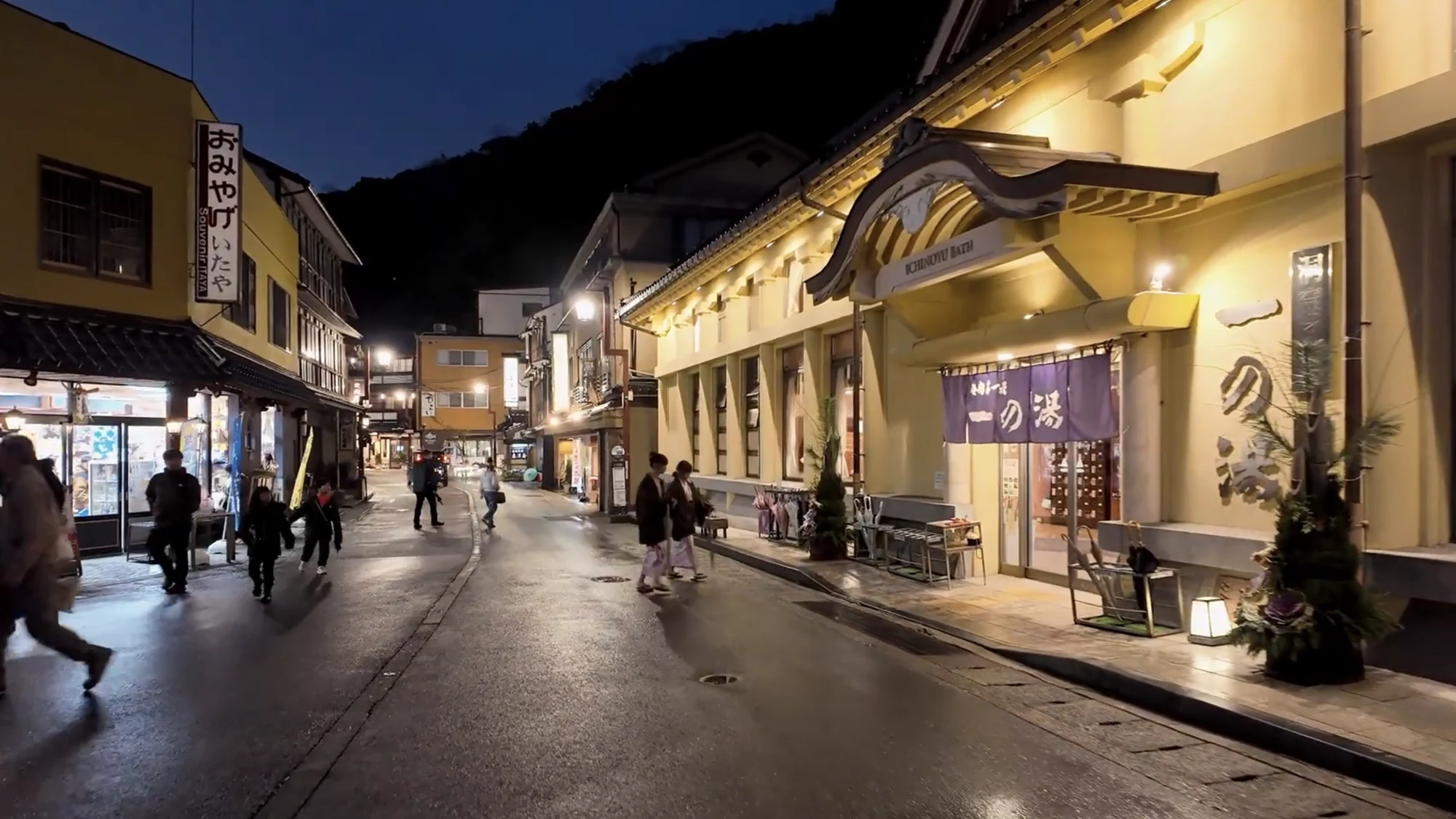
The circuit works best after dark, when the day visitors have gone and the lanterns are lit.
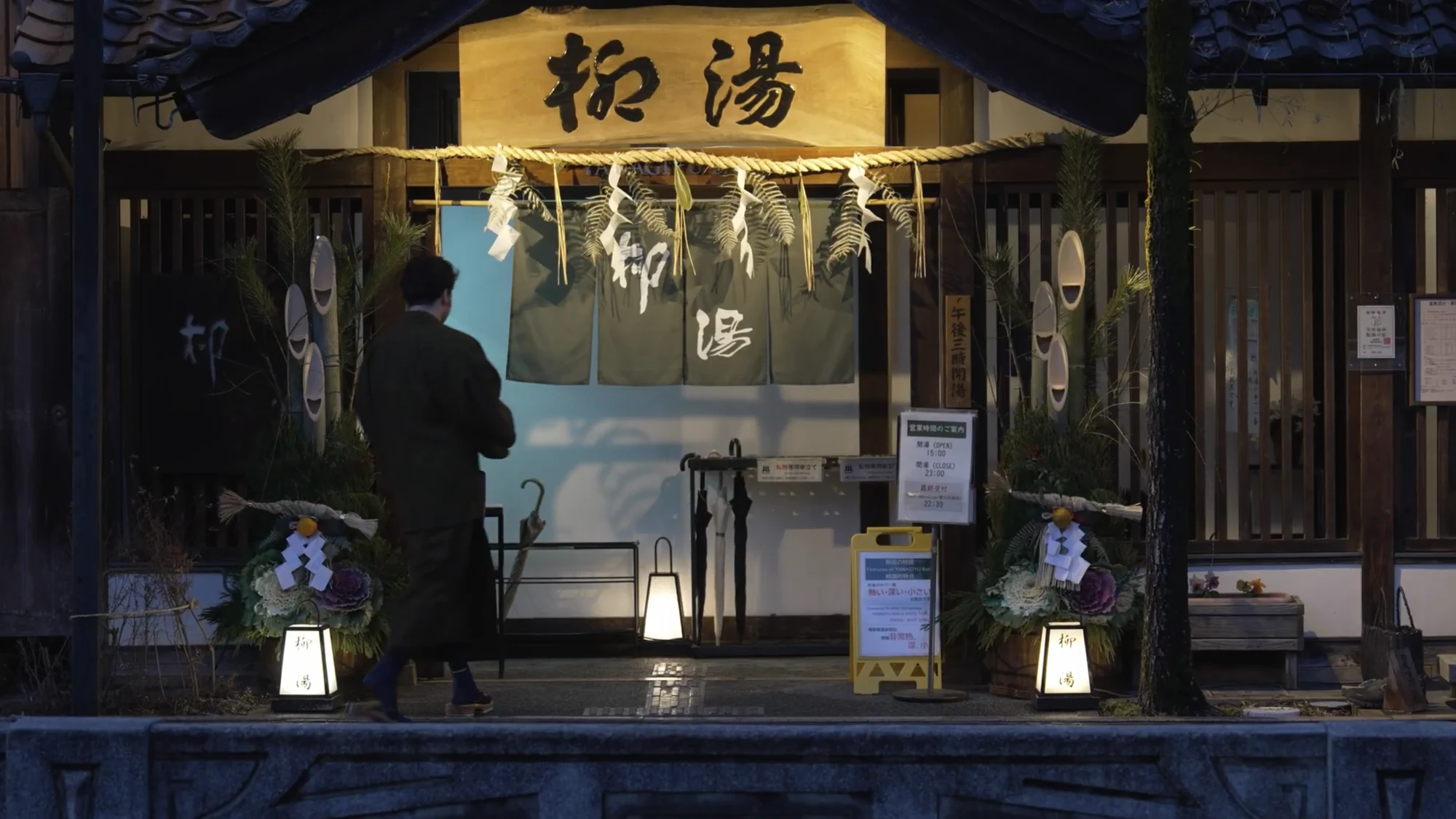
Nothing is required at the door but the pass and a small towel.
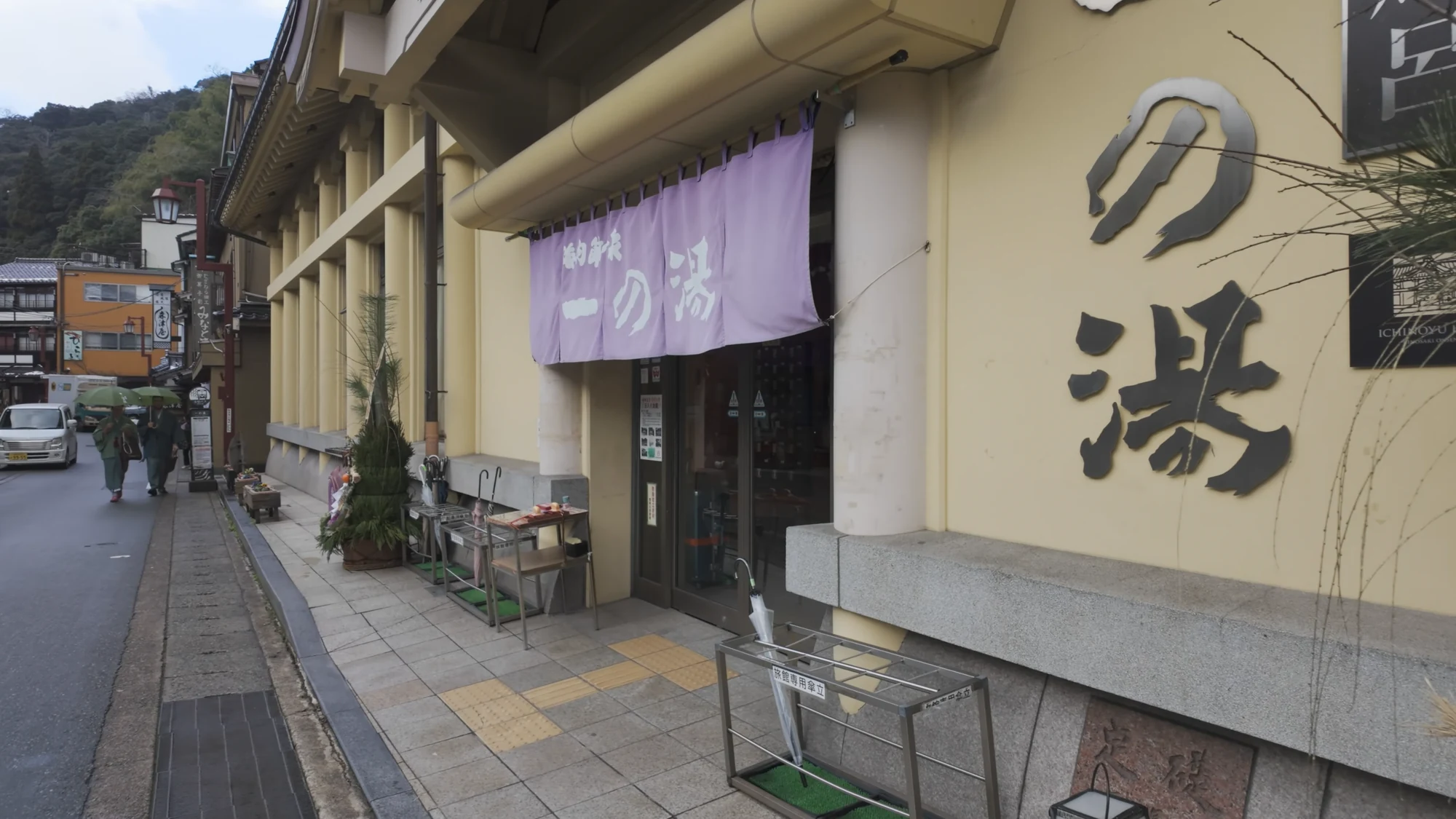
Start at the top of the street and walk down, so the last house is the one nearest your inn.
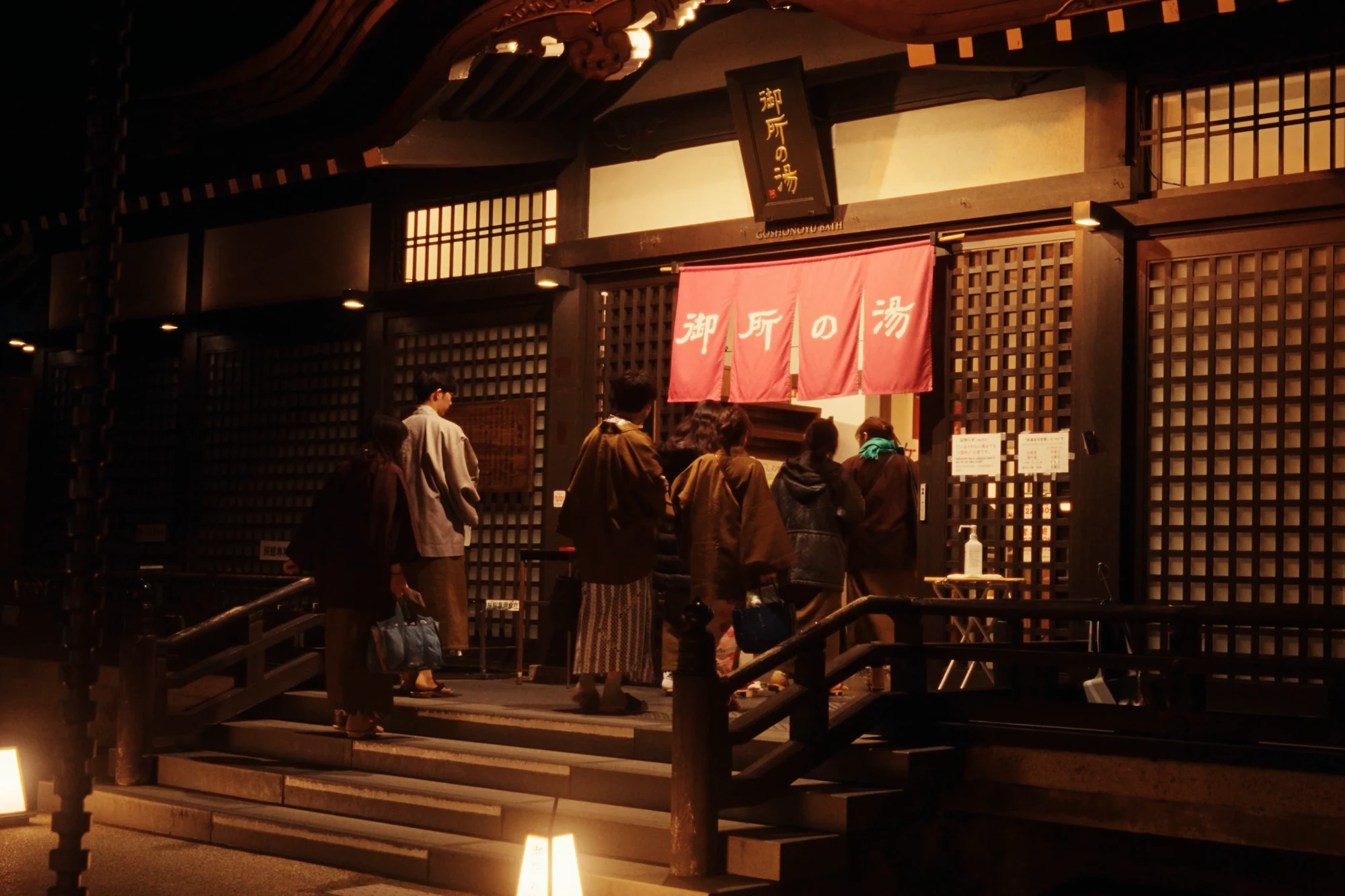
Goshono-yu keeps the waterfall bath and closes Thursdays; last entry is thirty minutes before the 11pm close.
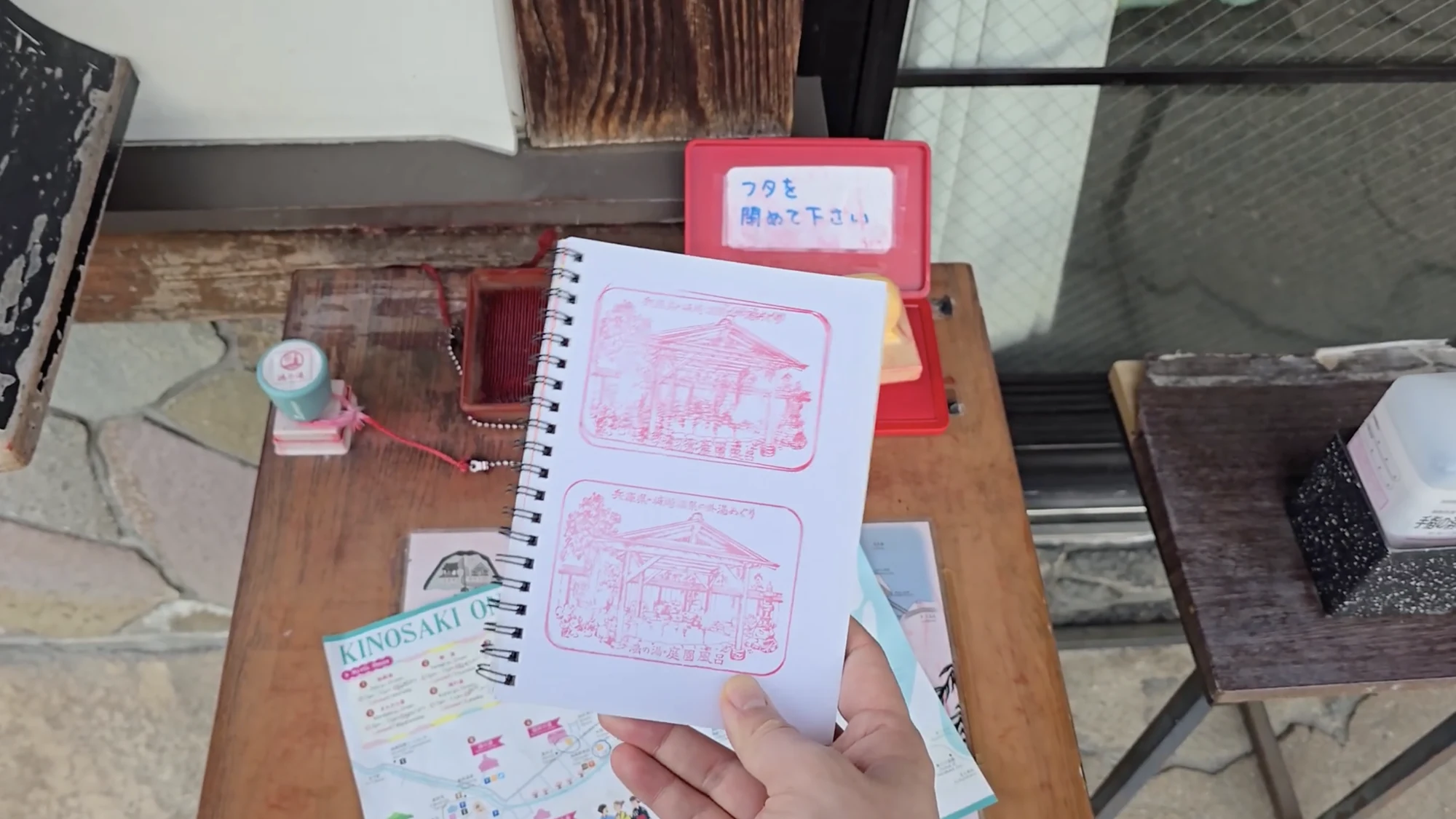
Each house stamps the book. The stamps differ; the water in all seven does not.
The tattoo sentence that travels farthest
All seven sotoyu admit tattooed bathers, full sleeves included, with no cover stickers, no segregated hours and no questions. This is not a quiet tolerance; it is town policy, and it makes Kinosaki the most openly tattoo-friendly onsen town in Japan. Individual ryokan still set their own rules for in-house baths, so tattooed travelers should confirm those when booking, but the seven public houses, the heart of the experience, are unconditionally open. Our tattoo-friendly guide expands on this. The policy is not an accident of tolerance; it follows from what the sotoyu are. These are civic institutions — municipally supplied water, town-run houses, neighbours in the next tub — not private businesses courting a clientele, and a civic bath excludes citizens badly. The town that legislated its inns' baths small so that everyone bathes together was never going to turn bathers away at the door over ink. For travellers who have navigated Japan's patchwork of sticker rules and segregated hours elsewhere, the experience here is disorienting in the best way: nobody looks, nobody asks, and the only rule anyone enforces is wash first. It is worth saying plainly because it is the single policy most likely to decide a destination for a meaningful number of travellers, and Kinosaki is the one famous onsen town where the answer is an unqualified yes, seven for seven. One caveat travels with the praise: the guarantee covers the seven public houses, not every private facility in town — tattooed travellers booking an inn for its own reservable bath should still ask when booking, because the sotoyu promise is the town's, while the inn's rules remain the inn's.
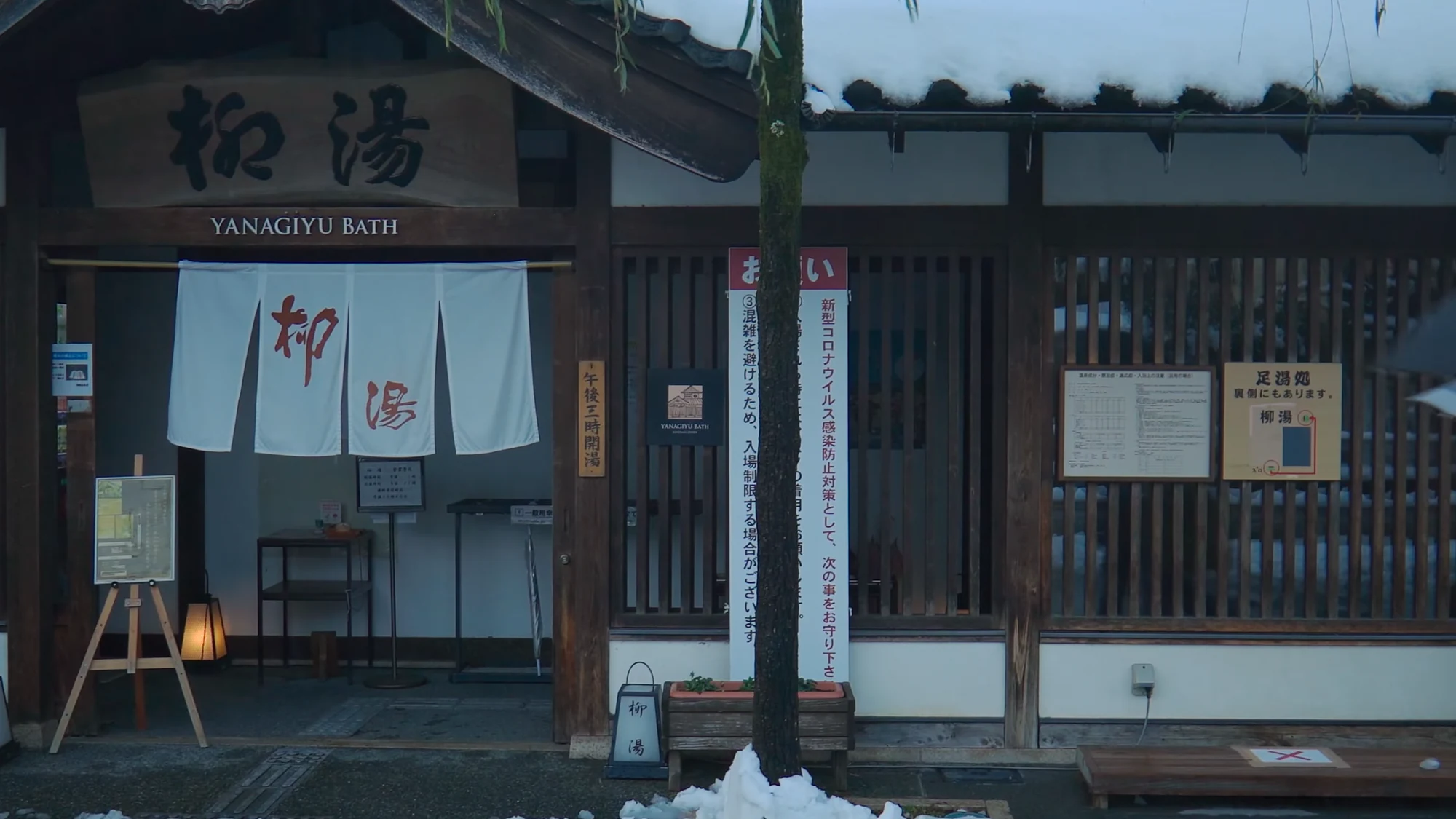
The tattoo policy holds in every season and at every house. There is no winter exception.
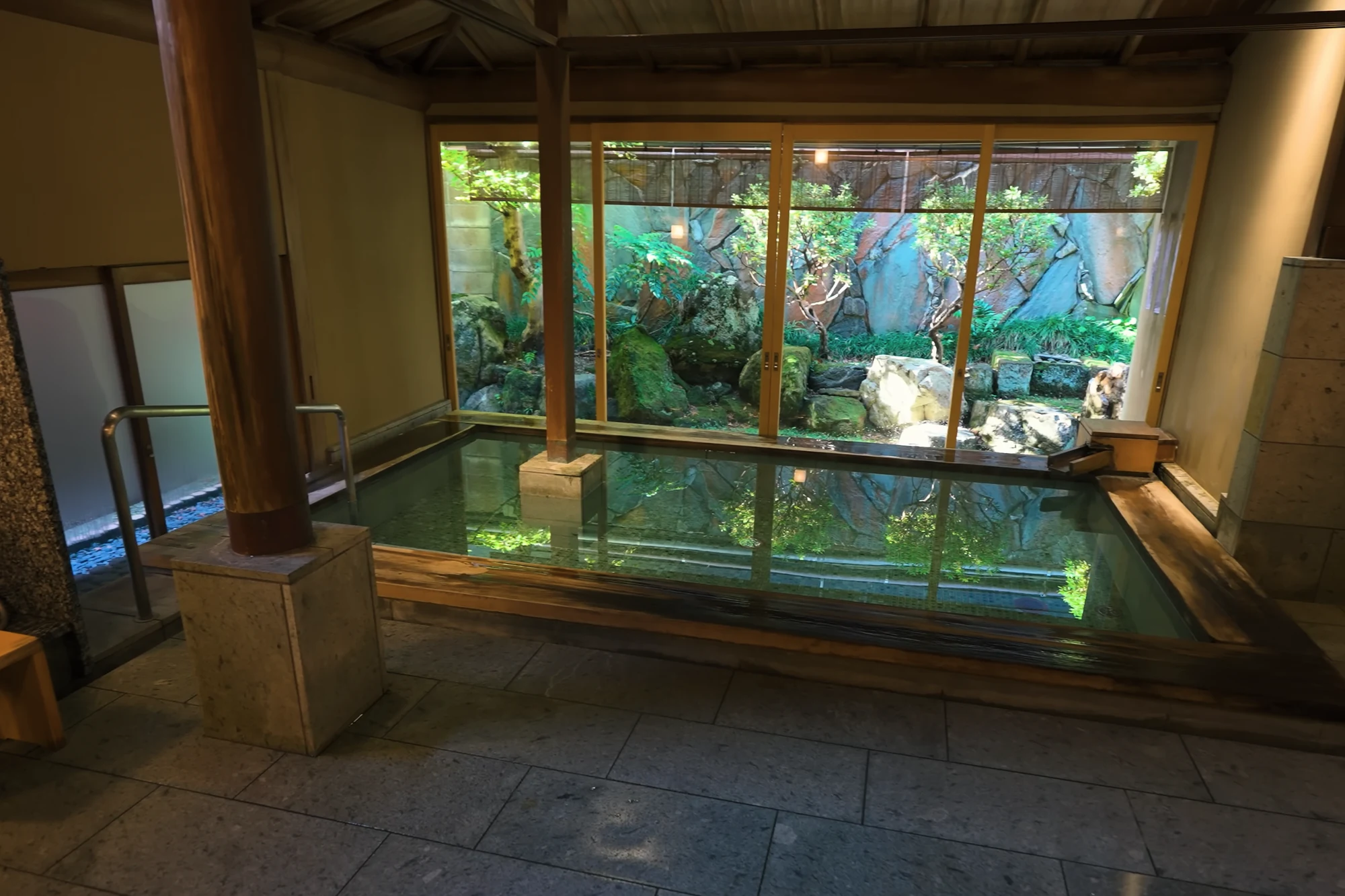
All seven admit tattooed bathers as formal policy — no covers, no separate hours, no questions at the desk.
The verdict
Rank them and you start arguments; choose by mood and you cannot lose. For the scene: Goshono-yu. For the story: Ichino-yu's cave and Mandara-yu's origin. For the heat: Yanagi-yu. For the quiet: Jizo-yu at night (and Kou-no-yu at opening, when its renovation ends, expected November 2026). For convenience: Satono-yu. The honest secret of the sotoyu is that the walking between them, yukata, geta, lantern light on the canal, is half the bathing, and no single house, however lovely, contains it. Buy the night, take the pass, and let the calendar of closing days decide the rest. And if the rota or the closures force a choice, choose by hour rather than house: any bath at 7:00 beats most baths at 20:00, and the emptiest tub in town is always the one the congestion page says it is. The seven were never a ranking; they are a week's worth of moods on one street, and the circuit's real gift is that you cannot exhaust it in a visit — which is, of course, the town's oldest trick for getting you back. Book the night, take the pass, and let the town deal the cards. A last planning note that outranks everything above: the two closures. Until Kou-no-yu (renovating until about November 2026) and Satono-yu (closed since April 2024) return, the circuit is five houses — still the deepest public-bath experience of any onsen town in the country, but plan stamp-rally ambitions accordingly and check the association's live status page the week you travel. This page will celebrate loudly when the count returns to seven.
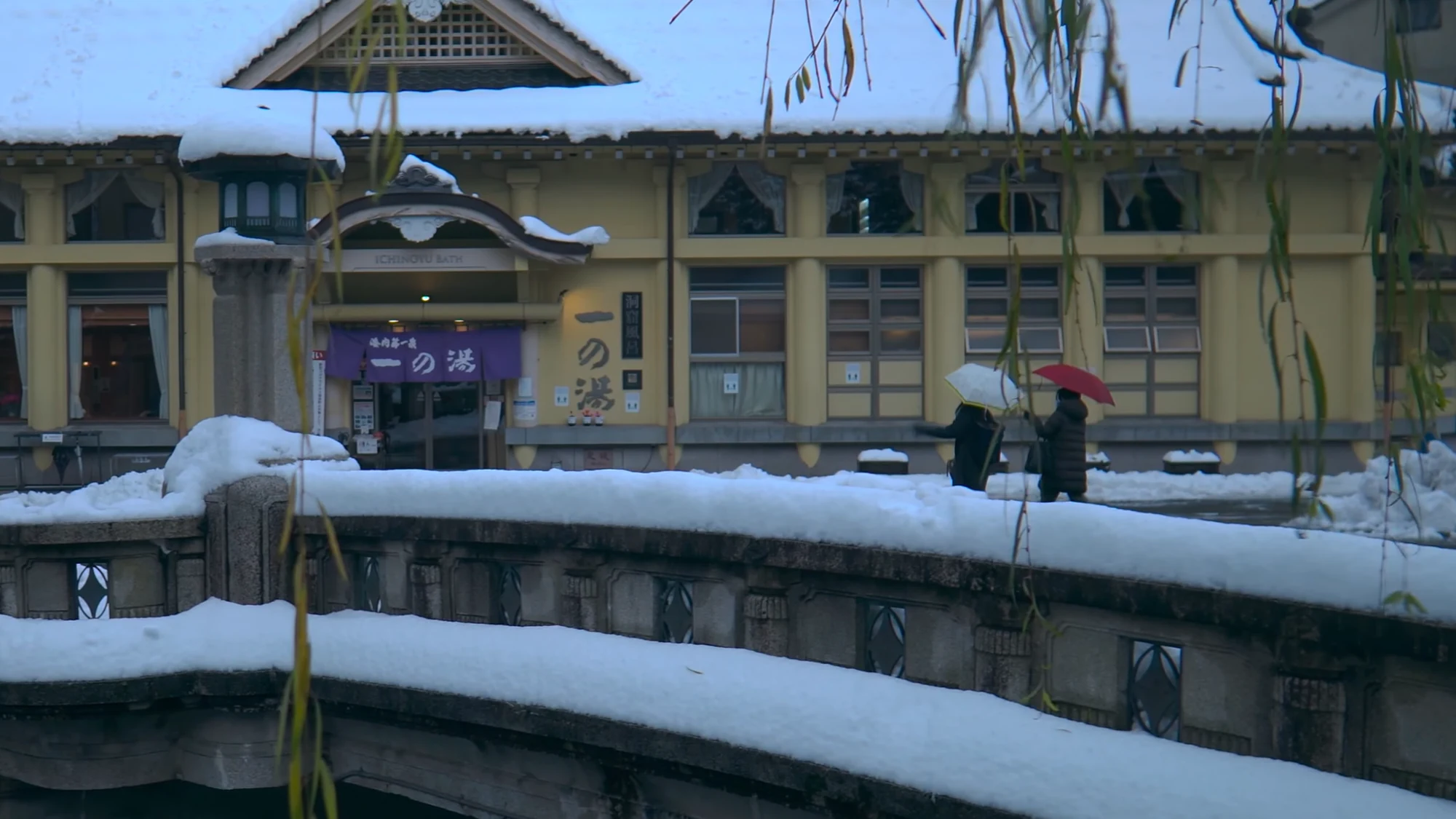
Five of the seven are operating. It is still the largest public bathing circuit of any onsen town in Japan.
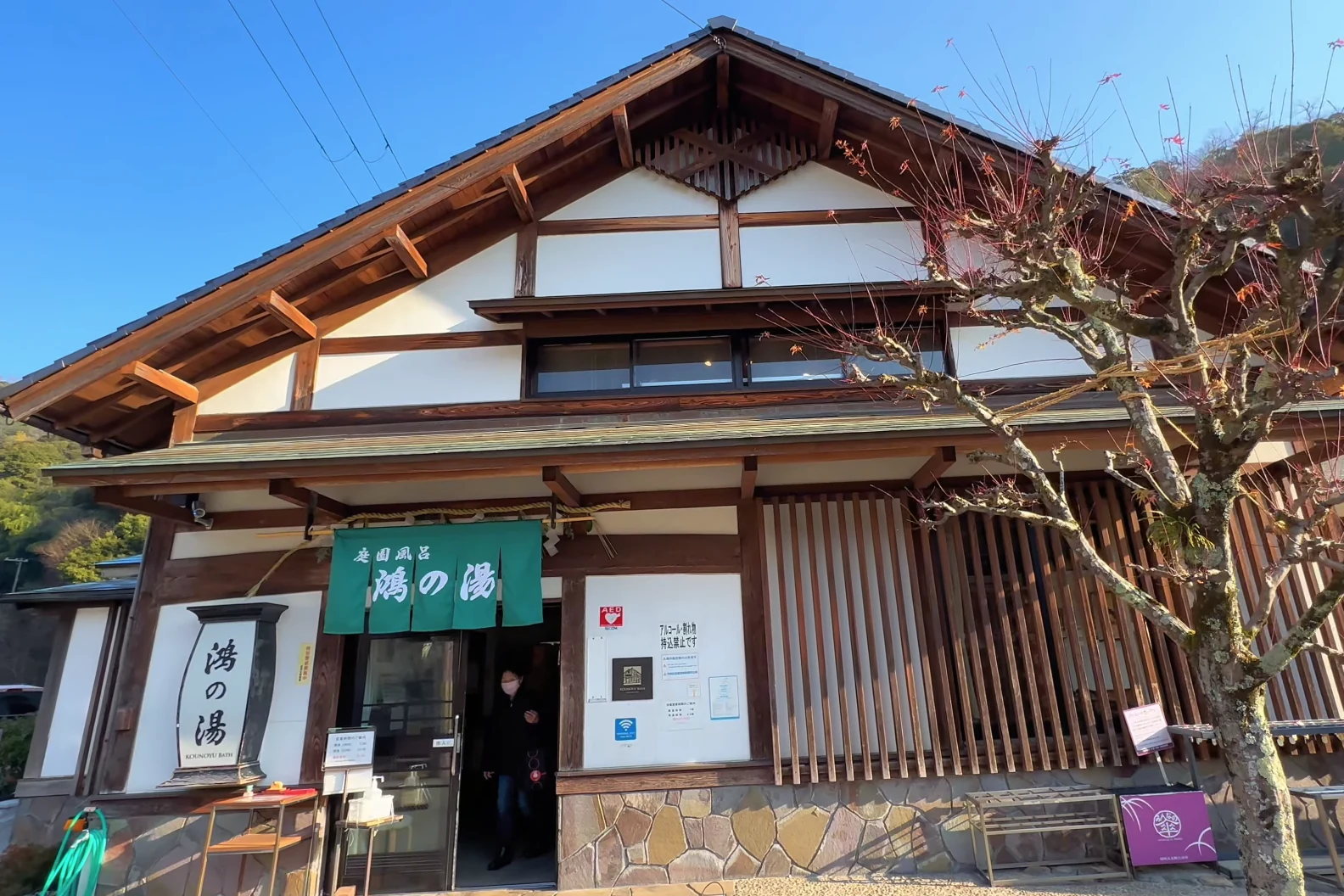
Ko-no-yu, the stork's bath and the oldest of the seven, is closed for renovation with reopening expected November 2026. ⚠️
Tips
Photograph the weekly closing-day calendar at the station on arrival and build your circuit from what's open.
Take the spectacle houses (Goshono-yu, Ichino-yu) before dinner while energy is high; save the small quiet houses for the lantern hours.
Goshono-yu at dusk, when the light goes amber over the waterfall bath, is the circuit's best-timed soak.
Bring only the pass and a small towel — rentable at every house for a few hundred yen.
Budget 40–60 minutes per bath including the walk; the walking is half the bathing.

Verified by The Japan Onsen Society
Show all sources
Verified July 7–16, 2026; hours, rota, name origins, family-bath status and closures verified September 22, 2026. Primary Japanese sources:
外湯 — 城崎温泉観光協会 (Kinosaki Onsen Tourism Association — per-bath hours, closing days, prices, name origins, family baths): [https://kinosaki-spa.gr.jp/about/spa/](https://kinosaki-spa.gr.jp/about/spa/)
外湯めぐり発祥の地!温泉天国★城崎温泉 — 豊岡市観光公式サイト (Toyooka City Official Tourism Site — the ordinance, ご利益 roster, 1925 rebuild, pass mechanics): [https://toyooka-tourism.com/recommend/onsen/kinosaki_sotoyu/](https://toyooka-tourism.com/recommend/onsen/kinosaki_sotoyu/)
「鴻の湯」の長期休館について — 城崎温泉観光協会 (closure notice, May 11, 2026): [https://kinosaki-spa.gr.jp/news/28289/](https://kinosaki-spa.gr.jp/news/28289/)
温泉地詳細〔城崎温泉〕 — 日本温泉協会 (Japan Spa Association — spring classification): [https://www.spa.or.jp/search_p/detail_p/?F_ID=280880&pg=0](https://www.spa.or.jp/search_p/detail_p/?F_ID=280880&pg=0)
Related guides
The Town and Its Baths
Kinosaki complete guide
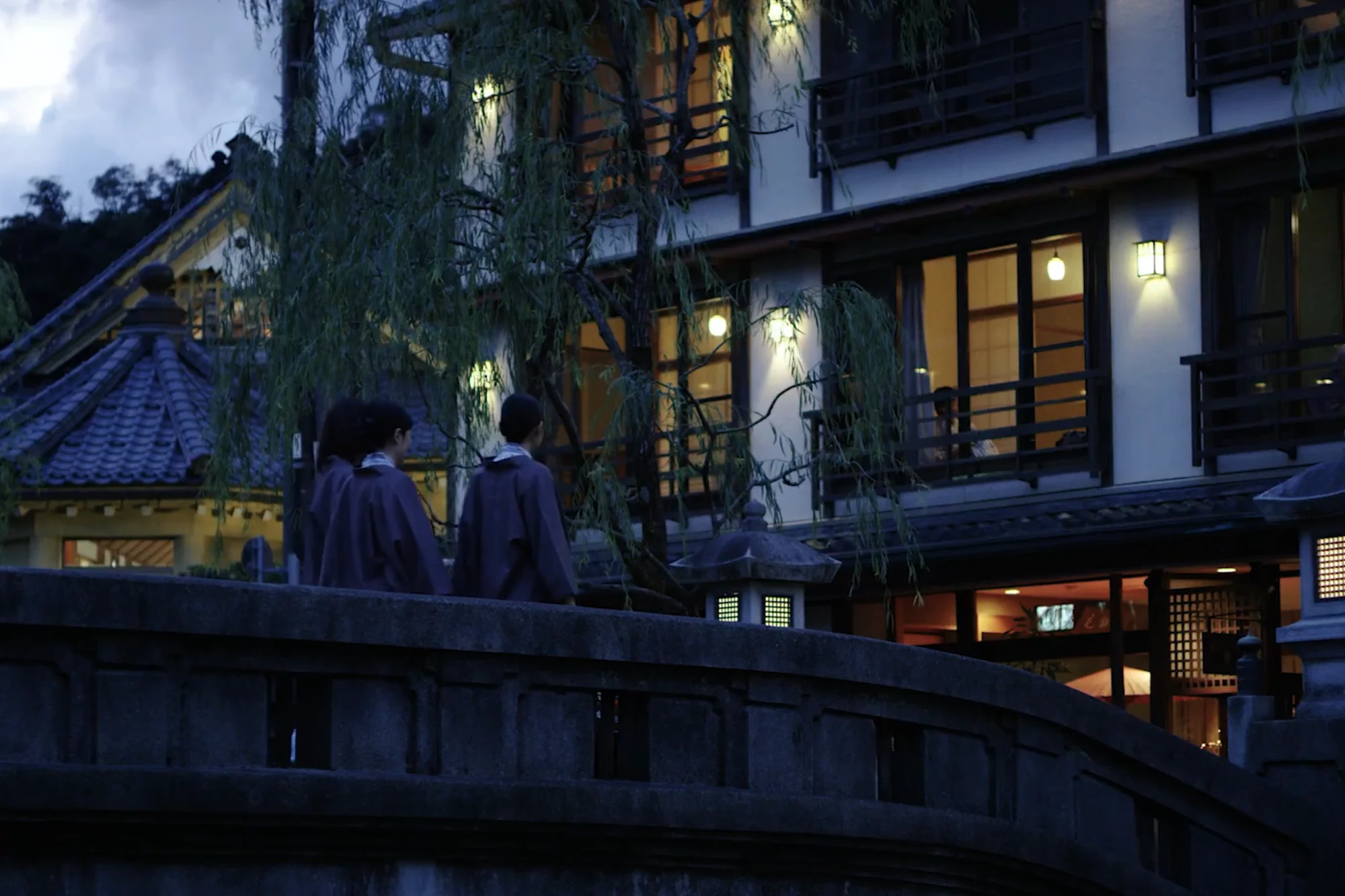
Seven public bathhouses, one shared spring, and a law that keeps them the centre of town. Start here.
The Town and Its Baths
Best time to visit
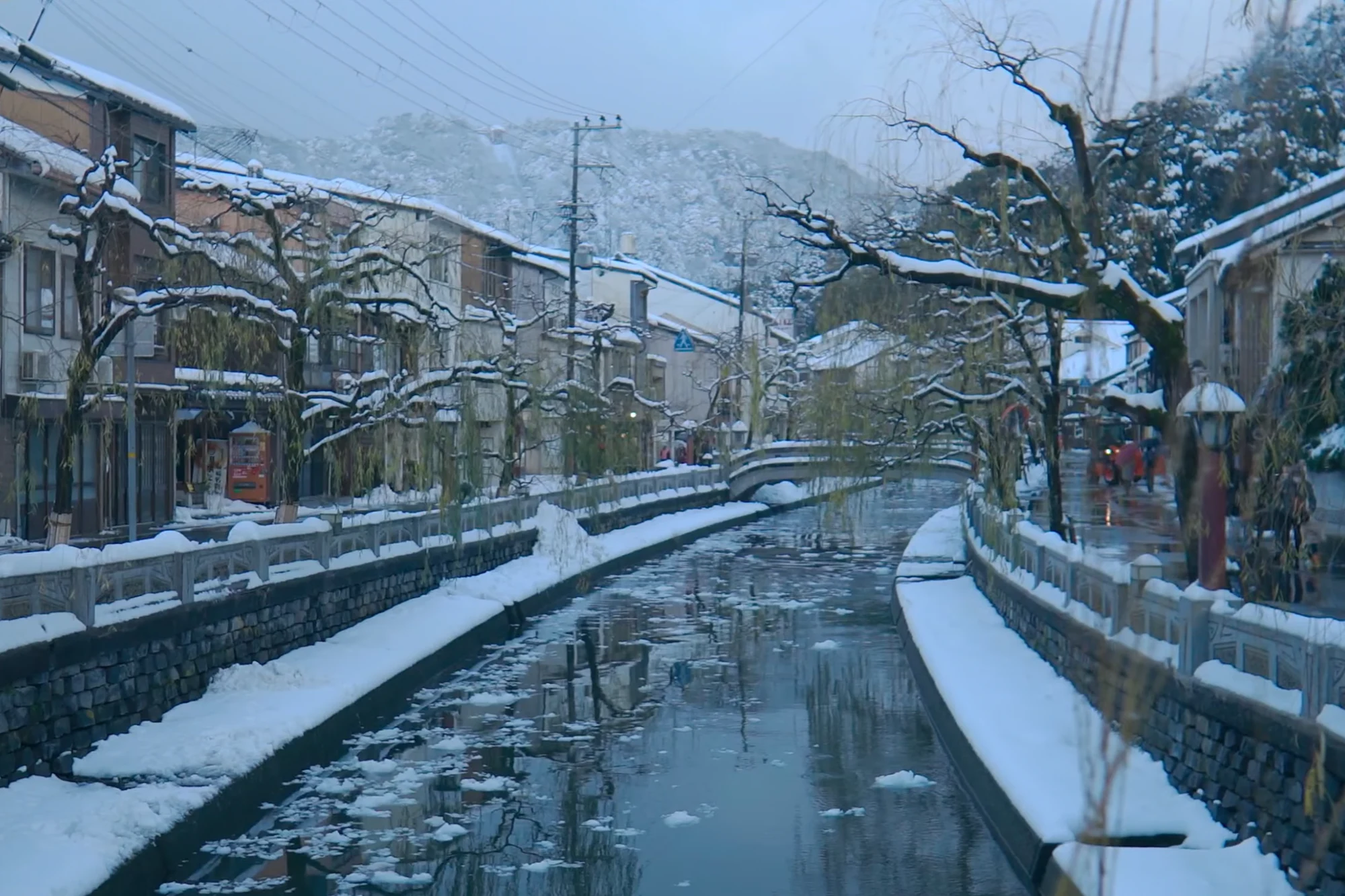
Crab from November, snow in January, willows in April. There is no wrong month, only different ones.
The Town and Its Baths
How long to stay
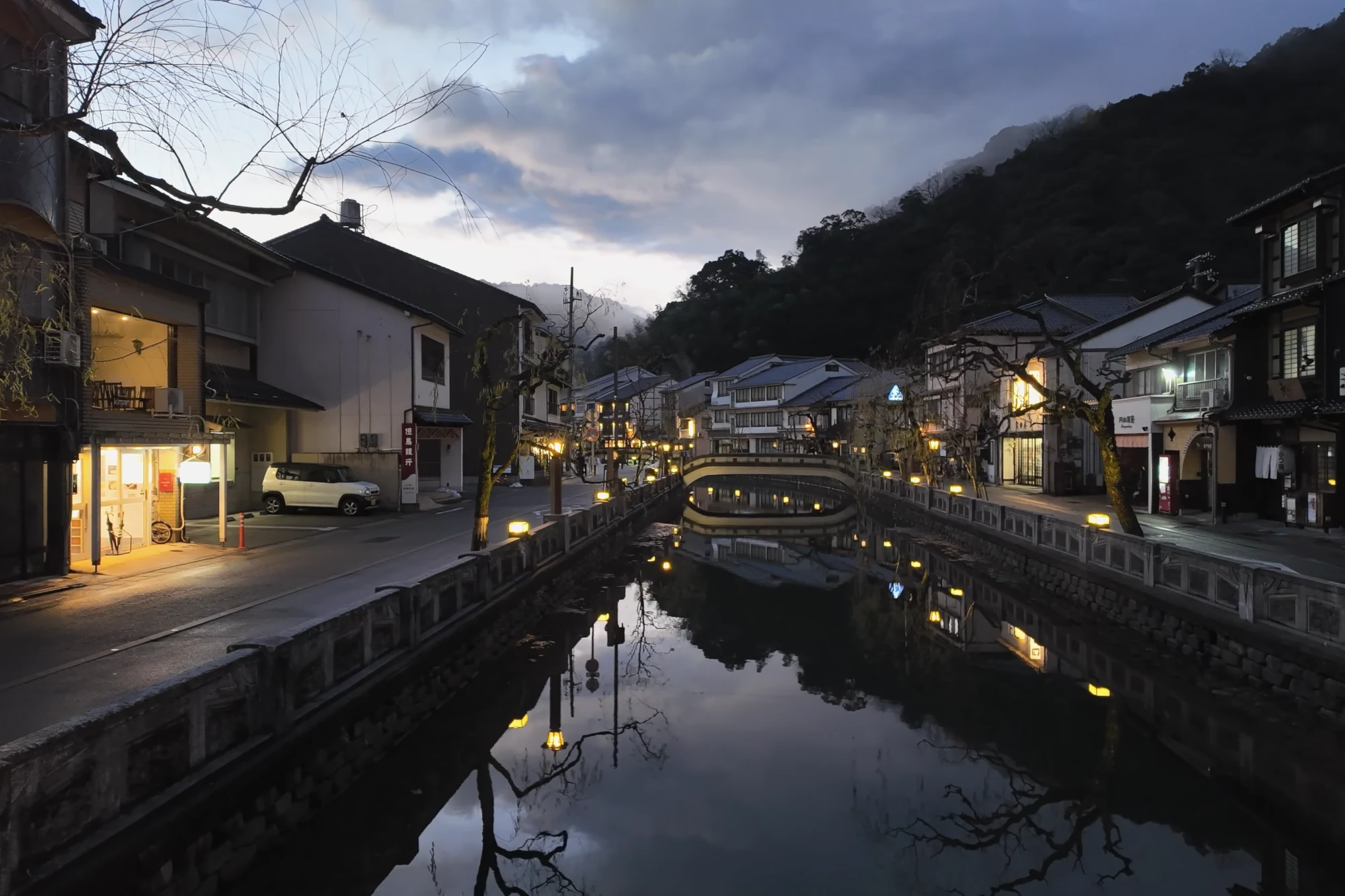
One night works, and most people do exactly that. Two nights is when the town stops being a stop.
The Town and Its Baths
Tattoo-friendly
All seven public baths admit tattoos, no cover-up required. Almost nowhere else in Japan does this.

The Town and Its Baths
Etiquette
Wash before you get in, keep the small towel out of the water, and nobody will look at you twice.