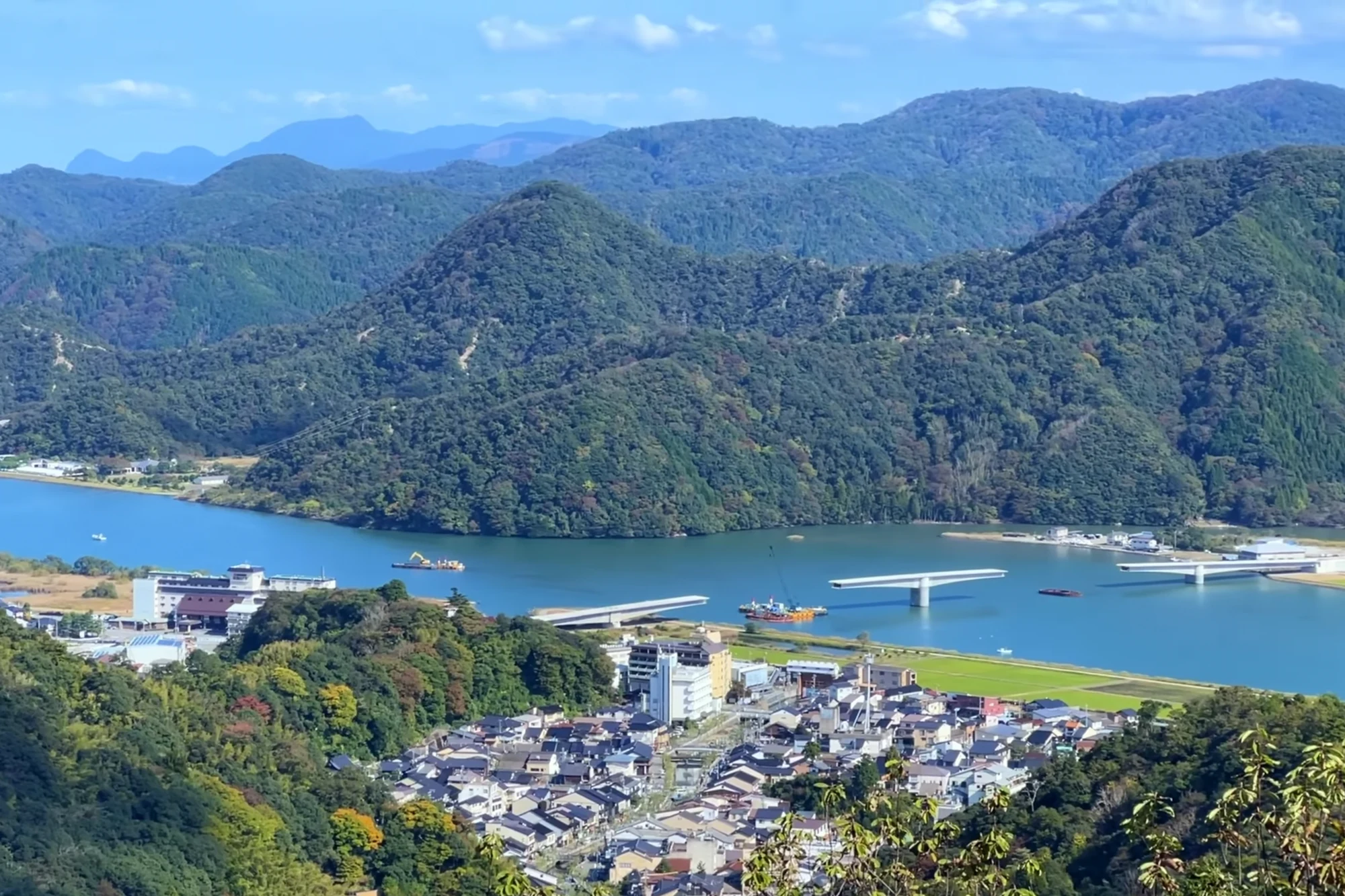
An honest framing before the list. Kinosaki is not a sightseeing town with baths attached; it is a bathing town with a handful of genuinely good diversions. A traveler who arrives with a checklist mentality will finish it by lunch and wonder what's wrong. The right use of this page is rhythm: one or two of these between baths, an unhurried lunch, and the reserve of energy that the evening circuit deserves. The scale is not a shortcoming; it is the ordinance again, working as designed. A town whose law keeps bathing at the centre never needed to build a second attraction economy, so what grew instead is a small set of genuinely local things — a temple that predates the tourism, a craft that exists nowhere else, a back lane the town kept for itself. Everything on this page passes one filter: it belongs to Kinosaki specifically, does its job in an hour or three, and returns you to the circuit better disposed toward it. A timing suggestion organises the whole list: the town's attractions and its bathhouses run complementary hours. The temple, the ropeway and the museums do their best work in the late morning and early afternoon — exactly when the bath street belongs to day-trippers — while the two afternoon bathhouses open at 15:00 and the evening belongs to the circuit. Slot the diversions into the midday trough and you never trade a good bath hour for anything.
Ride the ropeway up Mt. Daishi
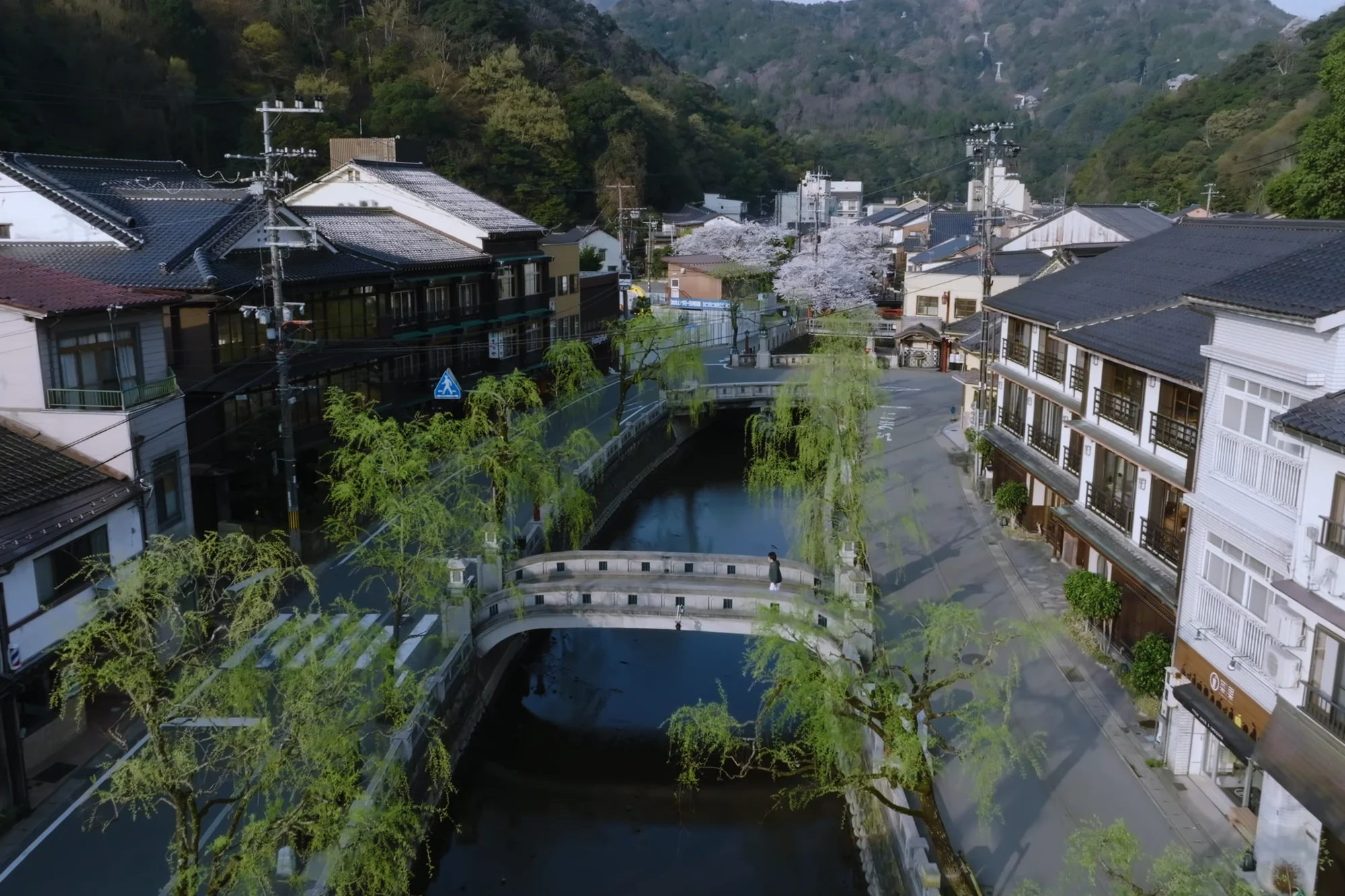
The Kinosaki Ropeway climbs from the top of the main street to the summit of Mt. Daishi in about seven minutes, with the town's rooftops, the Maruyama River delta, and the Sea of Japan arranging themselves below. Fares run about ¥910 (roughly US$6) round trip to the summit for adults, ¥570 (about US$3.80) to the mid-station ⚠️, and the summit cafe pours coffee against the view. Clear days justify the summit; the view has been recognized by the Michelin Green Guide ⚠️, and in winter the snowy version outranks it. The ropeway keeps a weekly closing day, so check before building an afternoon around it. ⚠️ Timing upgrades the ticket: the first cars of the morning get the sea light and the empty summit, and in the week of early November the gorge below runs its foliage peak just as crab season opens — the one week the view and the dinner argue for the same dates. ⚠️ Foliage timing shifts yearly. The view also does the useful work of explaining the town: from the summit you can read the whole system at once — the canal's single axis, the seven roofs along it, the Maruyama delta the crab boats work, the sea the weather comes from. Ride up, walk down via the temple stairs if your knees agree, and you have converted a viewpoint into the town's best short hike and a map you have already seen from above, at the price of a coffee.
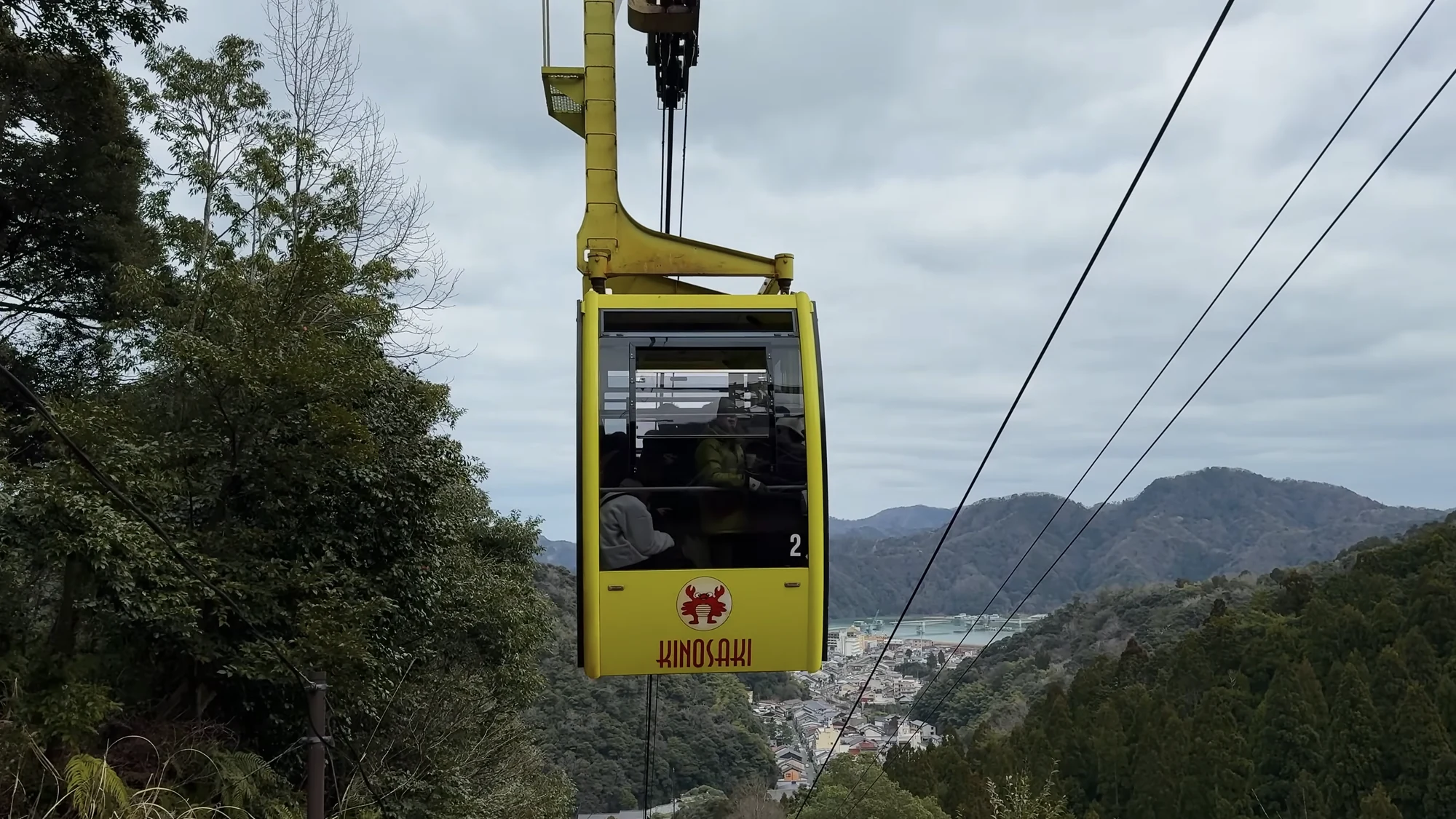
Two cars work the line in opposite directions, meeting roughly halfway up the hill.
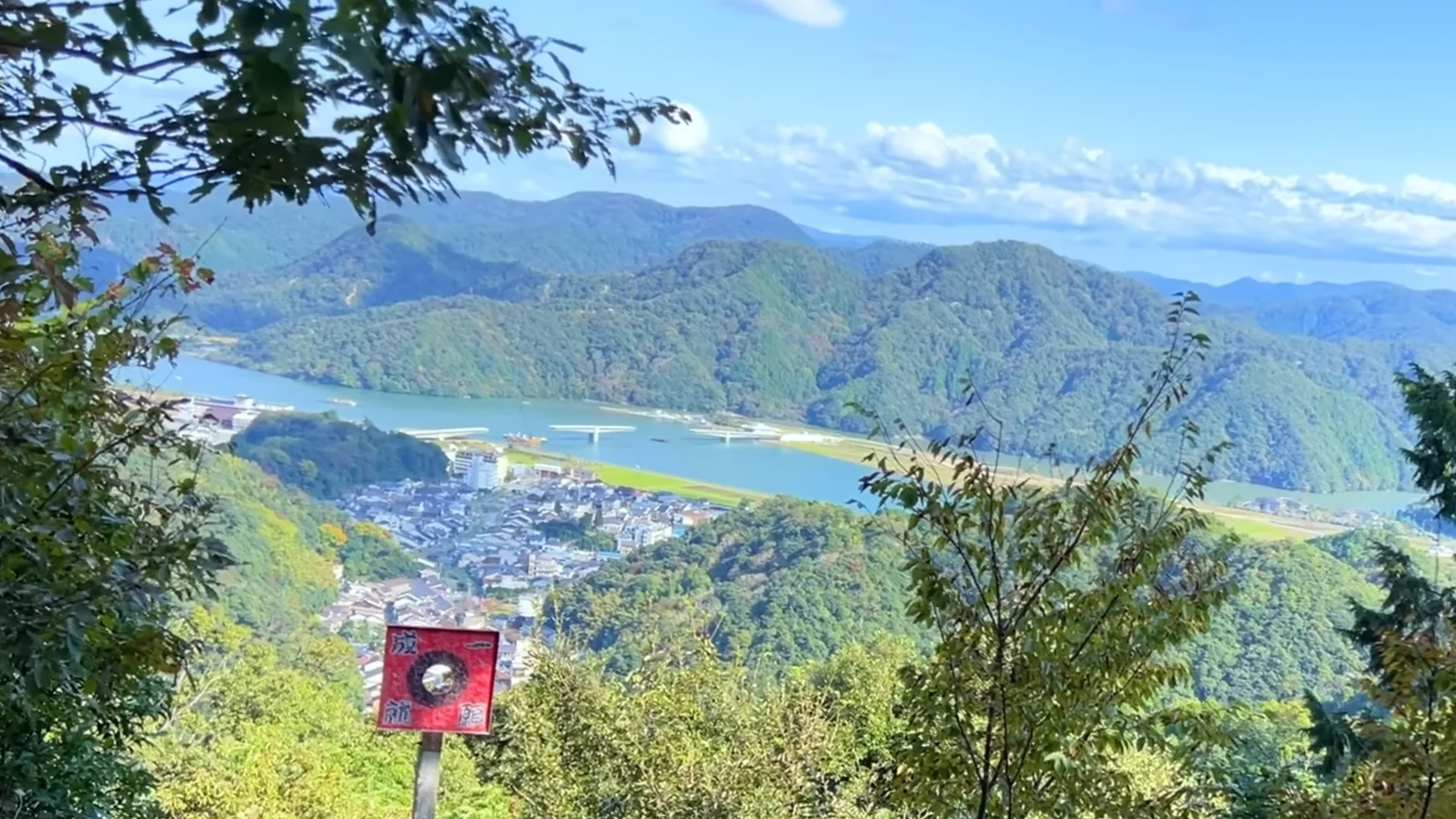
The summit terrace has a cafe and the coin-operated viewer; the temple is the middle stop.
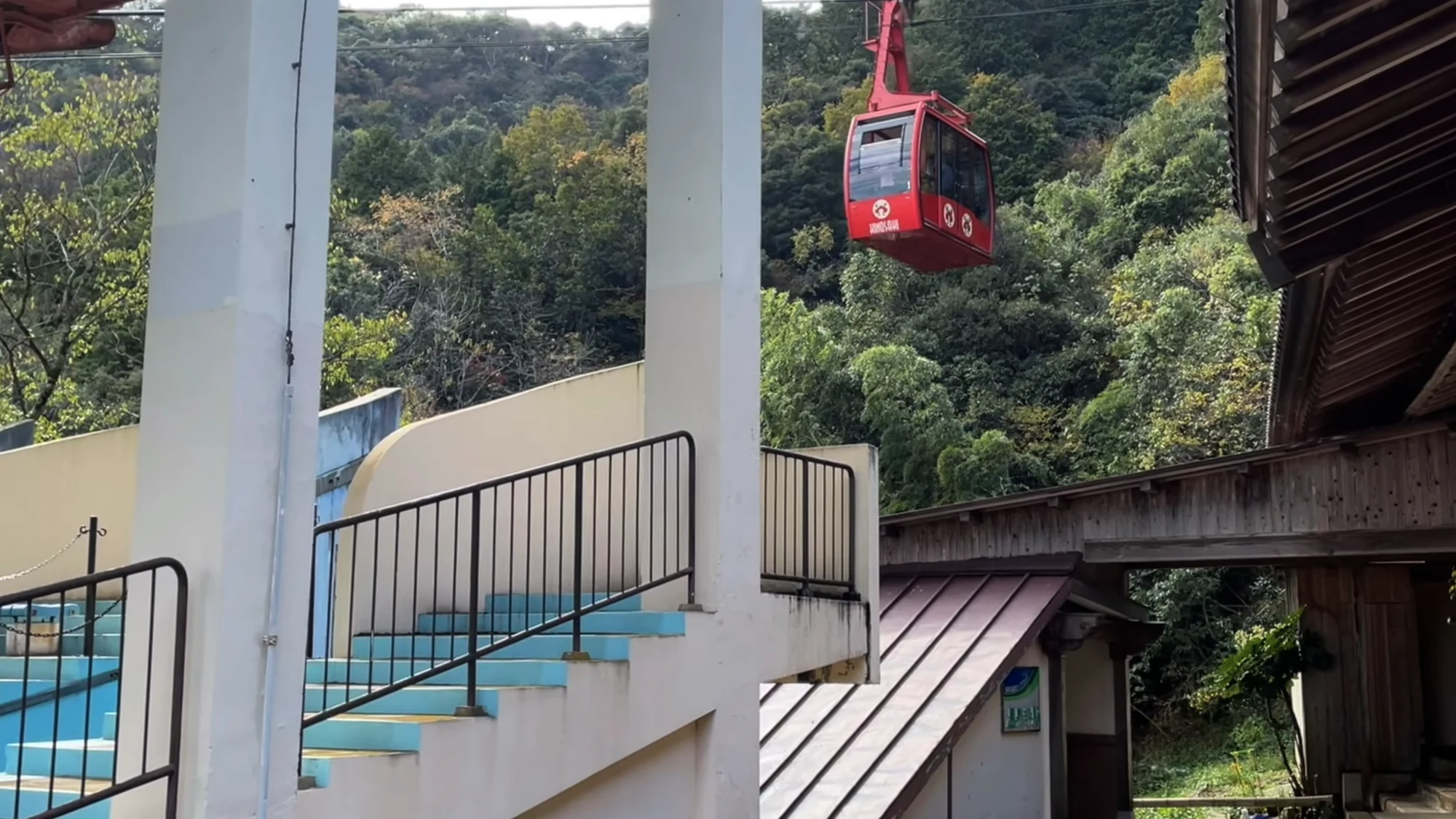
The lower station sits at the north end of the canal, past Ko-no-yu.
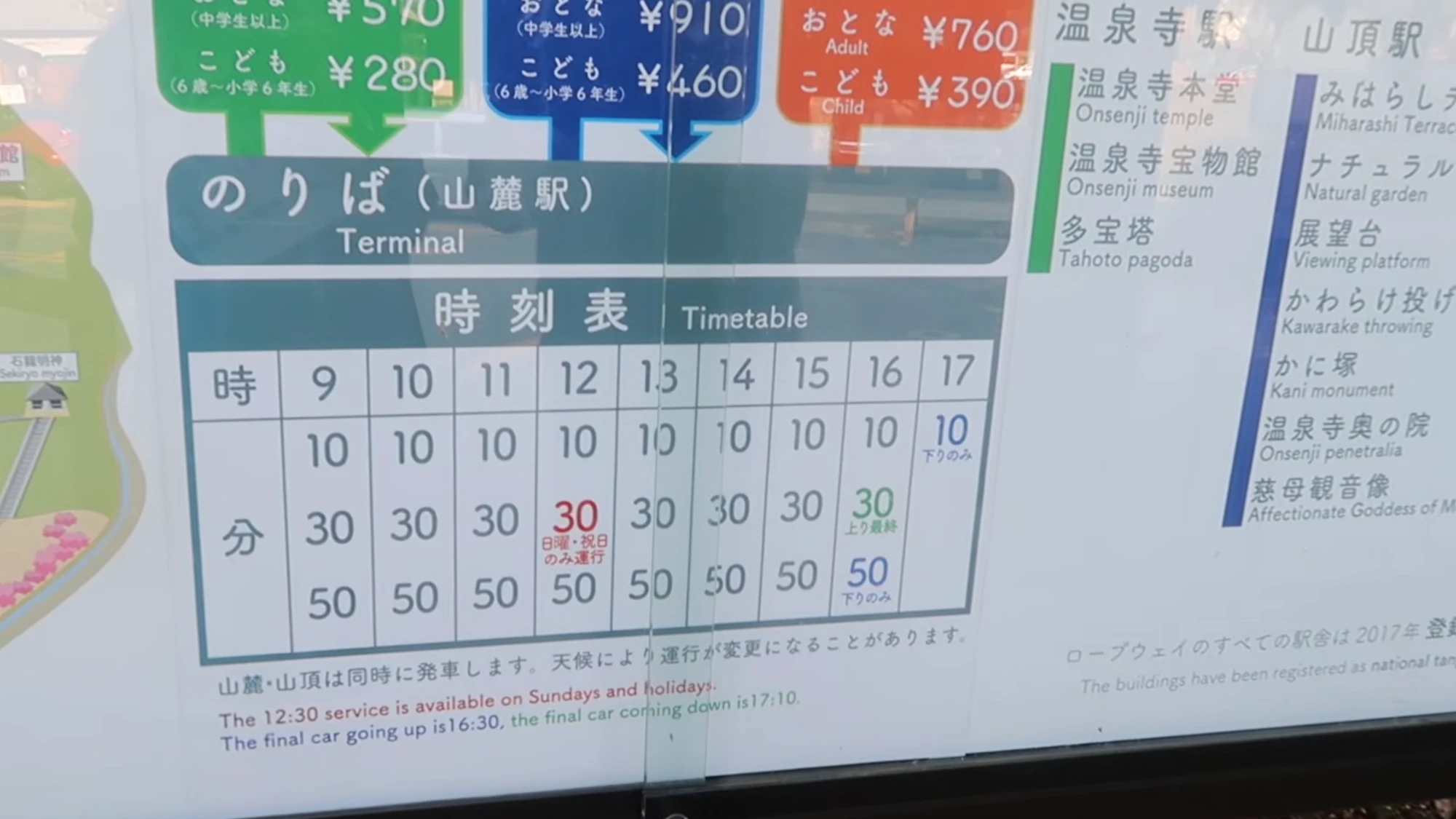
Round trip to the summit ¥910 adult, ¥460 child; the Onsenji-only leg is ¥570. ⚠️
Pay respects at Onsen-ji, the temple that owns the water
Halfway up the mountain, reachable by ropeway mid-station or a mossy stair climb of about 20 minutes on foot ⚠️, stands Onsen-ji, founded by Dōchi Shōnin, the monk credited with praying Kinosaki's waters into being in the 8th century. For centuries, pilgrims called at this temple before touching the baths, receiving a wooden ladle as proof of devotion; the baths came second to the blessing. ⚠️ (ladle custom details) Admission to the main hall runs about ¥300 (US$2) with an explanation from temple staff ⚠️, and the seated Eleven-Headed Kannon and temple treasures reward the modest fee. Visiting before your first bath, in the old order of operations, is the kind of small observance that improves a trip beyond its cost. The custom deserves its detail, because it is the town's oldest piece of etiquette: tōji pilgrims historically received a 湯杓 (yushaku, wooden ladle) at the temple and instruction in the 入湯作法 (nyūtō sahō, the formal bathing rite) before their first soak — the priest teaching the bath before the bath. ⚠️ Custom details per the association's history pages. Today's version survives in miniature: visit, take the blessing, and walk down to the water you have just been introduced to. The stair option earns its sweat too: the mossy path climbs through genuine forest quiet, and arriving at the temple warm makes the mountain's point better than the gondola can.
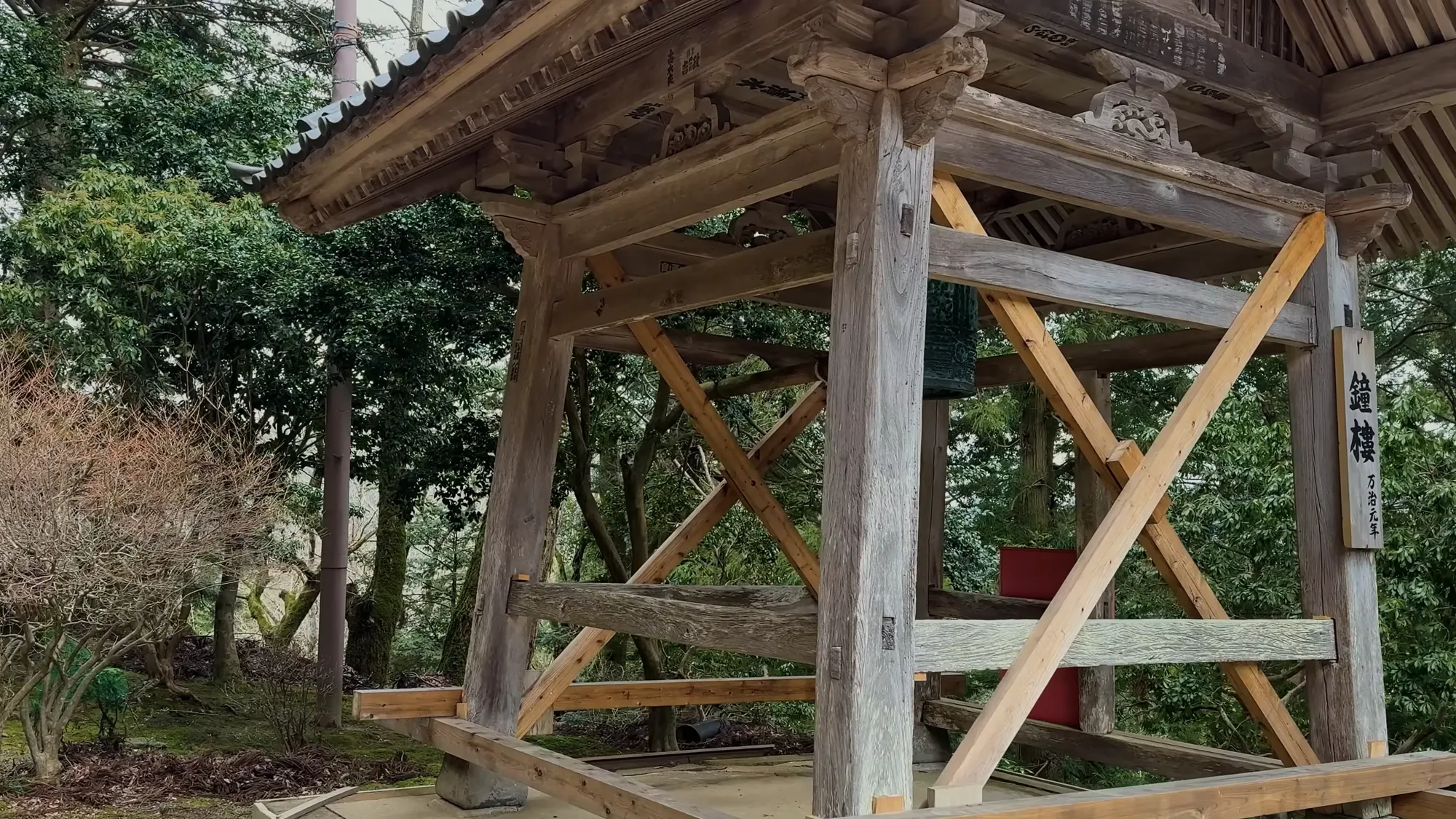
The bell is rung at New Year and on the founder's memorial in April.
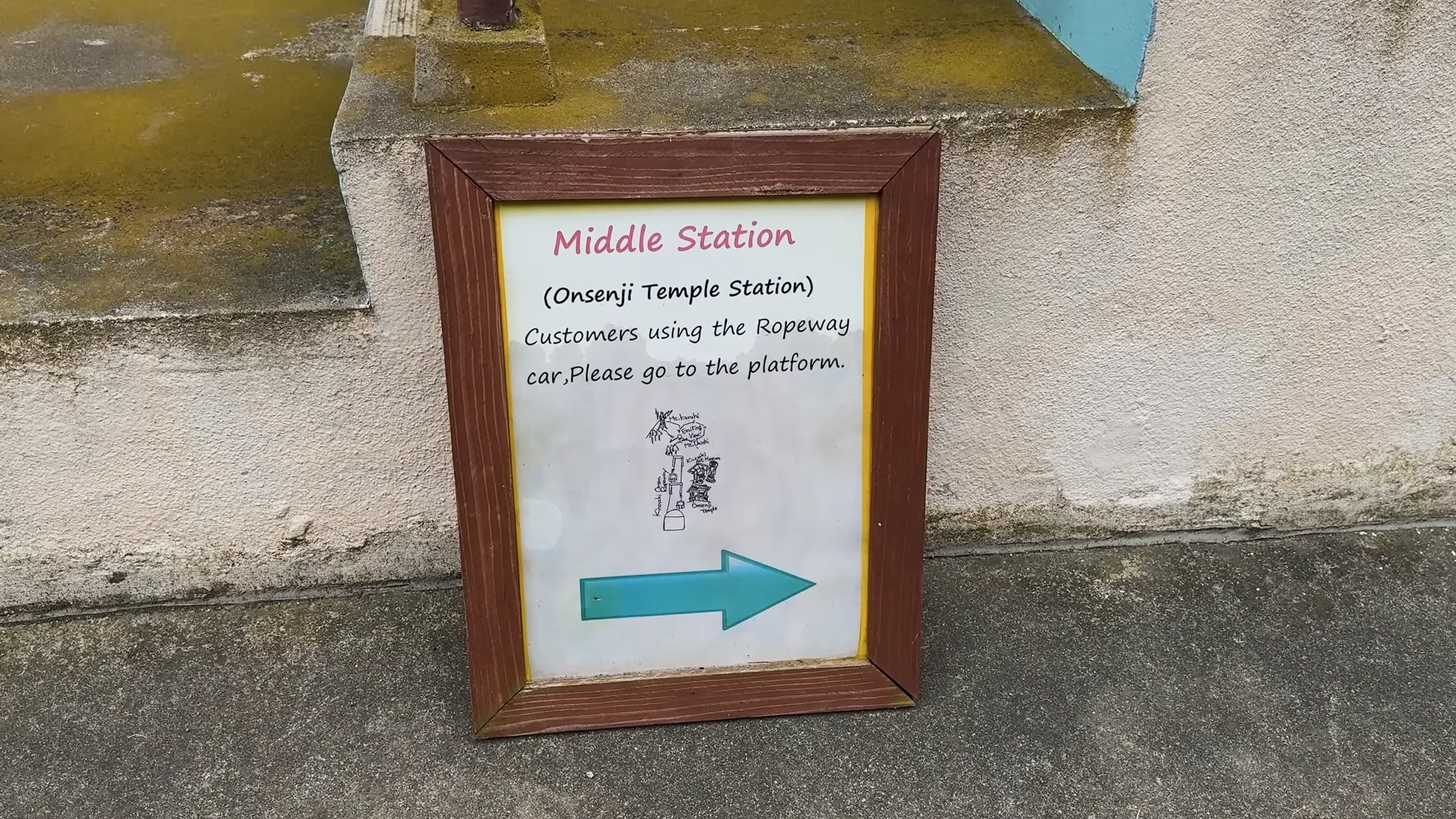
The middle station is the temple stop; the summit is one leg further on.
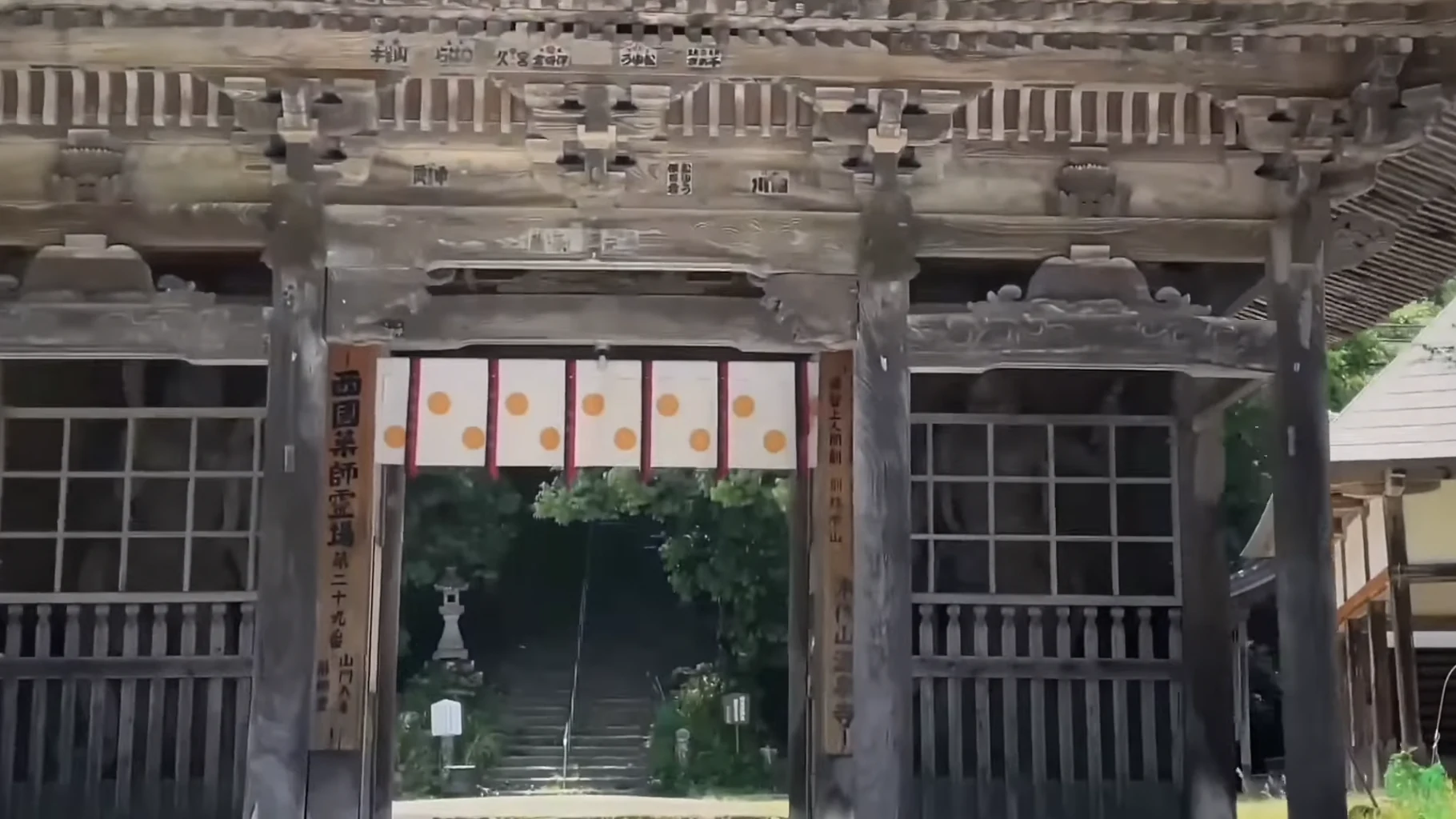
Onsenji is reached on foot in about twenty minutes, or by the middle ropeway station.
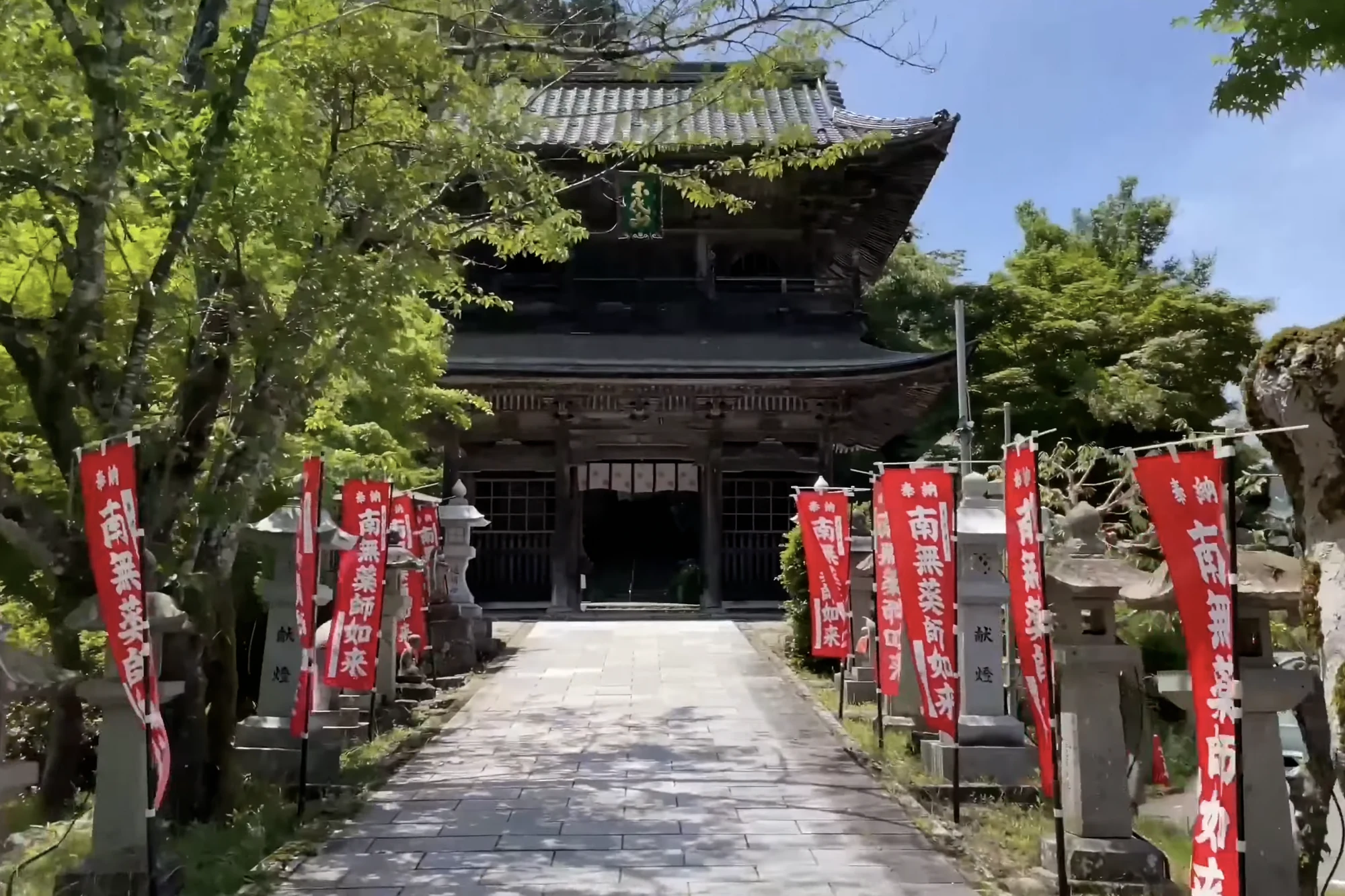
Onsenji has owned the rite governing this water since 738. The temple is the landlord, historically speaking.
Walk Kiyamachi, the town's quiet parallel
One street behind the main canal runs Kiyamachi-dōri, a narrow lane along a smaller waterway where the town drops its public voice. ⚠️ (confirm lane layout/naming) Ryokan back-entrances, ivy, uneven stone, and in early April a run of cherry blossoms locals prefer to the busier frontage. The small Kiyamachi Koji complex along it gathers a few craft shops and eateries. ⚠️ Ten minutes covers the walk; go at dusk, when the lanterns come on and the geta traffic thins. Kiyamachi also solves two specific problems the main street cannot. It is the photograph without the crowd — the same willows-and-water grammar, one lane over, with nobody in your frame — and it is the escape valve on festival days and crab-season weekends, when the main drag runs at full spectacle and this lane keeps the town's ordinary pulse. It is also the lane where the working town shows itself: deliveries at ryokan back doors, laundry lines of guest yukata, the occasional cook on a cigarette break between kaiseki courses. Photographers should give it the golden hour once — the same lantern light, the same water, and compositions the crowd shots on the main frontage simply cannot offer.
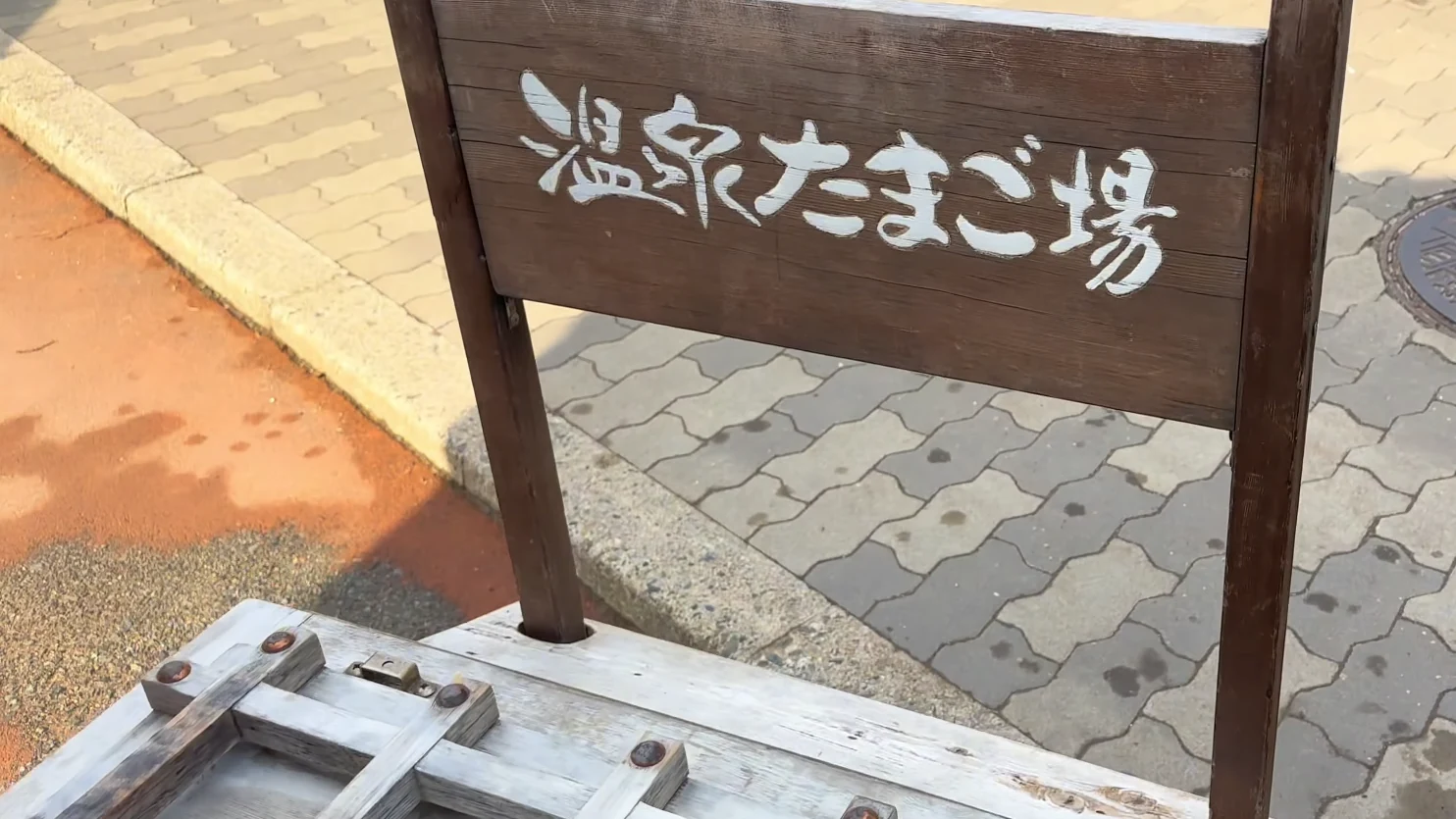
The egg pit is municipal, like the water. Nobody charges for the heat.
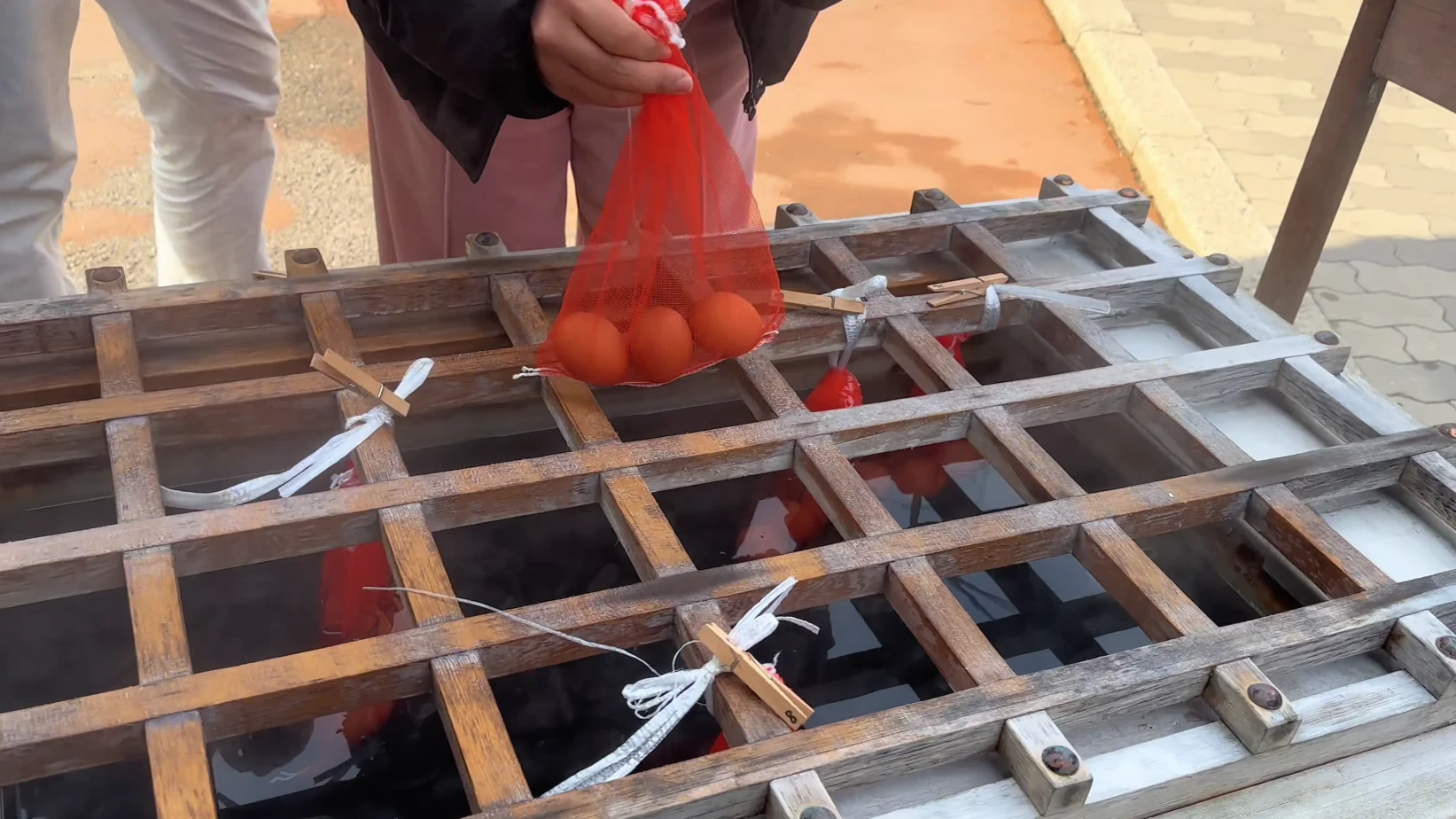
Kiyamachi runs parallel to the bath street and carries the egg pit, the bars and almost no foot traffic.
The two small museums worth the yen
The Kinosaki Literary Museum (Bungeikan) keeps the town's paper trail: Shiga Naoya's convalescence and "At Kinosaki," plus the wider circle of writers the town hosted. Modest, bilingual in parts ⚠️, and the right size for a between-baths hour. Pair it with our Mikiya page for the full story.
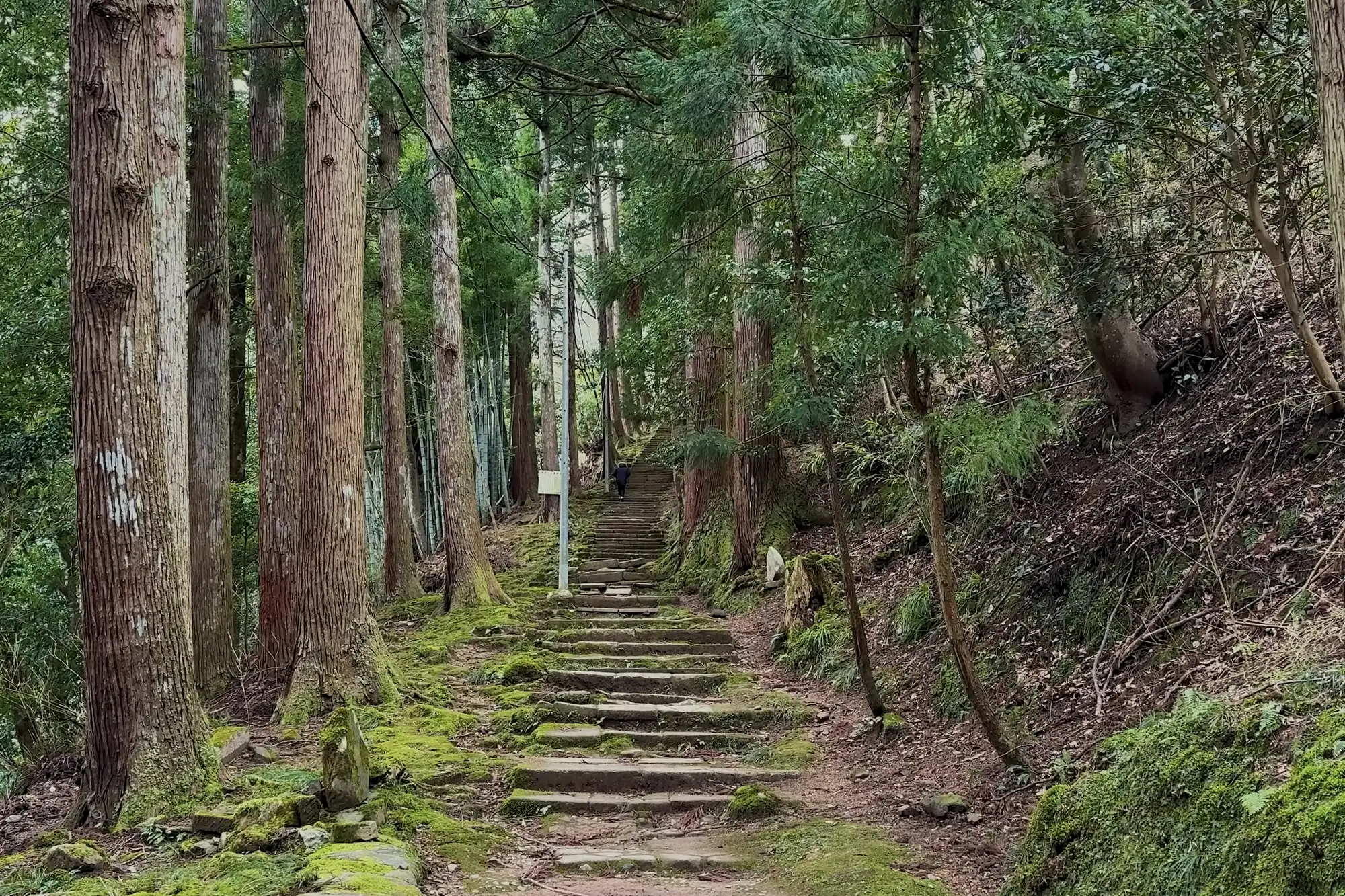
The old pilgrim path still runs beside the ropeway; it takes about twenty minutes on foot.
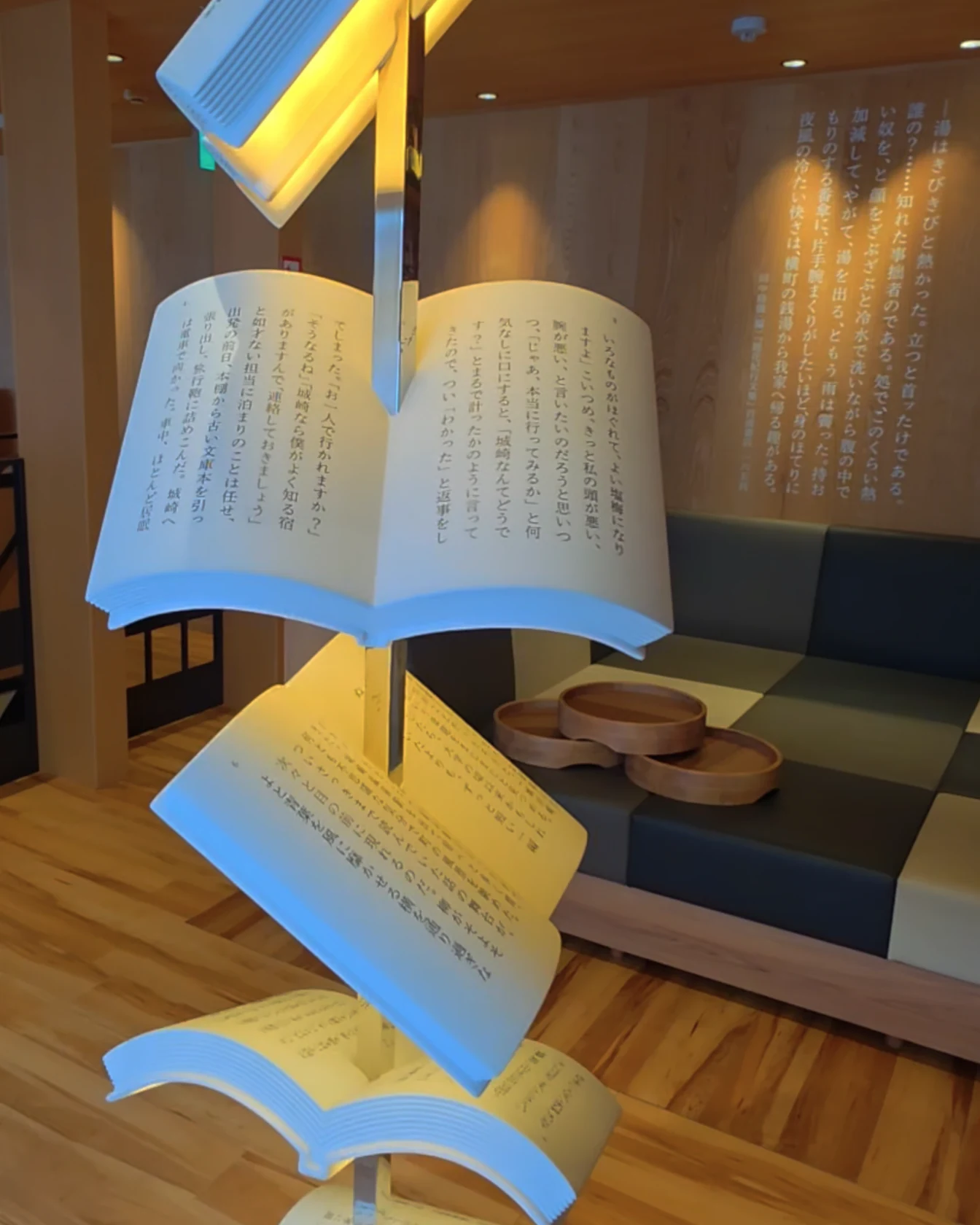
Two small museums: the literature hall, and the straw-craft museum on the canal.
The straw-craft museum (Mugiwara-zaiku Denshokan) documents a craft that exists nowhere else in Japan in this form: barley-straw marquetry, dyed and cut into geometric and pictorial inlays, practiced in Kinosaki for some three centuries. ⚠️ The workshops' small boxes and cards make the town's one distinctive souvenir; buying it here beats the generic sweets bag by every measure.
(⚠️ Status note, September 2026: the literary museum posted a temporary-closure notice — check before planning the hour around it. The straw-craft museum makes the better rainy-day anchor meanwhile.) The straw-craft case deserves one more sentence of advocacy, because the craft is easy to underrate from a shop window: 麦わら細工 (mugiwara-zaiku) is dyed barley straw cut and laid into patterns fine enough to read as inlaid wood or printed silk, a technique the town has kept alive for roughly three centuries while the rest of Japan let it lapse. ⚠️ Age and uniqueness claims per the museum's own materials. The demonstration pieces explain why the boxes cost what they cost — and why the honest souvenir hierarchy in this town runs straw-craft first, everything else somewhere after.
Kinosaki Marine World, the family card
Ten minutes by bus or taxi from town on the Hiyoriyama coast ⚠️, Marine World is an aquarium that stages itself against the sea cliffs: dolphin and sea lion shows, a fishing pool where children catch and eat their own aji (horse mackerel), and exhibits built into the coastal rock. Admission runs about ¥2,600 adults, ¥1,300 school-age, ¥650 small children (roughly US$17/9/4). ⚠️ The honest read: excellent with children, skippable without them unless aquariums are your genre. A half day covers it, buses permitting. ⚠️ The strategic use for bathing families is the schedule swap: Marine World absorbs the exact midday hours when the bathhouses are at their most crowded and least atmospheric, returning children tired and parents solvent in time for the 15:00 house openings and the evening circuit. Logistics decide the visit more than the exhibits do: the bus runs on a thin timetable, so photograph the return times before boarding — the Marine World hour that stretches to three because of a missed bus is the classic family-day failure, and entirely preventable with one screenshot. ⚠️ Current timetable at publish. Taxis bridge the gap when the schedule refuses to cooperate — ask the aquarium desk or your inn to call one, since the coastal rank is not a certainty. And in rough winter weather, check the sea-side exhibits' status before committing the afternoon; the cliffside setting that makes the place is also its exposure. ⚠️
The snack stroll, dignified
Between baths, the main street operates a running buffet of hand food: crab croquettes and crab buns in season, soft-serve, local sake by the cup at the brewery-linked shops, tajima beef buns, and pudding in jars. ⚠️ (categories only) Grazing in yukata is not just permitted but structurally encouraged, since the sotoyu circuit burns appetite. Two practical notes: eat standing near the shop or on its bench rather than walking with food, and carry small cash, as the tiniest counters may not take cards. ⚠️ The stroll also has a structural explanation worth knowing as you graze: the ordinance that keeps guests walking between baths is what keeps forty small counters alive on one street. A town where everyone bathed indoors would feed everyone indoors; Kinosaki's law walks its customers past every shopfront seven times a night, and the hand-food economy is the delicious downstream consequence. The seasonal rhythm upgrades the graze too: crab croquettes and crab buns own the counters from November to March, soft-serve and cold drinks take the summer shift, and the sake cups work year-round — the counter lineup is its own seasonal calendar. ⚠️ Categories only; vendors change. The best grazing window is the early-evening gap between the day-trippers' departure and your own dinner sitting.
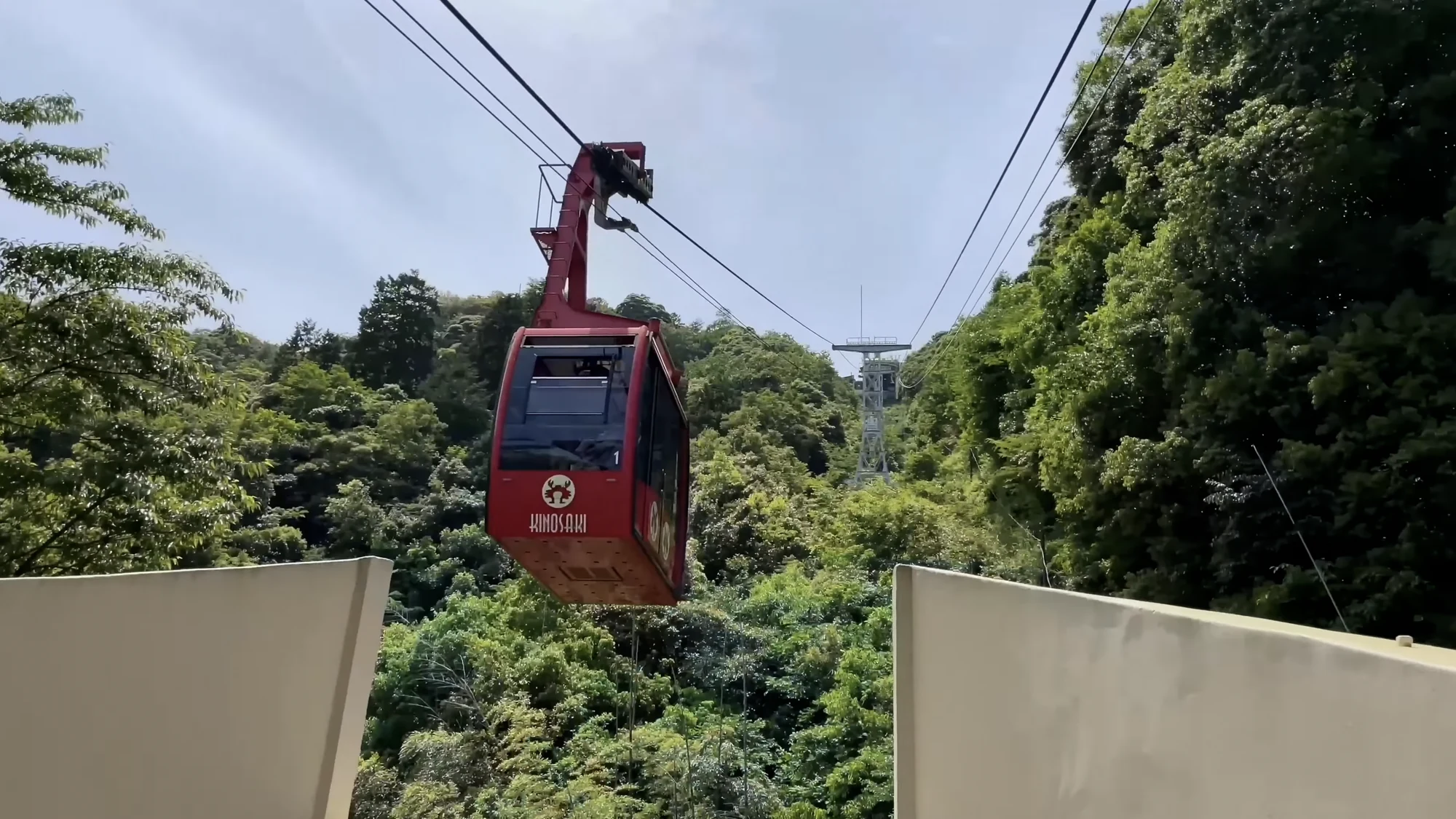
The ride runs in two legs and takes about seven minutes end to end.
What we'd skip
Completeness requires naming what not to do. The generic souvenir arcades near the station duplicate what every onsen town sells; spend that time at the straw-craft museum instead. Renting a car to "see the area" wastes a parking fee unless you're doing the full day-trip circuit, which has its own page. And scheduling every hour defeats the town: Kinosaki's real between-baths attraction is the absence of obligation. One last honest skip, aimed at the over-planners: skip the second museum on a one-night stay. Pick whichever of the two matches your temperament — words or craft — and leave the other as the reason the town keeps for next time. The deeper skip is attitudinal: do not import a city itinerary's pace. The travellers who report Kinosaki as "one day is plenty" invariably toured it as a checklist by 15:00 and left before the town's actual show — the lantern evening — began. A one-night Kinosaki that ends with everything seen was scheduled wrong; the correct residue of a first visit is a short list of things deliberately left undone, with the baths not on it. That list is the return ticket the town writes for you: the other museum, the summit in a different season, the festival dates you missed by a week — Kinosaki plans its own sequels, and the visitors who let it are the ones who come back.
The literary walk: 23 stones in ninety minutes
The town's most underrated diversion is a walk it built decades ago and rarely explains to foreign visitors: the 文学碑 (bungakuhi, literary monument) course — 23 stones scattered from the station to the temple, each carrying lines by a writer the town hosted, from 松尾芭蕉 (Matsuo Bashō) at the Tsukimi bridge to 与謝野晶子 (Yosano Akiko) beside Ichi-no-yu. The association maps it as a one-to-two-hour course, and since the stones line the same streets as the bathhouses, the literary walk and the bath circuit are the same geography read at two altitudes. The centrepiece stone rewards the detour to read about before standing at: the 志賀直哉 (Shiga Naoya) monument in front of the literary museum carries the author's own supplied signature — the only self-signed Shiga monument in Japan, granted over his famous dislike of monuments after the town's persistence won him over. And the walk has a participatory ending: 歌のポスト (uta no post, poem posts) stand at four points along the course, where anyone may drop a haiku or tanka; the town judges submissions each March and sends winners a piece of the local straw-craft. ⚠️ Program details per the association's literary page. Do it as the second morning's hour, after the 7:00 bath and before checkout, when the stones have the streets to themselves. No Japanese is required to feel the point, which is the town's point: for thirteen centuries the response to this water has been to write something down, and the street keeps the receipts where everyone walks. Our literary guide tells the full story; the walk is where the story stands around in stone.
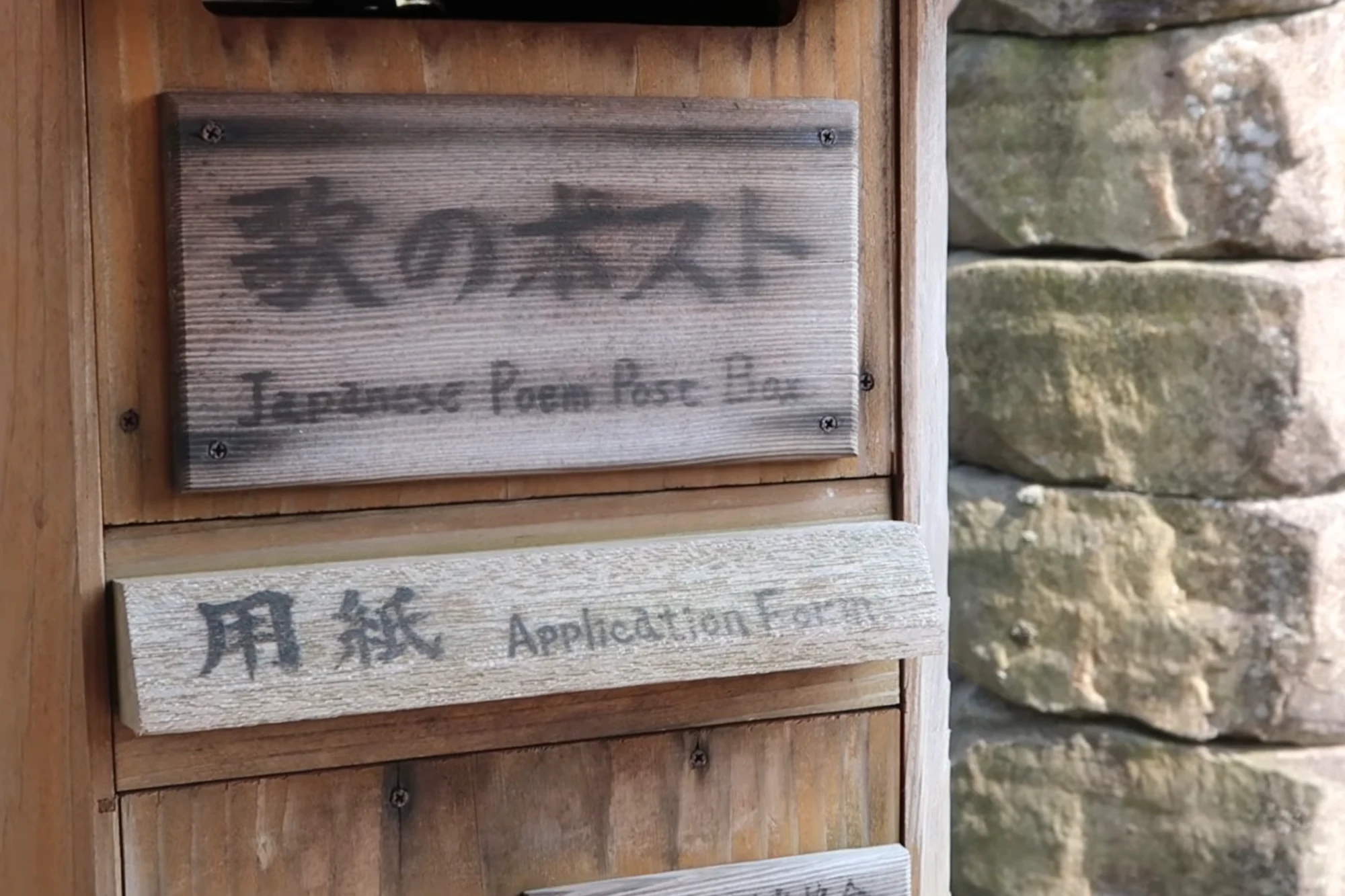
Twenty-three stones in about ninety minutes, and one of them the writer signed himself.
Tips
Check the ropeway's weekly closing day before building an afternoon around it; save the summit for clear days.
Visit Onsen-ji before your first bath — the old order of operations, and a better trip for it.
Walk Kiyamachi at dusk, when the lanterns come on and the geta traffic thins.
Buy the straw-craft box, skip the station souvenir arcades.
Eat standing near the shop, carry small cash — the tiniest counters may not take cards.

Verified by The Japan Onsen Society
Show all sources
Drafted July 2, 2026; the ordinance framing, literary-walk facts and museum status verified September 22, 2026. Primary Japanese sources:
文学のまち — 城崎温泉観光協会 (Kinosaki Onsen Tourism Association — the 23 monuments, the self-signed Shiga stone, the poem posts): [https://kinosaki-spa.gr.jp/about/writer/](https://kinosaki-spa.gr.jp/about/writer/)
城崎の歴史 — 城崎温泉観光協会 (the 湯杓/入湯作法 pilgrimage custom): [https://kinosaki-spa.gr.jp/about/history/](https://kinosaki-spa.gr.jp/about/history/)
外湯めぐり発祥の地!温泉天国★城崎温泉 — 豊岡市観光公式サイト (the sotoyu system behind the "correct scale" framing): [https://toyooka-tourism.com/recommend/onsen/kinosaki_sotoyu/](https://toyooka-tourism.com/recommend/onsen/kinosaki_sotoyu/)
Related guides
Plan Your Visit
Kinosaki complete guide
Seven public bathhouses, one shared spring, and a law that keeps them the centre of town. Start here.
Plan Your Visit
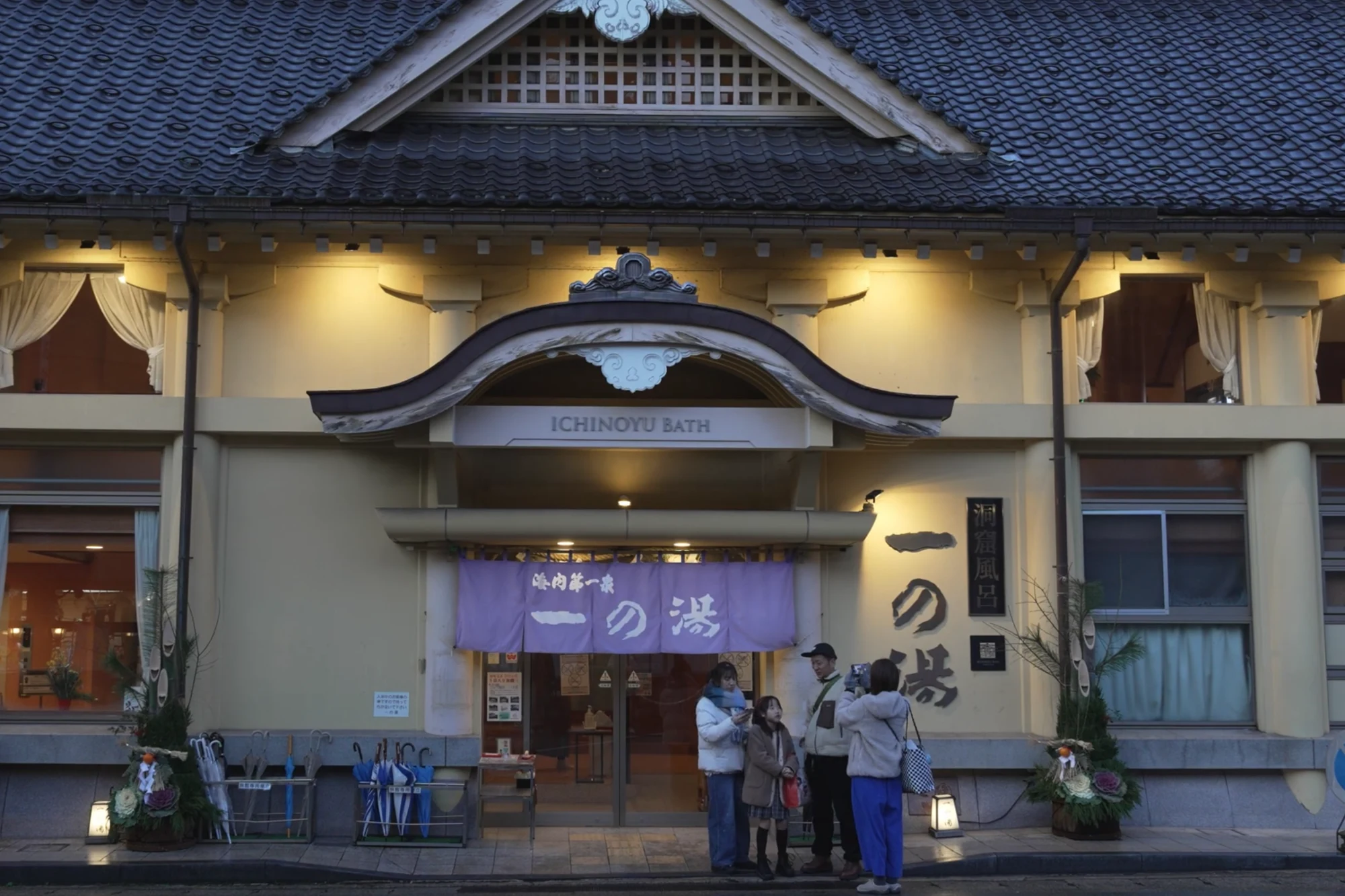
The 7 bathhouses
Same water in all seven houses. What changes is the room, the story, and the blessing on the door.
Plan Your Visit
Day trips
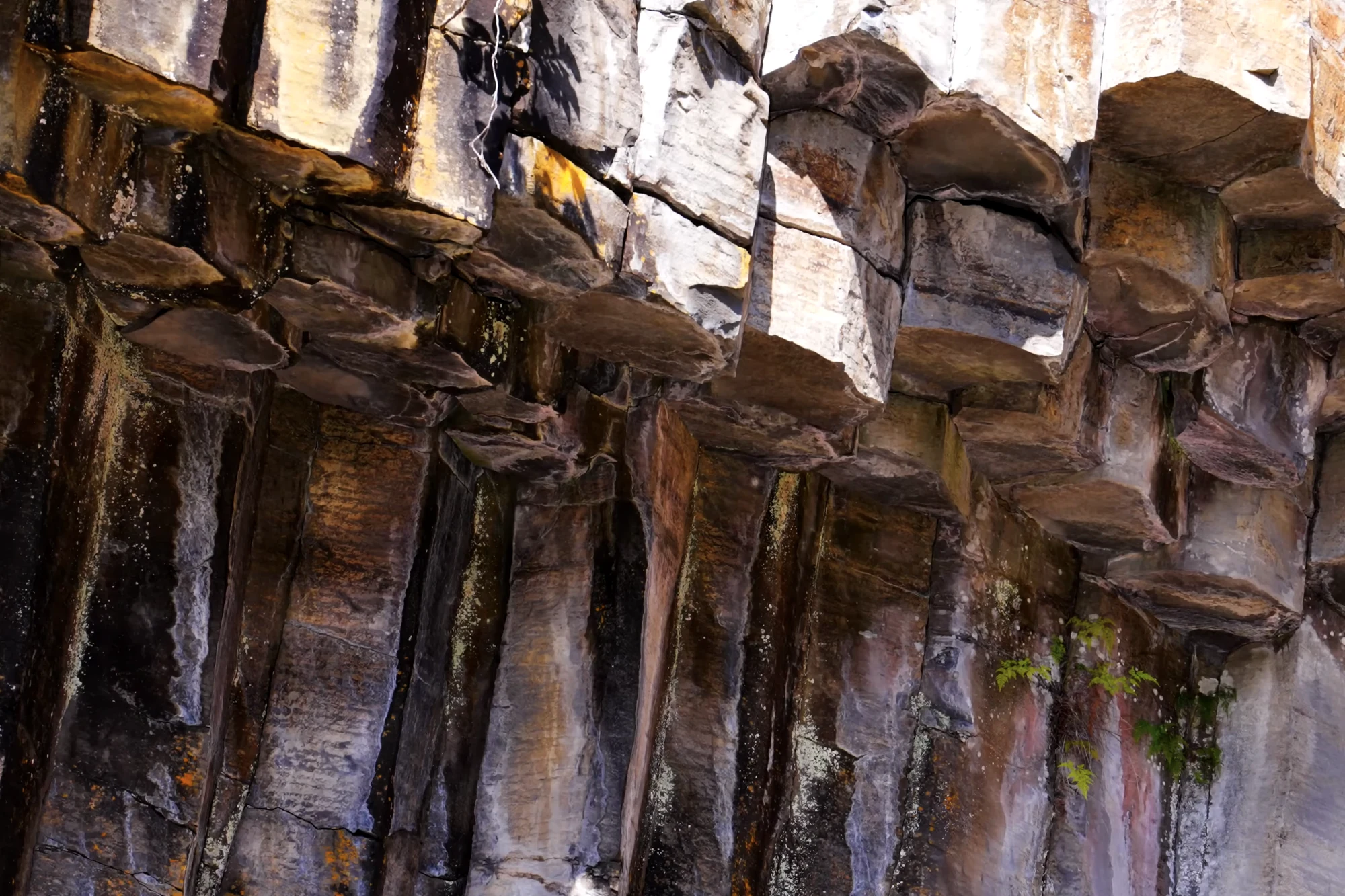
Izushi for soba, Genbudo for basalt caves, Takeno for the sea. All within an hour of the station.
Plan Your Visit
2-day itinerary
Two days and one night, hour by hour, built around the hours the seven bathhouses actually keep open.
Plan Your Visit
Literary Kinosaki
Twenty-three stone monuments and one novelist's accident. This has been a town of writers for centuries.
Plan Your Visit
Crab season
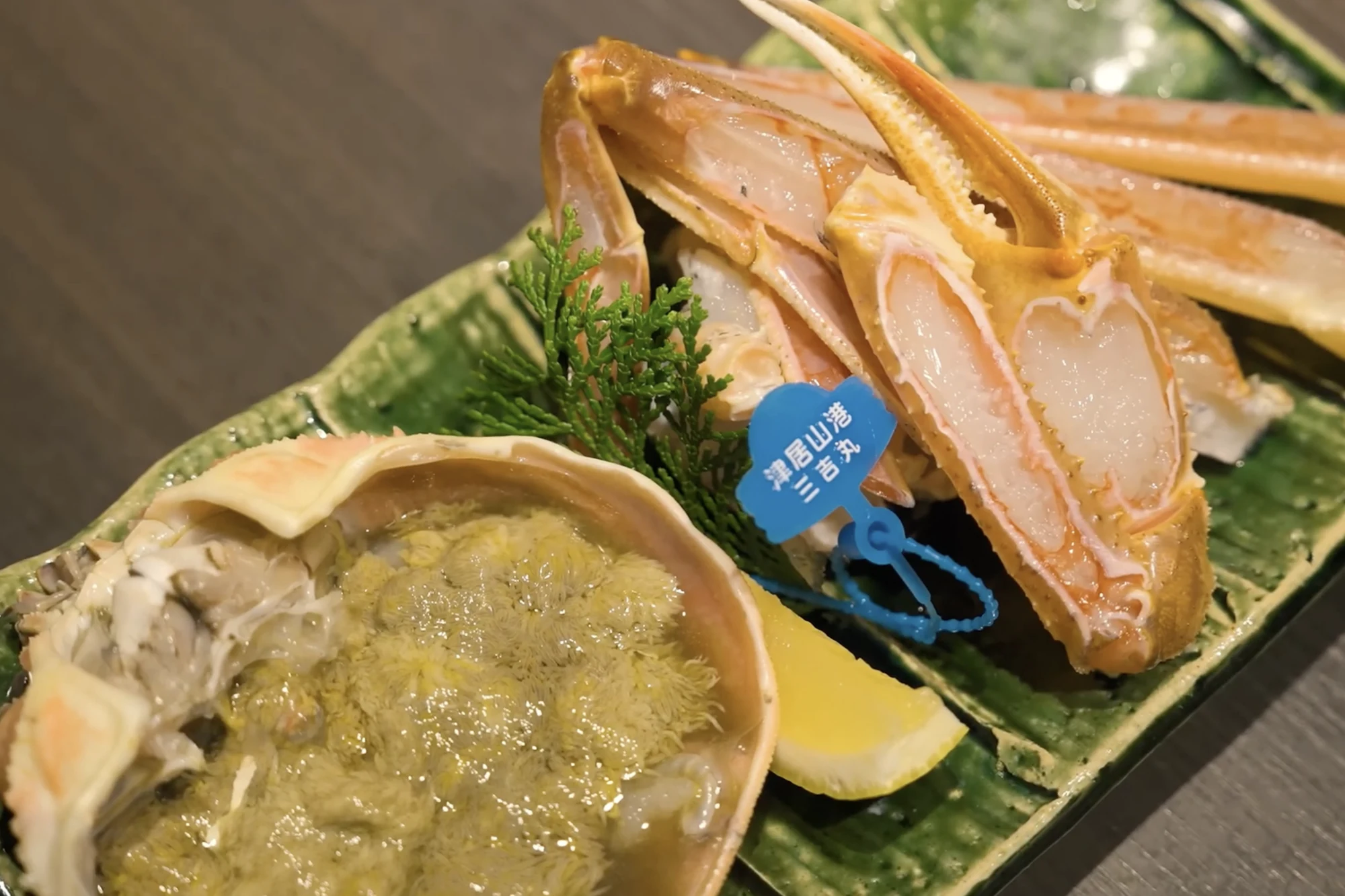
Matsuba crab season opens on November 6 and runs to March. It is why winter rooms disappear early.